How to create a safer warm bed for a senior cat
A senior cat’s warm bed should be low, supportive and easy to leave. Use pet-specific heating exactly as directed and always provide an unheated resting choice.
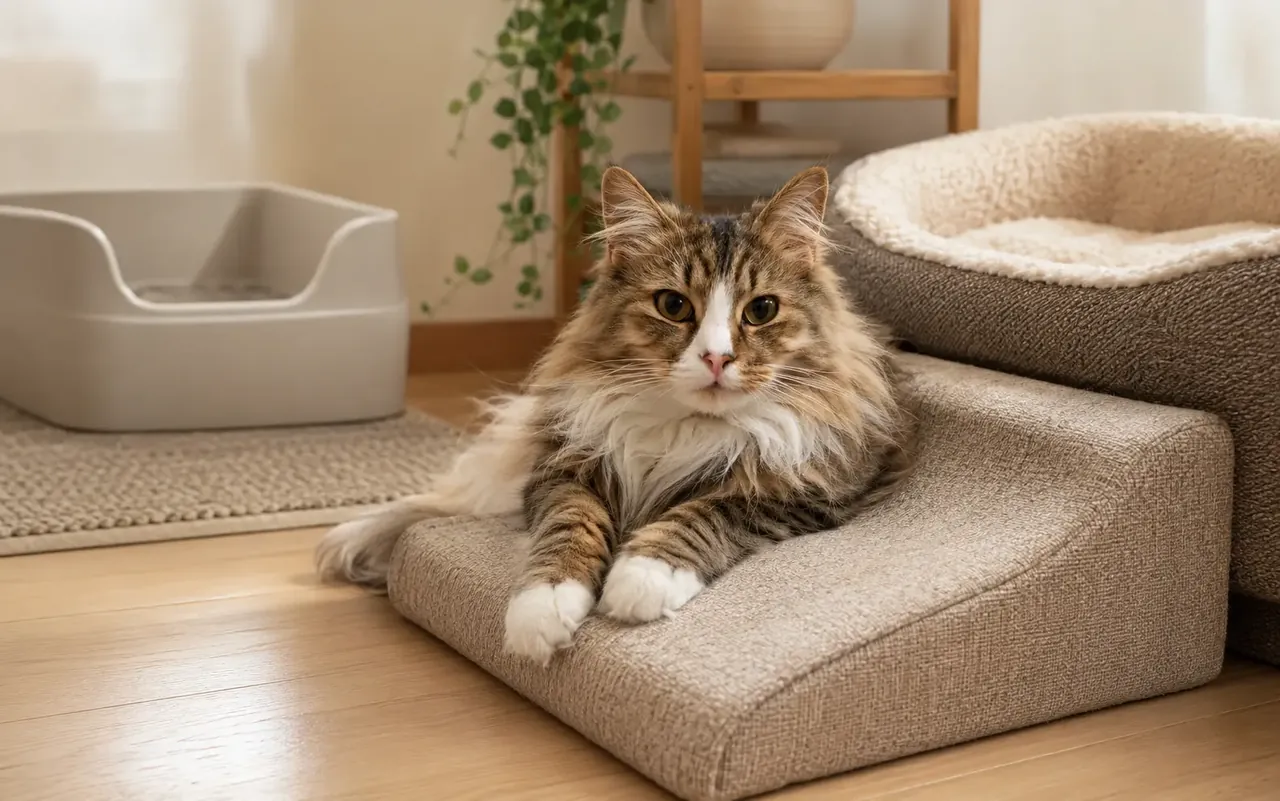 Topic illustration selected for this guide. Some learning images may be AI-assisted.
How to create a safer warm bed for a senior cat — the quick answer
✓ Reduced muscle mass and joint stiffness can make cold resting places less comfortable.
✓ Choose a low, supportive bed in a quiet draught-free place and follow all pet-heating safety instructions.
✓ Constant heat-seeking with weight, appetite or behaviour change can accompany illness and should be checked.
Older cats often appreciate warmth, but heated products must allow easy movement away from the heat.
The short answer
Older cats often appreciate warmth, but heated products must allow easy movement away from the heat.
Why it may happen
Reduced muscle mass and joint stiffness can make cold resting places less comfortable.
Read the whole situation
One behaviour rarely has one guaranteed meaning. Compare it with your cat’s age, health, posture, appetite, litter habits, environment and usual pattern before drawing a conclusion.
What to do now
Choose a low, supportive bed in a quiet draught-free place and follow all pet-heating safety instructions.
What not to do
Avoid punishment, forced handling and sudden large changes. They can add fear while hiding the information that would help you understand the original cause.
When to contact a veterinarian
Constant heat-seeking with weight, appetite or behaviour change can accompany illness and should be checked.
Keep a useful record
Write down when it started, how often it happens and what immediately precedes and follows it. Photos, weights or short videos can make a veterinary or behaviour consultation more productive.
Create warmth without trapping the cat
Place a stable bed in a quiet draught-free area with non-slip access. Heated products should be designed for pets, undamaged and used according to their instructions. The cat must be able to move completely away from the heat without climbing.
DEEPER GUIDE1 more detailed sectionsOpen +
Check skin and behaviour regularly
Feel the surface, inspect cords and look for redness, thinning fur or reluctance to move. Seniors with reduced mobility or sensation may be less able to avoid excessive heat. Constant heat-seeking with appetite, weight or behaviour change deserves veterinary assessment.
Your quick checklist
Your progress is saved on this device.
Three simple things you can do
You do not have to change everything today. Pick one step that feels realistic, try it and see how your cat responds.
- 1Choose a supportive low-entry bed in a quiet draft-free place.
- 2Use pet-safe low-level warmth with room to move away.
- 3Place another bed near the family's usual activity so the cat keeps social choice.
Common mistakes
×Using an unregulated human heating pad.
×Putting the only warm bed upstairs.
×Choosing high sides that painful joints cannot cross.
Questions cat people ask
What bed is best for a senior cat?+
A stable supportive bed with a low entrance, washable cover and gentle warmth often suits reduced mobility.
How warm should a heated cat bed be?+
It should provide mild regulated warmth rather than feel hot, and the cat must be able to leave freely. Follow the product's pet-safety instructions.
Still looking for the right answer?
Search the full EverYes Cats encyclopedia with your own words — a symptom, food, behaviour, breed or everyday question.
Checked, dated and transparent
- Prepared by
- EverYes Cats editorial team
- Last updated
- 13 August 2026
- Source checked
- 13 August 2026
- Primary reference
- AAHA/AAFP Feline Life Stage Guidelines ↗
We begin with the named reference, rewrite the information in plain language and add practical cat-parent steps. Urgent health statements are checked against veterinary sources. This guide has not been individually reviewed by a veterinarian unless explicitly stated. It provides education, not diagnosis or treatment.
Spotted something unclear or outdated? Tell us so we can review it.
Your answer helps us improve the cat encyclopedia.
Jumping down places force through joints and may become harder before ordinary walking changes. A practical guide to what matters, what to do and when to seek help.