Make a home easier for a senior cat
Low-cost changes for joints, senses, warmth and independence.
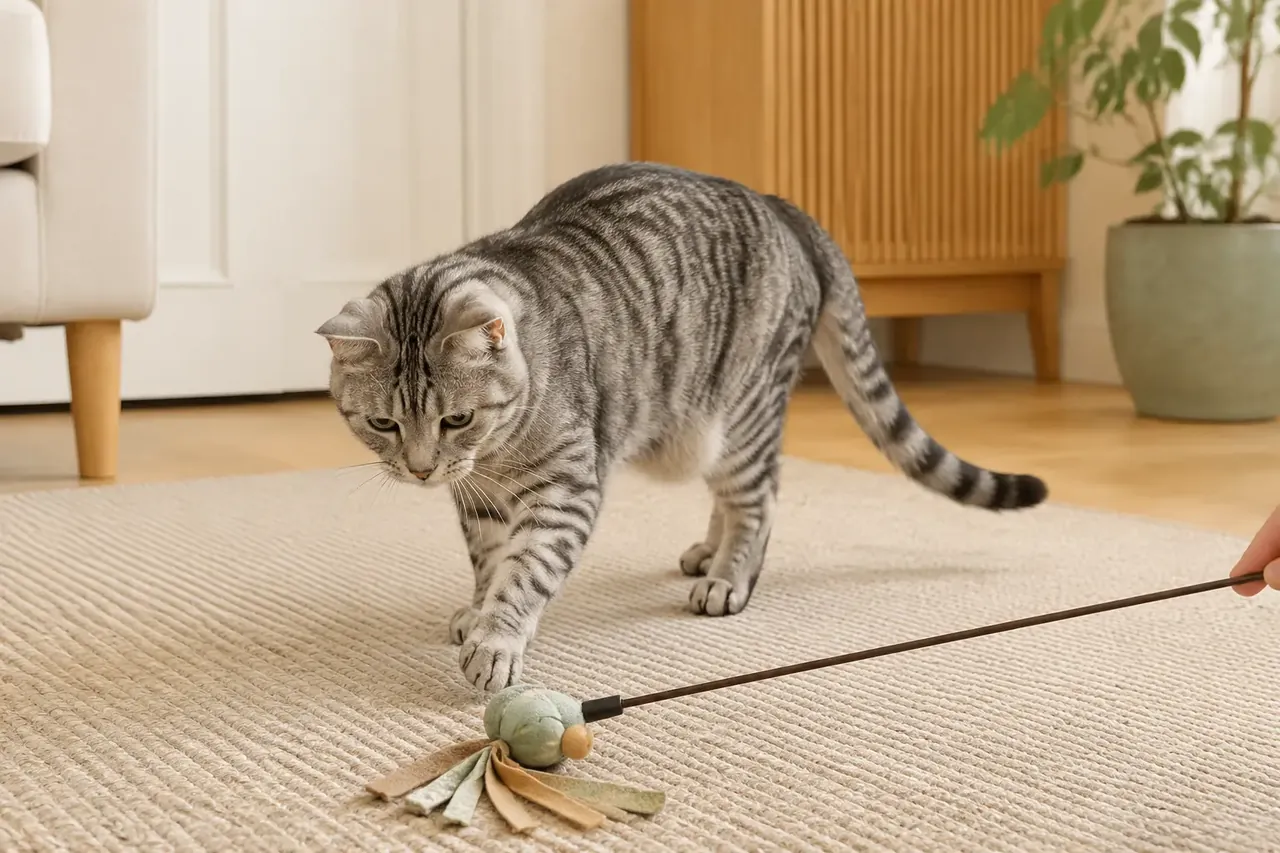 Topic illustration selected for this guide. Some learning images may be AI-assisted.
Make a home easier for a senior cat — the quick answer
✓ Add low steps and non-slip paths
✓ Use low-entry litter boxes on each level
✓ Keep resources close but separate
✓ Ask a vet about mobility and pain changes
A senior-friendly home reduces the physical work required to reach food, litter, beds and favourite people. These changes support comfort, but new slowing down should still be investigated rather than dismissed as ageing.
Improve the routes
Place non-slip runners on smooth floors and add stable steps or ramps to favourite furniture. Keep routes wide, well lit and free of jumps where possible.
Adapt the litter setup
Offer a spacious tray with a low entrance and litter the cat already accepts. Place a box on every used floor and scoop often so reduced mobility is not punished by poor access.
Support rest and senses
Provide warm, padded beds away from drafts, gentle night lighting and predictable furniture placement. Avoid moving key resources without need.
Monitor what the changes reveal
Difficulty jumping, stiffness after rest, missed grooming, sleep changes or toileting outside the box may reflect pain or disease. Record them for a veterinary visit.
Your quick checklist
Your progress is saved on this device.
Three simple things you can do
You do not have to change everything today. Pick one step that feels realistic, try it and see how your cat responds.
- 1Create non-slip paths and stable low steps to favourite places.
- 2Place a spacious low-entry litter box on every floor the cat uses.
- 3Provide warm padded beds, gentle night lighting and nearby but separate resources.
Common mistakes
×Dismissing reduced jumping or grooming as normal ageing.
×Making a ramp too steep or unstable to feel safe.
×Moving all key resources at once and removing familiar choices.
Questions cat people ask
What is the easiest home change for an older cat?+
Non-slip runners on smooth routes and a low-entry litter box often remove daily barriers at low cost. Choose changes based on what your cat struggles to reach.
When does slower movement need a veterinary check?+
New stiffness, reluctance to jump, missed grooming, sleep change or toileting problems may reflect pain or disease and should be assessed.
Still looking for the right answer?
Search the full EverYes Cats encyclopedia with your own words — a symptom, food, behaviour, breed or everyday question.
Checked, dated and transparent
- Prepared by
- EverYes Cats editorial team
- Last updated
- 7 August 2026
- Source checked
- 7 August 2026
- Primary reference
- AAHA/AAFP Feline Life Stage Guidelines ↗
We begin with the named reference, rewrite the information in plain language and add practical cat-parent steps. Urgent health statements are checked against veterinary sources. This guide has not been individually reviewed by a veterinarian unless explicitly stated. It provides education, not diagnosis or treatment.
Spotted something unclear or outdated? Tell us so we can review it.
Your answer helps us improve the cat encyclopedia.
A senior-friendly home keeps food, water, litter, warmth and favourite resting places within easy reach. Small changes can protect independence without forcing a cat to stop using familiar spaces.