How warm should a senior cat’s bed be?
Senior cats may seek extra warmth because they rest more or have less insulating muscle, but heat must remain gentle, stable and optional. The cat must always be able to move to a cooler place.
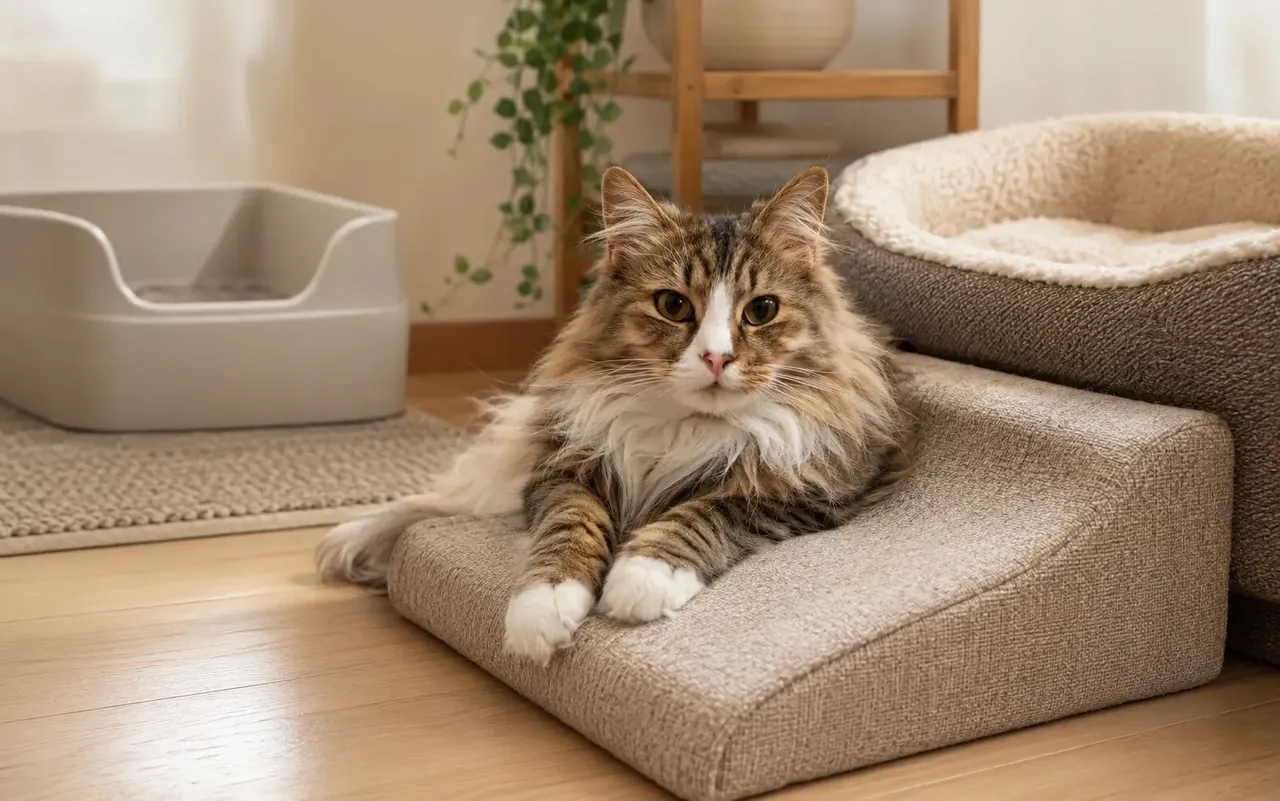 Topic illustration selected for this guide. Some learning images may be AI-assisted.
How warm should a senior cat’s bed be — the quick answer
✓ Older cats often appreciate warmth, but they must be able to move away and avoid direct high heat.
✓ Observe: Check skin temperature, mobility, sleeping duration and room conditions.
✓ Try this: Offer insulated bedding plus a cooler alternative and use only pet-safe warming products as directed.
Older cats often appreciate warmth, but they must be able to move away and avoid direct high heat. The useful question is not only what the moment resembles, but whether it fits this cat’s normal pattern. Context, frequency, recovery and accompanying changes make the interpretation safer and more accurate.
Offer warmth with an exit
Place an insulated bed in a draft-free familiar area and keep an equally accessible cooler bed nearby. The route between them should be short, non-slip and free of jumps.
Use warming products cautiously
Choose only a pet-specific product used exactly as directed, protect cords and check the surface frequently. Never use a human electric blanket, hot-water bottle or direct heater where a cat can become trapped or burned.
Check mobility and skin
A senior cat with arthritis, weakness, neuropathy or cognitive change may not move away promptly. Inspect the skin, note stiffness and confirm the cat changes position normally rather than remaining fixed on the warmest spot.
When veterinary advice matters
Seek assessment for new heat-seeking with weight loss, weakness, appetite change, increased thirst, poor coat or reduced mobility. Red skin, burns, collapse, confusion or breathing difficulty needs prompt or urgent care.
Your quick checklist
Loading saved progress…
Three simple things you can do
You do not have to change everything today. Pick one step that feels realistic, try it and see how your cat responds.
- 1Observe your cat’s individual baseline.
- 2Make one gentle change at a time.
- 3Ask a qualified professional when health or safety is involved.
Common mistakes
×Waiting for a dramatic symptom instead of noticing smaller changes from the cat’s normal routine.
×Changing several things at once, making it difficult to learn what actually helped.
×Treating general guidance as a substitute for advice from a veterinarian who knows the individual cat.
Questions cat people ask
Does every cat follow the same rule?+
No. Age, health, history, temperament and environment all change what works for an individual.
When should I seek professional help?+
Seek veterinary advice for sudden, persistent or concerning changes and urgent help for breathing difficulty, collapse, seizures, poisoning or urinary obstruction signs.
Still looking for the right answer?
Search the full EverYes Cats encyclopedia with your own words — a symptom, food, behaviour, breed or everyday question.
Checked, dated and transparent
- Prepared by
- EverYes Cats editorial team
- Last updated
- Source checked
- Primary reference
- AAHA: Evaluating the Healthy Senior Pet ↗
We begin with the named reference, rewrite the information in plain language and add practical cat-parent steps. Urgent health statements are checked against veterinary sources. This guide has not been individually reviewed by a veterinarian unless explicitly stated. It provides education, not diagnosis or treatment.
How we choose and use sources →
Spotted something unclear or outdated? Tell us so we can review it.
Loading your saved choice…
Older cats may shed claw sheaths less effectively and scratch less because of mobility change. Learn what to check, what to change safely and when professional help matters.
 02
 04
 05