Why Does My Senior Cat Hesitate Before Jumping Down?
Hesitating before jumping down can be an early mobility or pain clue. Observe natural movement, provide a safer route and arrange assessment instead of repeatedly testing the jump.
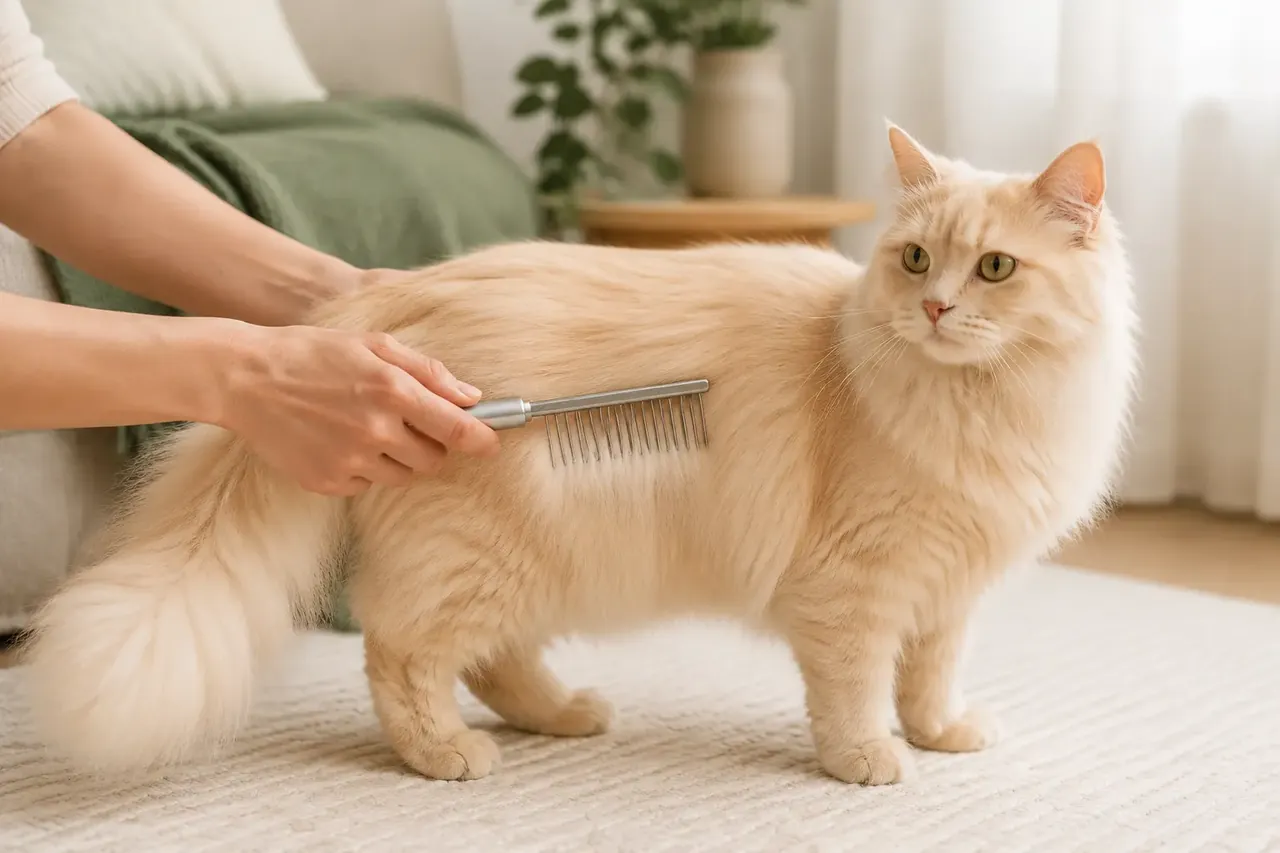 Topic illustration selected for this guide. Some learning images may be AI-assisted.
Why Does My Senior Cat Hesitate Before Jumping Down — the quick answer
✓ Jumping down places force through joints and may become harder before ordinary walking changes.
✓ Add stable steps, non-slip landing surfaces and lower routes to favourite places.
✓ Falling, limping, severe pain or sudden weakness needs prompt care.
Jumping down places force through joints and may become harder before ordinary walking changes. Start by comparing the moment with your cat's usual pattern.
Observe the whole movement pattern
Note the height and surface, which limb leads, whether the cat pauses, searches for another route or lands stiffly, and how movement looks after rest. Compare stairs, litter entry, grooming and climbing onto furniture. A short video of spontaneous movement can help the veterinarian, but never place the cat at height or encourage repeated jumps to capture it.
Make the route lower and more secure
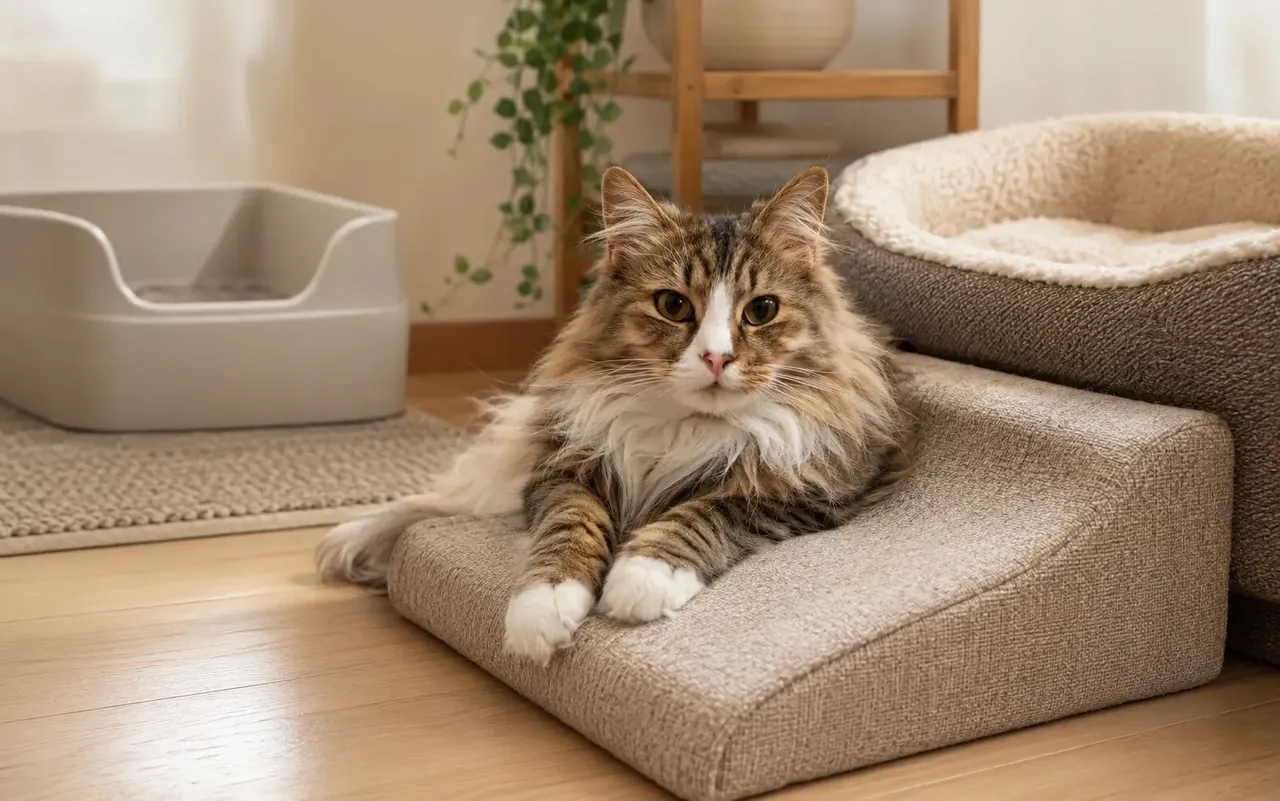
Add a broad stable step or gentle ramp with a gripping surface and a non-slip landing. Ensure the aid cannot wobble and that the cat can choose a floor-level bed or another route. Keep claws, cords and clutter away from the landing zone. Do not lift a painful cat without guidance or remove every familiar elevated place before offering safe alternatives.
Consider more than normal ageing
Joint pain is common, but hesitation can also relate to weakness, injury, vision change, balance problems or an uncertain surface. Arrange veterinary advice for a new or persistent change, especially with limping, reduced grooming, toileting difficulty, hiding, appetite change or reluctance to use stairs. Do not give human anti-inflammatory or pain medicine.
Recognise urgent change
Seek urgent veterinary help after a significant fall or trauma, or for sudden inability to stand, dragging limbs, severe pain, collapse or breathing difficulty. Sudden painful hind-leg weakness, especially with cold paws, is also an emergency. Keep the cat quiet in a secure carrier and call ahead rather than massaging limbs or testing movement.
Your quick checklist
Loading saved progress…
Three simple things you can do
You do not have to change everything today. Pick one step that feels realistic, try it and see how your cat responds.
- 1Observe your cat’s individual baseline.
- 2Make one gentle change at a time.
- 3Ask a qualified professional when health or safety is involved.
Common mistakes
×Waiting for a dramatic symptom instead of noticing smaller changes from the cat’s normal routine.
×Changing several things at once, making it difficult to learn what actually helped.
×Treating general guidance as a substitute for advice from a veterinarian who knows the individual cat.
Questions cat people ask
Does every cat follow the same rule?+
No. Age, health, history, temperament and environment all change what works for an individual.
When should I seek professional help?+
Seek veterinary advice for sudden, persistent or concerning changes and urgent help for breathing difficulty, collapse, seizures, poisoning or urinary obstruction signs.
Still looking for the right answer?
Search the full EverYes Cats encyclopedia with your own words — a symptom, food, behaviour, breed or everyday question.
Checked, dated and transparent
- Prepared by
- EverYes Cats editorial team
- Last updated
- Source checked
- Primary reference
- Cornell Feline Health Center: Is Your Cat Slowing Down? ↗
We begin with the named reference, rewrite the information in plain language and add practical cat-parent steps. Urgent health statements are checked against veterinary sources. This guide has not been individually reviewed by a veterinarian unless explicitly stated. It provides education, not diagnosis or treatment.
How we choose and use sources →
Spotted something unclear or outdated? Tell us so we can review it.
Loading your saved choice…
Older cats may value warmer beds as body condition, activity and joint comfort change. Offer controlled warmth with room to move away, while checking sudden or extreme heat seeking for illness or pain.
 02
 04
 05