Living safely with a deaf or hard-of-hearing cat
Communication and home design when sound is no longer reliable.
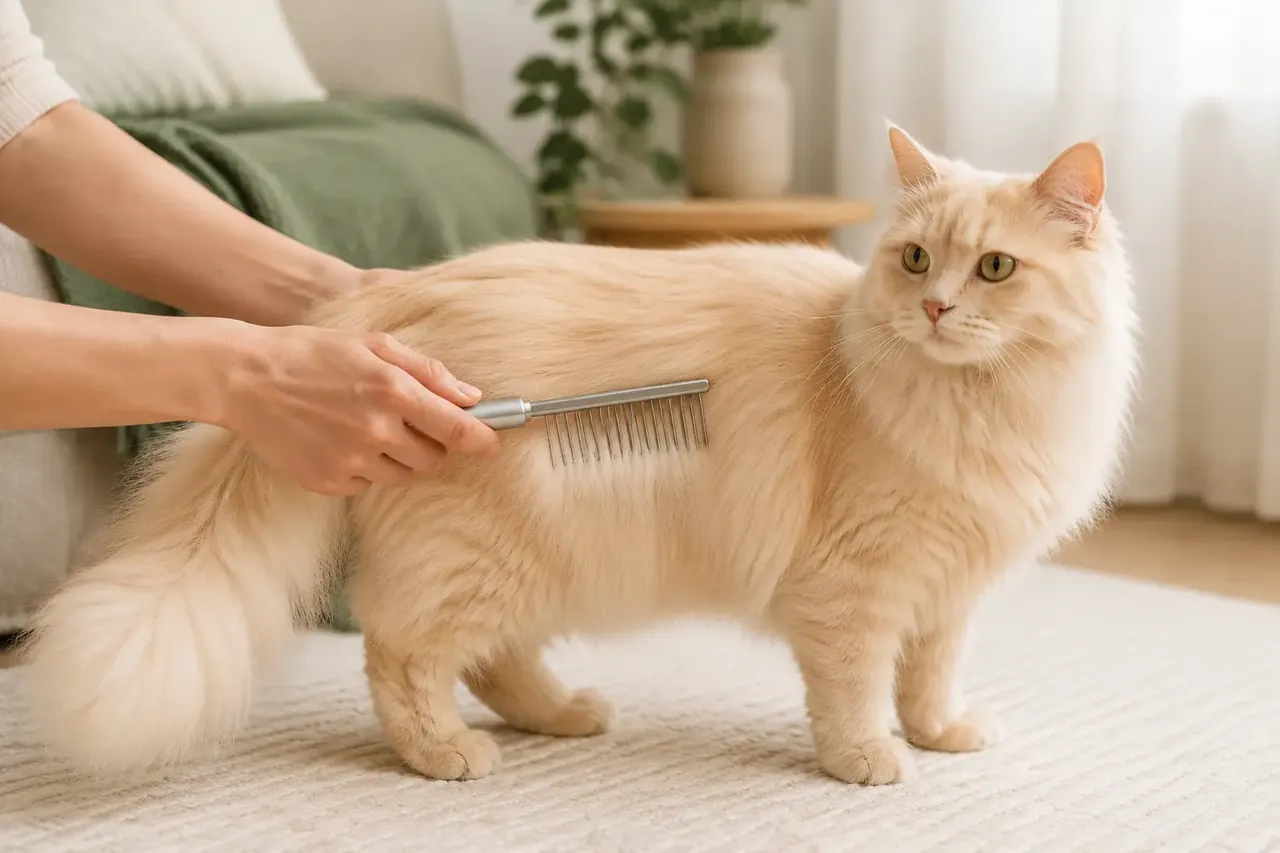 Topic illustration selected for this guide. Some learning images may be AI-assisted.
Living safely with a deaf or hard-of-hearing cat — the quick answer
✓ Approach where the cat can see you
✓ Use floor vibration and visual cues gently
✓ Keep deaf cats protected from traffic
✓ New hearing change deserves a veterinary check
Hearing loss may be lifelong or develop with age or disease. Deaf cats can live rich lives when people replace surprise with visible, tactile and environmental cues.
Confirm the change
A cat that sleeps through sounds, startles when touched or vocalises differently may have hearing loss, but ear disease and neurological problems can also alter responses.
Prevent startling
Walk into view, tap the floor lightly or switch a light on and off before approaching. Let sleeping cats notice your scent or vibration before touch.
Train visible signals
Pair a consistent hand signal or small light cue with rewards. Never shine bright light into the eyes or use vibration to frighten.
Increase physical safety
Use secure screens, identification and supervised outdoor access only. The cat cannot depend on horns, dogs or approaching vehicles as warnings.
Your quick checklist
Your progress is saved on this device.
Three simple things you can do
You do not have to change everything today. Pick one step that feels realistic, try it and see how your cat responds.
- 1Use floor vibrations, lights and visible hand signals to announce your approach.
- 2Wake the cat by gently vibrating the surface from a distance rather than touching suddenly.
- 3Keep a deaf cat indoors or in secure contained outdoor space.
Common mistakes
×Startling the sleeping cat with unexpected touch.
×Allowing unsupervised outdoor access where traffic and predators cannot be heard.
×Assuming deafness prevents training or a rich life.
Questions cat people ask
How can I tell if my cat is deaf?+
A cat may not respond to unseen sounds, may sleep deeply or vocalise differently, but veterinary assessment is needed to distinguish hearing loss from other causes.
Can deaf cats learn hand signals?+
Yes. Consistent visual cues, vibration and rewards can support communication and training very effectively.
Still looking for the right answer?
Search the full EverYes Cats encyclopedia with your own words — a symptom, food, behaviour, breed or everyday question.
Checked, dated and transparent
- Prepared by
- EverYes Cats editorial team
- Last updated
- 7 August 2026
- Source checked
- 7 August 2026
- Primary reference
- AAHA/AAFP Feline Life Stage Guidelines ↗
We begin with the named reference, rewrite the information in plain language and add practical cat-parent steps. Urgent health statements are checked against veterinary sources. This guide has not been individually reviewed by a veterinarian unless explicitly stated. It provides education, not diagnosis or treatment.
Spotted something unclear or outdated? Tell us so we can review it.
Your answer helps us improve the cat encyclopedia.
A senior-friendly home keeps food, water, litter, warmth and favourite resting places within easy reach. Small changes can protect independence without forcing a cat to stop using familiar spaces.