Early signs of cognitive change in older cats
Sleep disruption, disorientation, house-soiling and changed interaction can occur with cognitive dysfunction, but pain, sensory loss and medical disease must be assessed first.
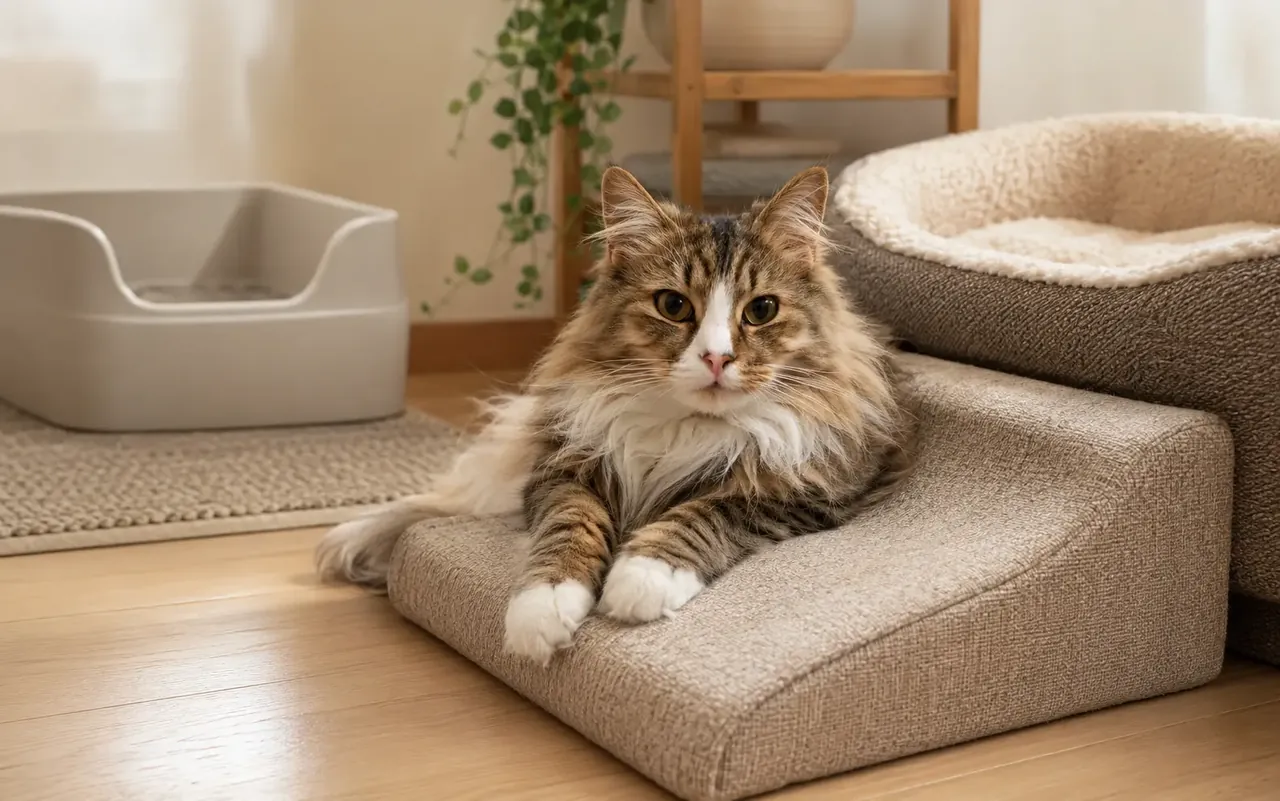 Topic illustration selected for this guide. Some learning images may be AI-assisted.
Early signs of cognitive change in older cats — the quick answer
✓ Disorientation, changed social interaction, sleep disruption, house-soiling and altered activity can form a pattern.
✓ Keep a dated log and videos, preserve familiar routines and arrange a thorough veterinary assessment.
✓ Sudden confusion is not assumed to be dementia and may require urgent investigation.
Cognitive dysfunction can affect older cats, but similar signs may be caused by treatable pain, sensory loss or disease.
The short answer
Cognitive dysfunction can affect older cats, but similar signs may be caused by treatable pain, sensory loss or disease.
Why it may happen
Disorientation, changed social interaction, sleep disruption, house-soiling and altered activity can form a pattern.
Read the whole situation
One behaviour rarely has one guaranteed meaning. Compare it with your cat’s age, health, posture, appetite, litter habits, environment and usual pattern before drawing a conclusion.
What to do now
Keep a dated log and videos, preserve familiar routines and arrange a thorough veterinary assessment.
What not to do
Avoid punishment, forced handling and sudden large changes. They can add fear while hiding the information that would help you understand the original cause.
When to contact a veterinarian
Sudden confusion is not assumed to be dementia and may require urgent investigation.
Keep a useful record
Write down when it started, how often it happens and what immediately precedes and follows it. Photos, weights or short videos can make a veterinary or behaviour consultation more productive.
Track a pattern across daily life
Keep a dated record of navigation, vocalising, sleep, litter use, appetite, play and social contact. Film safe examples and note whether signs are gradual or sudden. Consistent records help separate a repeating pattern from one unusual day.
DEEPER GUIDE1 more detailed sectionsOpen +
Preserve familiarity while seeking answers
Keep furniture and resources stable, add gentle night lighting and make routes short and non-slip. Do not punish confusion or accidents. Arrange a thorough veterinary assessment, and treat sudden confusion, collapse, circling or vision change as potentially urgent.
Your quick checklist
Your progress is saved on this device.
Three simple things you can do
You do not have to change everything today. Pick one step that feels realistic, try it and see how your cat responds.
- 1Track disorientation, interaction, sleep, house-soiling and activity over several weeks.
- 2Keep routes predictable with night lights and easy resources.
- 3Ask the veterinarian to rule out pain, sensory loss and medical disease.
Common mistakes
×Assuming confusion is untreatable old age.
×Rearranging the home to stimulate the cat.
×Punishing nighttime calling or accidents.
Questions cat people ask
What are signs of cognitive dysfunction in cats?+
Disorientation, changed social interaction, sleep disruption, house-soiling, altered activity and anxiety can occur, but other diseases can look similar.
Can feline cognitive dysfunction be helped?+
Environmental support, treatment of concurrent illness and an individual veterinary plan may improve comfort and function, especially when changes are recognised early.
Still looking for the right answer?
Search the full EverYes Cats encyclopedia with your own words — a symptom, food, behaviour, breed or everyday question.
Checked, dated and transparent
- Prepared by
- EverYes Cats editorial team
- Last updated
- 13 August 2026
- Source checked
- 13 August 2026
- Primary reference
- AAHA/AAFP Feline Life Stage Guidelines ↗
We begin with the named reference, rewrite the information in plain language and add practical cat-parent steps. Urgent health statements are checked against veterinary sources. This guide has not been individually reviewed by a veterinarian unless explicitly stated. It provides education, not diagnosis or treatment.
Spotted something unclear or outdated? Tell us so we can review it.
Your answer helps us improve the cat encyclopedia.
A modest stable height can help some cats eat comfortably, but there is no single correct setup. A practical guide to what matters, what to do and when to seek help.