Why Do My Cats Move Carefully Past Each Other in a Narrow Hallway?
A narrow route removes easy escape choices, so even cats who coexist peacefully may slow, stare or wait.
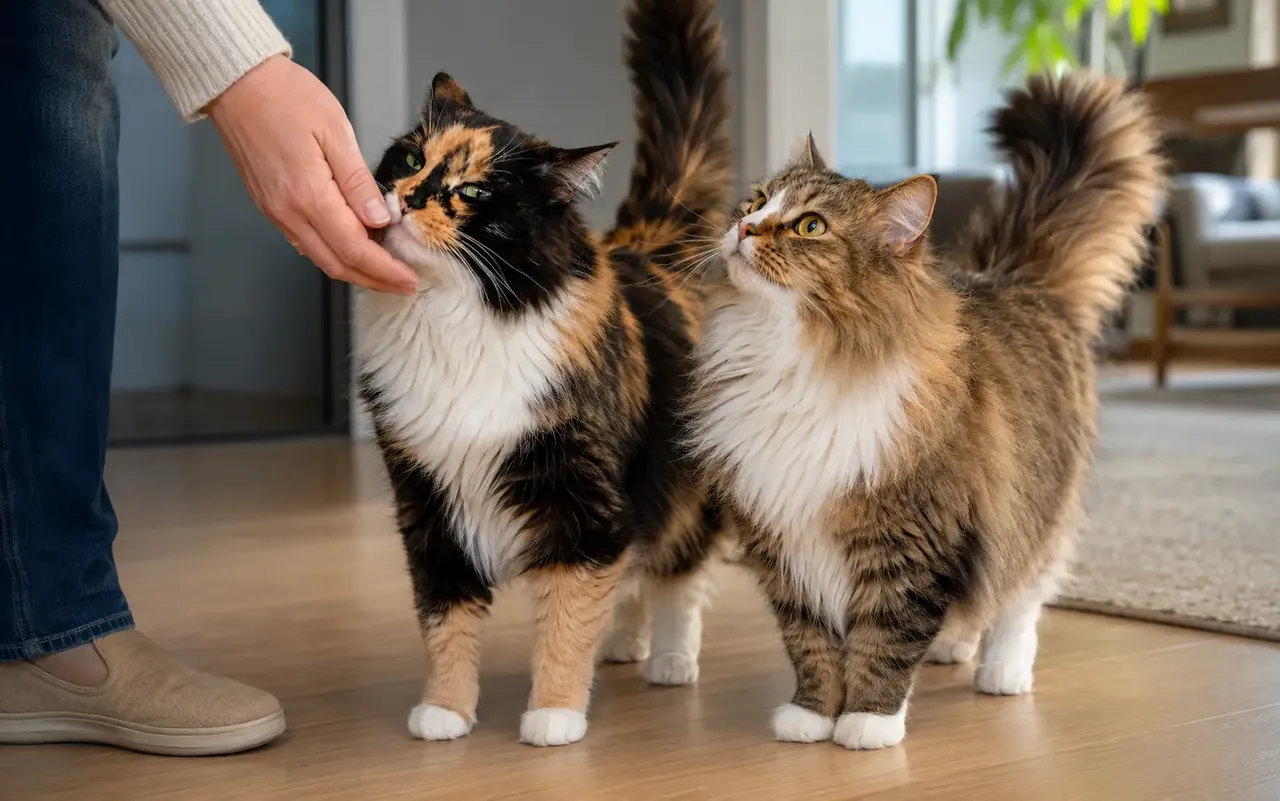 Topic illustration selected for this guide. Some learning images may be AI-assisted.
Why Do My Cats Move Carefully Past Each Other in a Narrow Hallway — the quick answer
✓ A narrow route removes easy escape choices, so even cats who coexist peacefully may slow, stare or wait.
✓ Create alternate routes, add visual breaks and keep essential resources out of bottlenecks.
✓ Chasing, fighting, hiding or loss of access to food or litter needs behavioural help.
A narrow route removes easy escape choices, so even cats who coexist peacefully may slow, stare or wait. The safest interpretation begins with your cat's normal pattern and the full context.
The quick answer
A narrow route removes easy escape choices, so even cats who coexist peacefully may slow, stare or wait.
What to observe first
Watch who stops, turns away or retreats and whether the hallway leads to food, litter or a favourite room.
Why context matters
Timing, body language, appetite, water intake, litter use, mobility and household changes help explain what the behaviour means.
What to do now
Create alternate routes, add visual breaks and keep essential resources out of bottlenecks.
Try one change at a time
Keep the setup calm, preserve choice and test one safe adjustment before changing anything else.
When to contact a veterinarian
Chasing, fighting, hiding or loss of access to food or litter needs behavioural help.
What to record
Note frequency, timing and what happens immediately before and after. Track food, water, weight and litter output when relevant.
The practical takeaway
Begin with this step: Create alternate routes, add visual breaks and keep essential resources out of bottlenecks. Use the warning guidance if the pattern is sudden, persistent or paired with illness signs.
Your quick checklist
Your progress is saved on this device.
Three simple things you can do
You do not have to change everything today. Pick one step that feels realistic, try it and see how your cat responds.
- 1Observe your cat’s individual baseline.
- 2Make one gentle change at a time.
- 3Ask a qualified professional when health or safety is involved.
Common mistakes
×Waiting for a dramatic symptom instead of noticing smaller changes from the cat’s normal routine.
×Changing several things at once, making it difficult to learn what actually helped.
×Treating general guidance as a substitute for advice from a veterinarian who knows the individual cat.
Questions cat people ask
Does every cat follow the same rule?+
No. Age, health, history, temperament and environment all change what works for an individual.
When should I seek professional help?+
Seek veterinary advice for sudden, persistent or concerning changes and urgent help for breathing difficulty, collapse, seizures, poisoning or urinary obstruction signs.
Still looking for the right answer?
Search the full EverYes Cats encyclopedia with your own words — a symptom, food, behaviour, breed or everyday question.
Checked, dated and transparent
- Prepared by
- EverYes Cats editorial team
- Last updated
- 15 August 2026
- Source checked
- 15 August 2026
- Primary reference
- AAHA/AAFP Feline Life Stage Guidelines ↗
We begin with the named reference, rewrite the information in plain language and add practical cat-parent steps. Urgent health statements are checked against veterinary sources. This guide has not been individually reviewed by a veterinarian unless explicitly stated. It provides education, not diagnosis or treatment.
Spotted something unclear or outdated? Tell us so we can review it.
Your answer helps us improve the cat encyclopedia.
Cats may share a preferred box, but one popular tray does not make the extras unnecessary. Learn what to observe, what to try safely and when to seek help.