When a cat introduction went badly: reset the process
A frightening first meeting does not prove two cats can never coexist. Separate them completely, restore normal eating and resting, then rebuild from scent to sight and shared space only while both cats remain relaxed and able to disengage.
 Topic illustration selected for this guide. Some learning images may be AI-assisted.
When a cat introduction went badly: reset the process — the quick answer
✓ Separate fully after a bad encounter
✓ Rebuild from scent and closed-door routines
✓ Advance only while both cats can eat and relax
✓ Never use bare hands to break up a fight
A frightening first meeting does not mean two cats can never coexist. It does mean the process should reset. Repeated forced contact can rehearse fear and aggression, while separation creates room for calmer learning.
End contact and let arousal settle
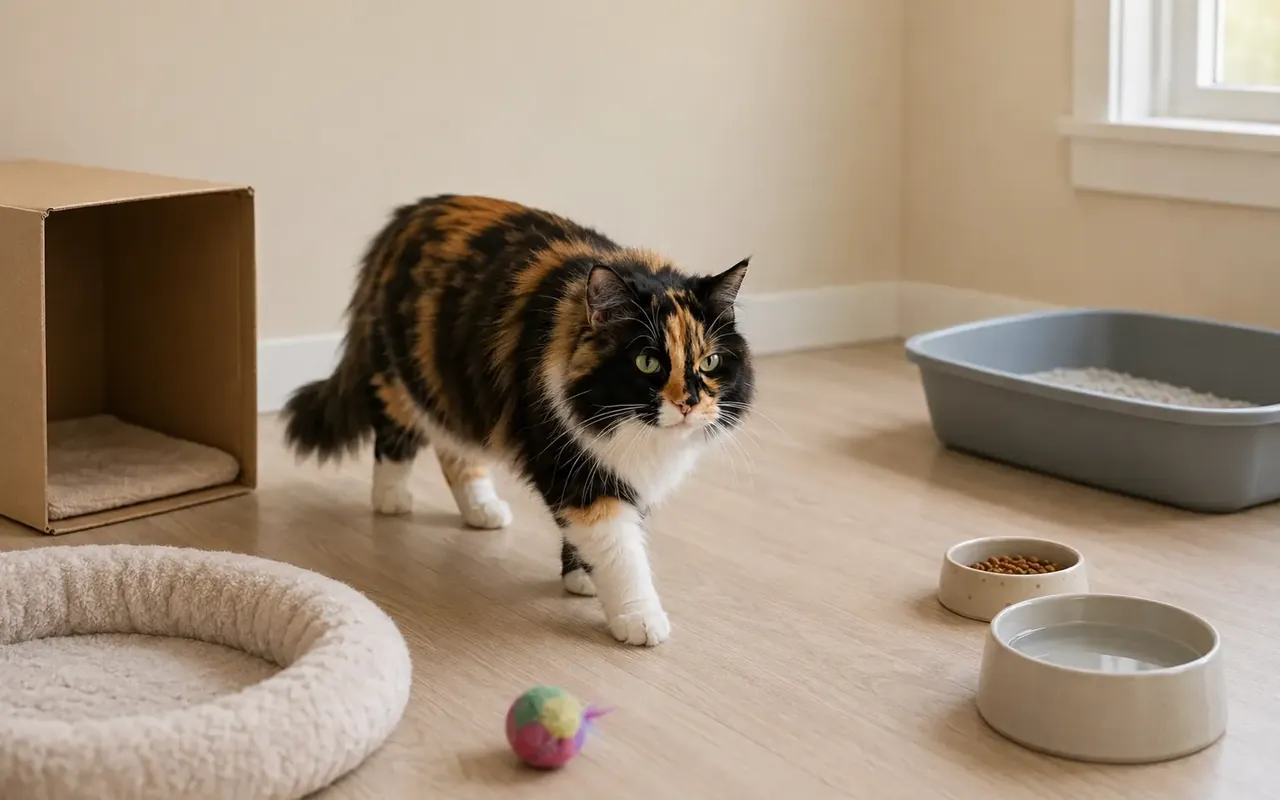
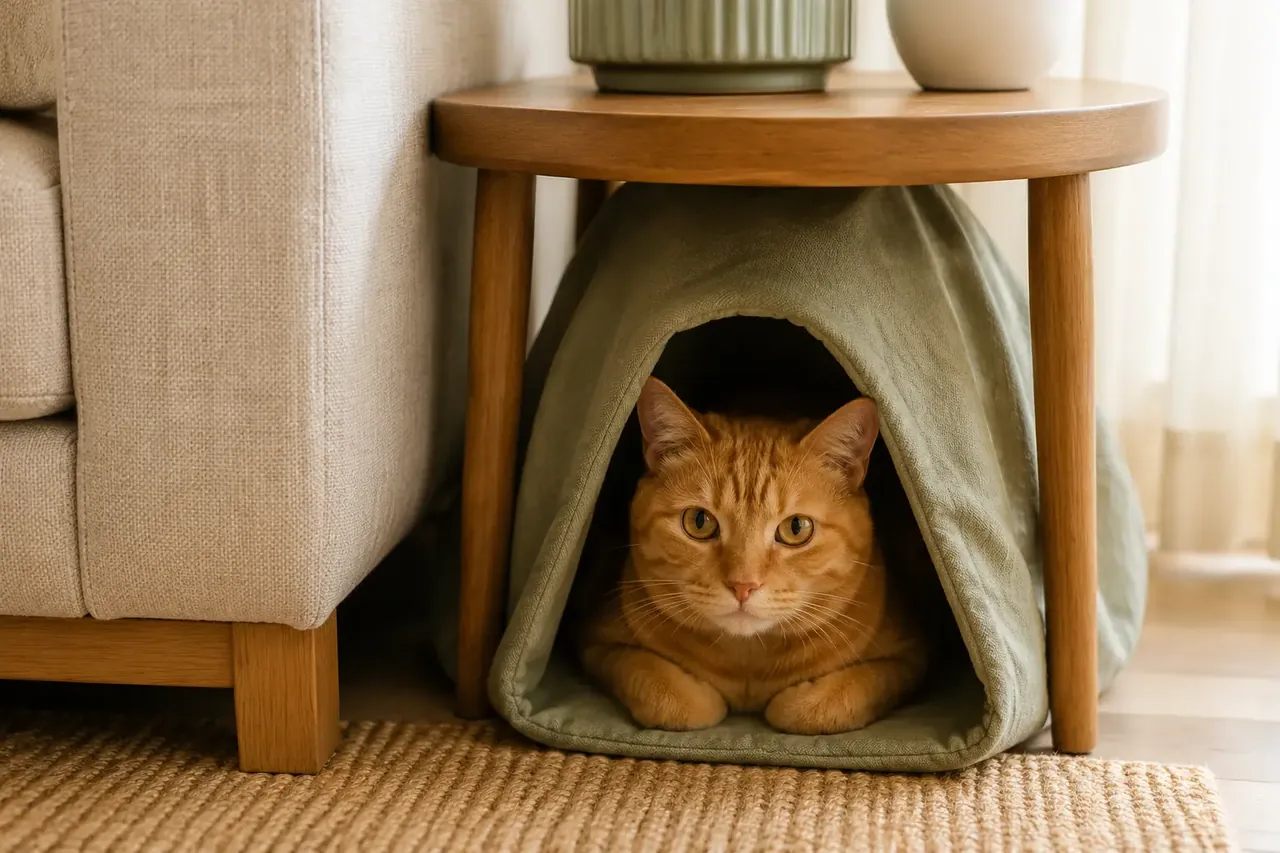
Place each cat behind a secure closed door with separate food, water, litter, scratching, hiding and elevated resting options. Do not hold one cat near the other or allow repeated encounters through a gap. Recovery may take days; calm behaviour, normal eating and ordinary litter use matter more than a fixed timetable.
Rule out pain and protect injuries
Arrange veterinary care for bites, scratches, limping, appetite loss or a sudden behaviour change. Pain and illness can reduce tolerance and complicate introductions. Do not punish hissing or growling, and never place bare hands between fighting cats; use distance and a large visual barrier when safe separation is necessary.
Restart with low-pressure scent exchange
Swap bedding or soft cloths between rooms and pair the other cat's scent with food, play or rest at a distance each cat accepts. Exchange room access without face-to-face contact only when secure. If either cat avoids the item, stops eating, sprays, growls or patrols, increase distance and slow down.
Build a positive closed-door routine
Offer meals or valued activities on opposite sides of the closed door, beginning far enough away for both cats to eat normally. Gradually reduce distance across successful sessions. The goal is not silence at any cost but relaxed bodies, ordinary appetite and the ability to leave without being followed.
Add brief protected visual access
Use a secure screen, tall gates with no climb-through gaps or another setup that prevents physical contact. Begin at distance with short sessions and multiple escape routes. End before fixed staring, crouching, tail lashing, blocking, chasing or food refusal develops; cover the barrier and return to an easier step after tension.
Share space gradually and seek help early
When repeated visual sessions remain calm, allow a short supervised room session with high routes, hiding and more than one exit. Keep key resources separated throughout the home. Persistent stalking, blocking, spraying, injury or one cat living in hiding warrants veterinary assessment and help from a qualified feline behaviour professional.
Your quick checklist
Loading saved progress…
Three simple things you can do
You do not have to change everything today. Pick one step that feels realistic, try it and see how your cat responds.
- 1After a bad encounter, separate the cats fully with complete resources behind a secure door.
- 2Restart with scent swapping and closed-door meals at a distance both cats accept.
- 3Add brief visual access through a secure barrier only while both cats can eat, explore and disengage.
Common mistakes
×Trying another face-to-face meeting while both cats remain aroused.
×Holding one cat near the other or forcing them to share a small space.
×Using bare hands to separate a fight.
Questions cat people ask
Can cats recover after a bad first introduction?+
Often yes, but the process should reset rather than continue from the frightening meeting. Decompression and gradual scent work can rebuild safer associations.
How long should reintroduction take?+
There is no fixed schedule. Advance only while both cats remain relaxed, eat normally and can look away; step back after staring, crouching, growling or food refusal.
Still looking for the right answer?
Search the full EverYes Cats encyclopedia with your own words — a symptom, food, behaviour, breed or everyday question.
Checked, dated and transparent
- Prepared by
- EverYes Cats editorial team
- Last updated
- Source checked
- Primary reference
- FelineVMA: Introducing a New Cat ↗
We begin with the named reference, rewrite the information in plain language and add practical cat-parent steps. Urgent health statements are checked against veterinary sources. This guide has not been individually reviewed by a veterinarian unless explicitly stated. It provides education, not diagnosis or treatment.
How we choose and use sources →
Spotted something unclear or outdated? Tell us so we can review it.
Loading your saved choice…
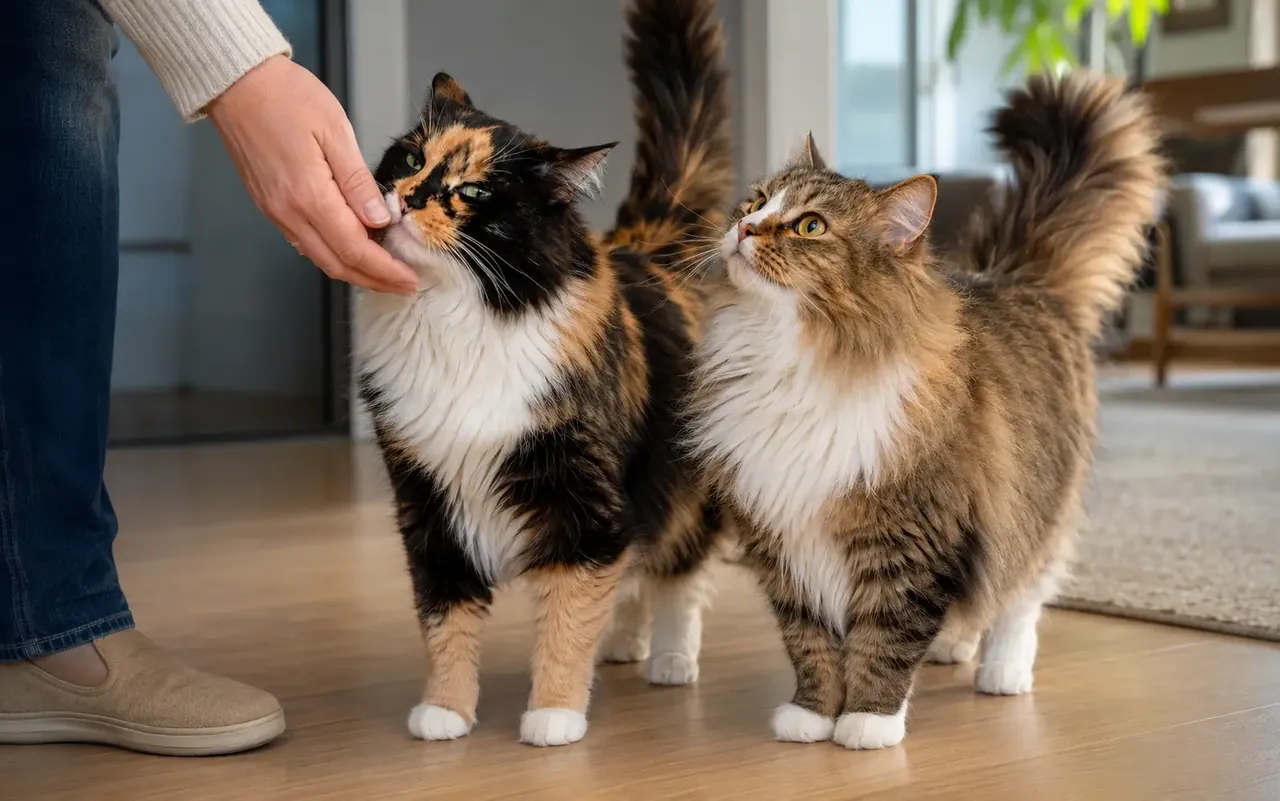
A new cat may use the resident cat’s movement as information about meals, quiet periods and safe rooms. Copying is useful only when the newcomer can also choose independent routes and resources.
 01
 02
 03
 06