Why cats hide—and when to worry
Hiding is a normal safety and rest behaviour, but new or prolonged hiding can be an early sign of pain, fear or illness. Compare appetite, litter use, movement and social contact with the cat’s baseline.
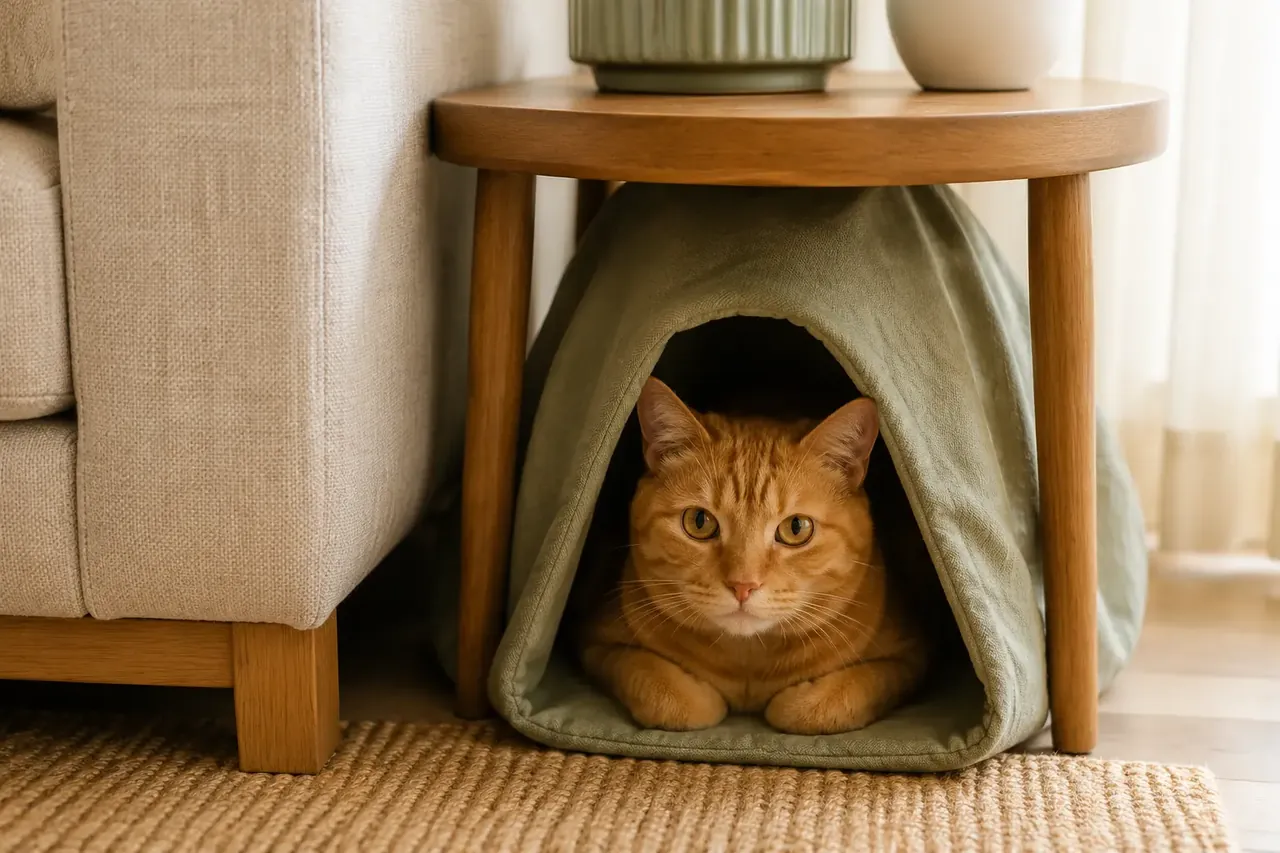 Topic illustration selected for this guide. Some learning images may be AI-assisted.
Why cats hide—and when to worry — the quick answer
✓ Every cat needs an undisturbed hiding place
✓ New or prolonged hiding deserves attention
✓ Never drag a frightened cat from cover
Hiding is a normal way for cats to rest and feel protected, but a sudden change in hiding habits can also signal fear, pain or illness.
Normal retreat
Many cats choose a covered bed, box or quiet shelf for deep rest. A cat that emerges normally to eat, play and socialize is usually using the space well.
Look for change
Notice whether hiding began suddenly and whether appetite, litter use, movement or grooming changed at the same time.
Make safety easy
Offer several quiet hiding options and let the cat come out by choice. Contact a veterinarian when hiding is new, prolonged or paired with other changes.
Assess what happens around the hiding
A cat using a favourite box may still emerge normally to eat, play and toilet. Concern rises when the cat misses meals, stays tense, moves poorly, breathes differently, avoids the litter box or chooses an unusual inaccessible place.
Make retreat safe without losing oversight
Offer covered beds or boxes in quiet places where the cat cannot be trapped by another pet. Keep food, water and litter accessible, but do not drag the cat out. Use calm checks and contact a veterinarian when the change is sudden or paired with another sign.
Your quick checklist
Your progress is saved on this device.
Three simple things you can do
You do not have to change everything today. Pick one step that feels realistic, try it and see how your cat responds.
- 1Provide several safe hiding places with more than one route where possible.
- 2Observe appetite, litter use, mobility and when the hiding began rather than dragging the cat out.
- 3Reduce noise and pressure, then let the cat choose when to re-emerge.
Common mistakes
×Pulling a frightened cat from a hiding place.
×Blocking every hiding option instead of providing safer alternatives.
×Ignoring sudden or persistent hiding accompanied by health or behaviour changes.
Questions cat people ask
Is hiding normal for cats?+
Hiding can be normal rest or coping, especially after change. A sudden increase, persistent withdrawal or accompanying appetite, toileting or mobility change needs attention.
Should I coax my cat out with food?+
You can place food at a comfortable distance, but do not use it to trap or grab the cat. Give choice and arrange a veterinary check if health may be involved.
Still looking for the right answer?
Search the full EverYes Cats encyclopedia with your own words — a symptom, food, behaviour, breed or everyday question.
Checked, dated and transparent
- Prepared by
- EverYes Cats editorial team
- Last updated
- 13 August 2026
- Source checked
- 13 August 2026
- Primary reference
- FelineVMA Healthy Feline Environment ↗
We begin with the named reference, rewrite the information in plain language and add practical cat-parent steps. Urgent health statements are checked against veterinary sources. This guide has not been individually reviewed by a veterinarian unless explicitly stated. It provides education, not diagnosis or treatment.
Spotted something unclear or outdated? Tell us so we can review it.
Your answer helps us improve the cat encyclopedia.
Brief cat zoomies are usually normal bursts of sprinting after rest, play or litter-box use. Make the route safe and use daily hunt-style play; investigate episodes that include distress, pain or disorientation.