Is it good to play with a cat before breakfast?
A short catchable play session before a measured meal can create a predictable hunt–eat–rest routine. Keep it voluntary and moderate, and never delay necessary food, medication or care to complete the sequence.
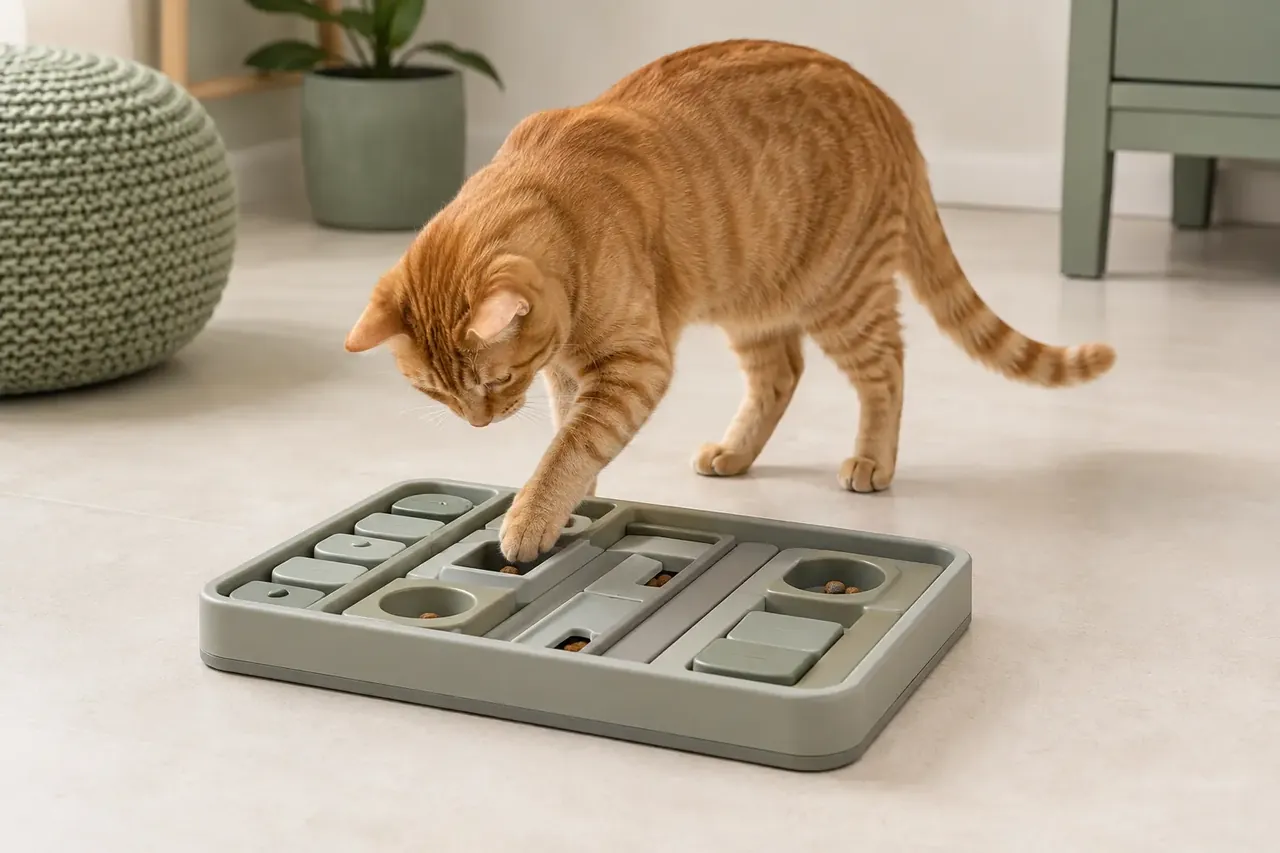 Topic illustration selected for this guide. Some learning images may be AI-assisted.
Is it good to play with a cat before breakfast — the quick answer
✓ A short hunt-like play session before food can fit a natural sequence and support predictable activity.
✓ Observe: Watch excitement, frustration, breathing and whether the routine delays needed food or medication.
✓ Try this: Use brief catchable play and finish with the measured meal.
A short hunt-like play session before food can fit a natural sequence and support predictable activity. The useful question is not only what the moment resembles, but whether it fits this cat’s normal pattern. Context, frequency, recovery and accompanying changes make the interpretation safer and more accurate.
Match play to the individual cat
Young healthy cats may enjoy faster chase, while seniors, kittens and cats with heart, breathing, joint or neurological conditions need a gentler plan. Begin with a few minutes and watch coordination, recovery and willingness rather than chasing a fixed duration.
Make the hunt achievable
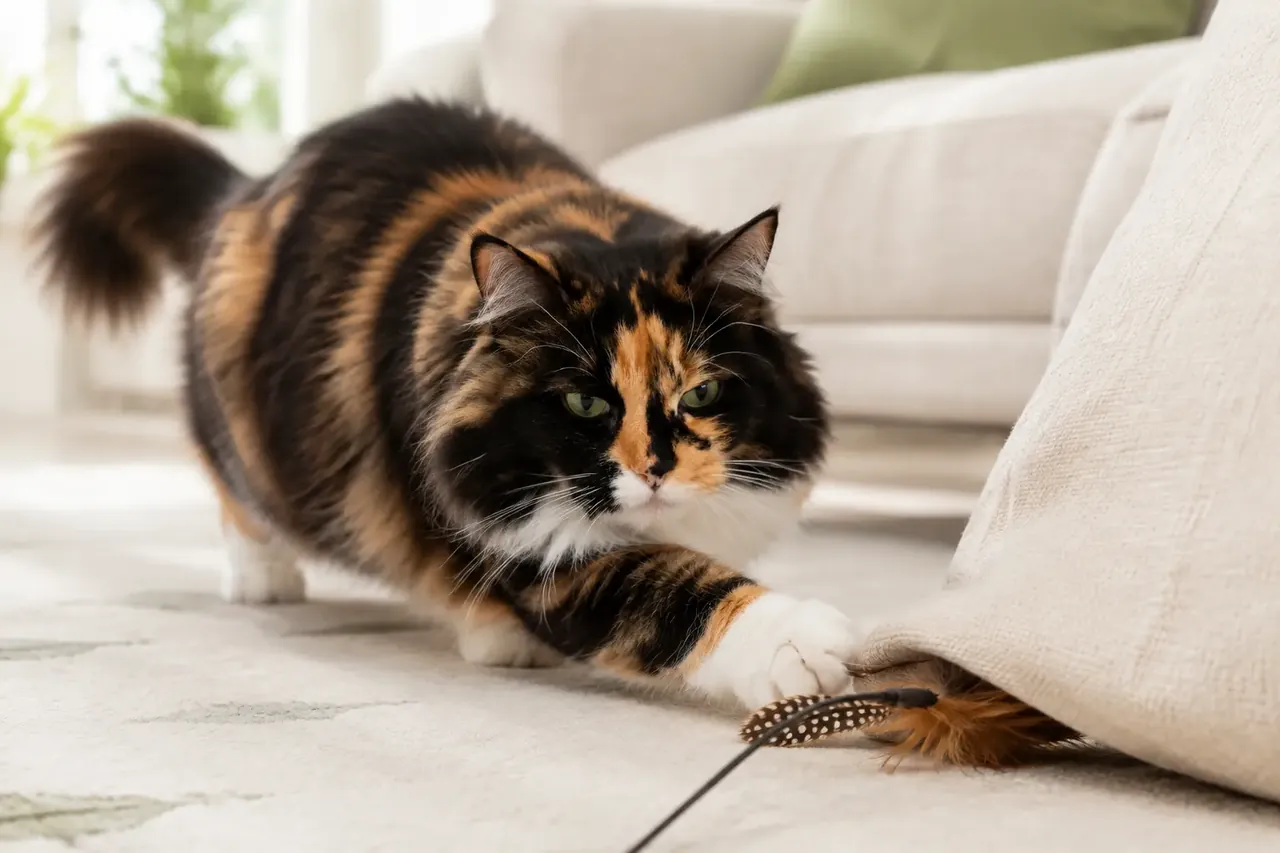
Move a wand toy away, hide it, pause and allow several catches. Avoid frantic nonstop circles and never use hands as prey. Store string and wand toys after the session. A final catch before the measured breakfast can end the activity without leaving the cat searching.
Keep the meal schedule nutritionally sound
Use the cat's normal complete food and count any training rewards within the daily allowance. Do not withhold food from a kitten, underweight cat, diabetic cat or a cat with medication timing needs to make it play first. Follow the individual veterinary feeding plan.
Avoid turning breakfast into pressure
If the cat prefers to eat first or walks away, respect that choice. Play can occur at another time. Shift a strongly learned morning schedule in small steps, and use calm independent activities when early demand wakes the household.
When to stop and seek advice
Stop for panting, coughing, weakness, uncoordinated movement or distress. Open-mouth breathing or collapse is urgent. A sudden loss of interest in both play and food, repeated vomiting or weight change needs veterinary assessment.
Your quick checklist
Loading saved progress…
Three simple things you can do
You do not have to change everything today. Pick one step that feels realistic, try it and see how your cat responds.
- 1Observe your cat’s individual baseline.
- 2Make one gentle change at a time.
- 3Ask a qualified professional when health or safety is involved.
Common mistakes
×Waiting for a dramatic symptom instead of noticing smaller changes from the cat’s normal routine.
×Changing several things at once, making it difficult to learn what actually helped.
×Treating general guidance as a substitute for advice from a veterinarian who knows the individual cat.
Questions cat people ask
Does every cat follow the same rule?+
No. Age, health, history, temperament and environment all change what works for an individual.
When should I seek professional help?+
Seek veterinary advice for sudden, persistent or concerning changes and urgent help for breathing difficulty, collapse, seizures, poisoning or urinary obstruction signs.
Still looking for the right answer?
Search the full EverYes Cats encyclopedia with your own words — a symptom, food, behaviour, breed or everyday question.
Checked, dated and transparent
- Prepared by
- EverYes Cats editorial team
- Last updated
- Source checked
- Primary reference
- AAHA/AAFP Feline Life Stage Guidelines ↗
We begin with the named reference, rewrite the information in plain language and add practical cat-parent steps. Urgent health statements are checked against veterinary sources. This guide has not been individually reviewed by a veterinarian unless explicitly stated. It provides education, not diagnosis or treatment.
How we choose and use sources →
Spotted something unclear or outdated? Tell us so we can review it.
Loading your saved choice…
An immediate catch can build confidence and complete part of the hunting sequence. Let the cat win, then vary hiding, pauses and distance instead of pulling the toy away or making every chase impossible.
 01
 03
 05