Why a cat may stop using the litter box
A cat toileting outside the box is communicating a problem, not taking revenge. Sudden changes need a veterinary check while you improve access, cleanliness and safety.
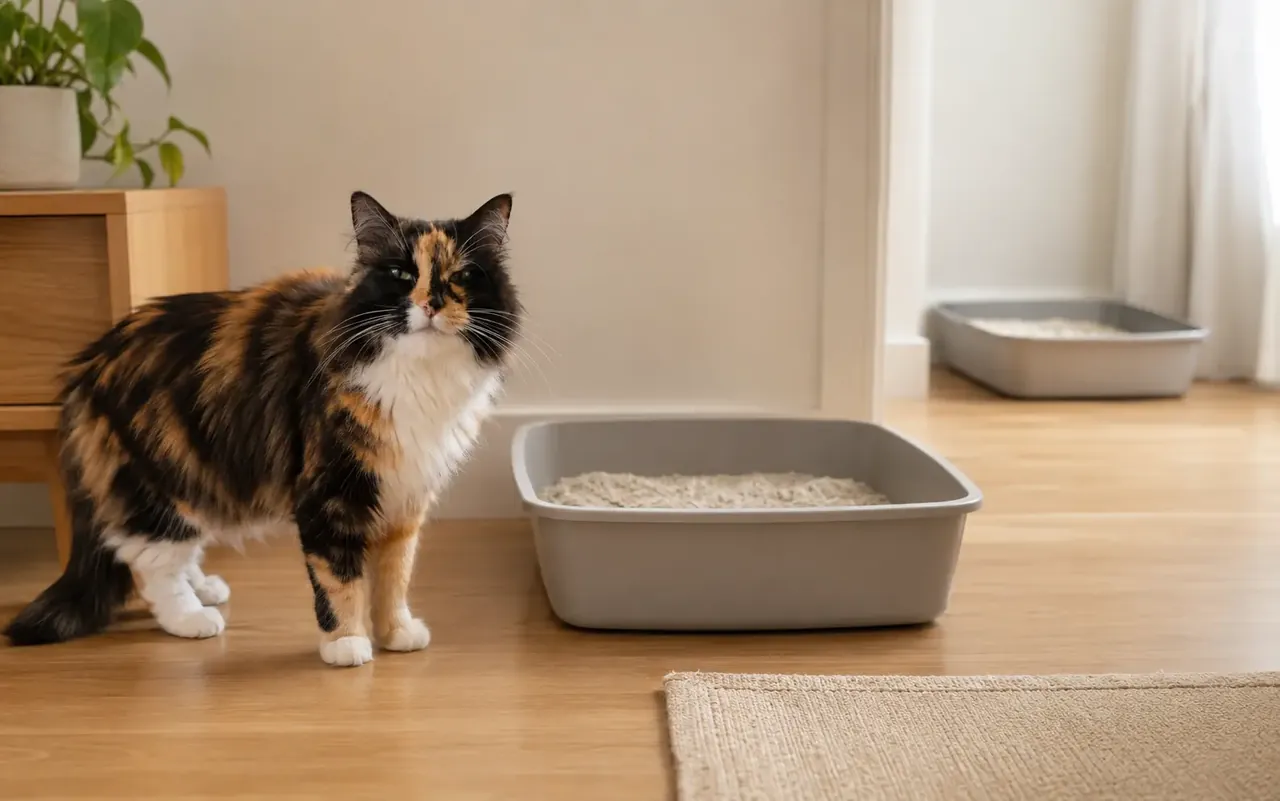 Topic illustration selected for this guide. Some learning images may be AI-assisted.
Why a cat may stop using the litter box — the quick answer
✓ Rule out medical causes promptly
✓ Keep boxes clean, quiet and easy to reach
✓ Offer one box per cat plus one extra
Litter box avoidance is communication, not revenge. Sudden changes can reflect pain or illness, so a veterinary check is an important first step.
Health comes first
Urinary discomfort, constipation, arthritis and other problems can change toileting behavior. Straining to urinate, especially in a male cat, is an emergency.
Review the setup
Many cats prefer a large uncovered box, unscented litter and a quiet location that does not feel trapped.
Clean without punishment
Use an enzymatic cleaner on accidents and avoid scolding. Add suitable boxes and rebuild a calm, predictable routine.
Separate urine, stool and spraying
A puddle on a horizontal surface, stool outside the tray and a small amount of urine on a vertical surface are different patterns. Record location, posture and amount without punishing the cat. Repeated straining, frequent trips or little to no urine is an emergency, especially in male cats.
Run a practical litter-box reset
Offer one large open tray per cat plus one extra, spread across separate quiet locations. Use unscented litter, scoop at least daily and keep trays away from food, noisy appliances and ambush points. Add a low-entry tray for kittens, seniors or cats with limited mobility.
Your quick checklist
Your progress is saved on this device.
Three simple things you can do
You do not have to change everything today. Pick one step that feels realistic, try it and see how your cat responds.
- 1Arrange a veterinary check for a sudden change.
- 2Add a large clean box in a quiet, accessible location.
- 3Keep a log of surface, location and timing of accidents.
Common mistakes
×Assuming the cat is being spiteful.
×Using strong fragrance or changing litter abruptly.
×Placing every box together so they function like one resource.
Questions cat people ask
Should I place a box where the accident happened?+
Temporarily doing so can help re-establish the correct surface. The box can later be moved gradually if the cat remains reliable.
How often should litter be scooped?+
At least daily is a useful starting point, and some cats need more frequent cleaning. Wash the box regularly with a mild unscented product.
Still looking for the right answer?
Search the full EverYes Cats encyclopedia with your own words — a symptom, food, behaviour, breed or everyday question.
Checked, dated and transparent
- Prepared by
- EverYes Cats editorial team
- Last updated
- 8 August 2026
- Source checked
- 8 August 2026
- Primary reference
- FelineVMA Healthy Feline Environment ↗
We begin with the named reference, rewrite the information in plain language and add practical cat-parent steps. Urgent health statements are checked against veterinary sources. This guide has not been individually reviewed by a veterinarian unless explicitly stated. It provides education, not diagnosis or treatment.
Spotted something unclear or outdated? Tell us so we can review it.
Your answer helps us improve the cat encyclopedia.
Hiding is a normal safety and rest behaviour, but new or prolonged hiding can be an early sign of pain, fear or illness. Compare appetite, litter use, movement and social contact with the cat’s baseline.