Why does my cat prefer the floor to the cat tree?
The floor may be cooler, steadier, easier to reach or better placed than the cat tree. Improve stability, routes and location while keeping choices at several heights; floor use is not a failure unless it reflects a new mobility change.
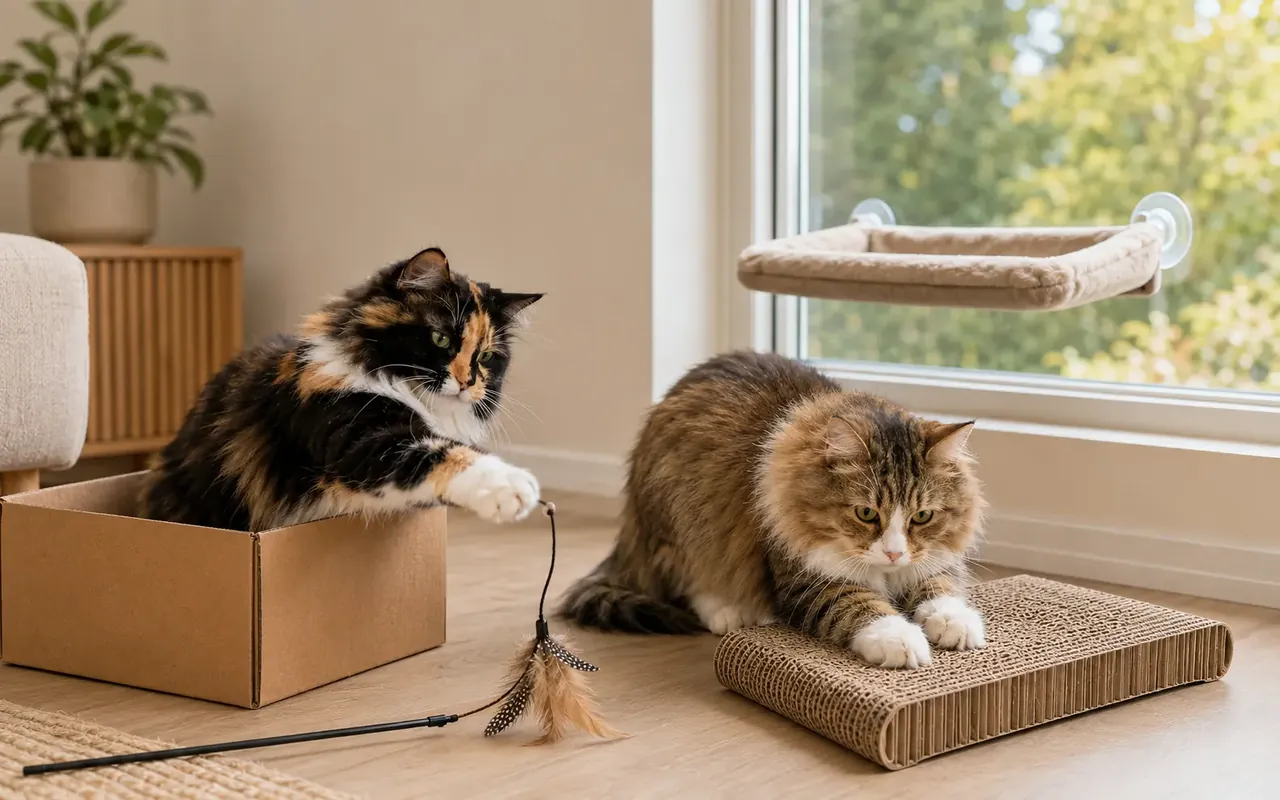 Topic illustration selected for this guide. Some learning images may be AI-assisted.
Why does my cat prefer the floor to the cat tree — the quick answer
✓ Temperature, stability, location, mobility and the need for cover can matter more than height.
✓ Observe: Compare surface warmth, wobble, route difficulty and household activity.
✓ Try this: Move or stabilize the tree and provide choices at several heights instead of forcing use.
Temperature, stability, location, mobility and the need for cover can matter more than height. The useful question is not only what the moment resembles, but whether it fits this cat’s normal pattern. Context, frequency, recovery and accompanying changes make the interpretation safer and more accurate.
Compare location before height
Check where people spend time, sunlight, drafts, outdoor views, noise and escape routes. A tree in an isolated, hot or busy corner may lose to a central cool floor. Move only one element at a time and allow several days for voluntary investigation.
Test stability and surface grip
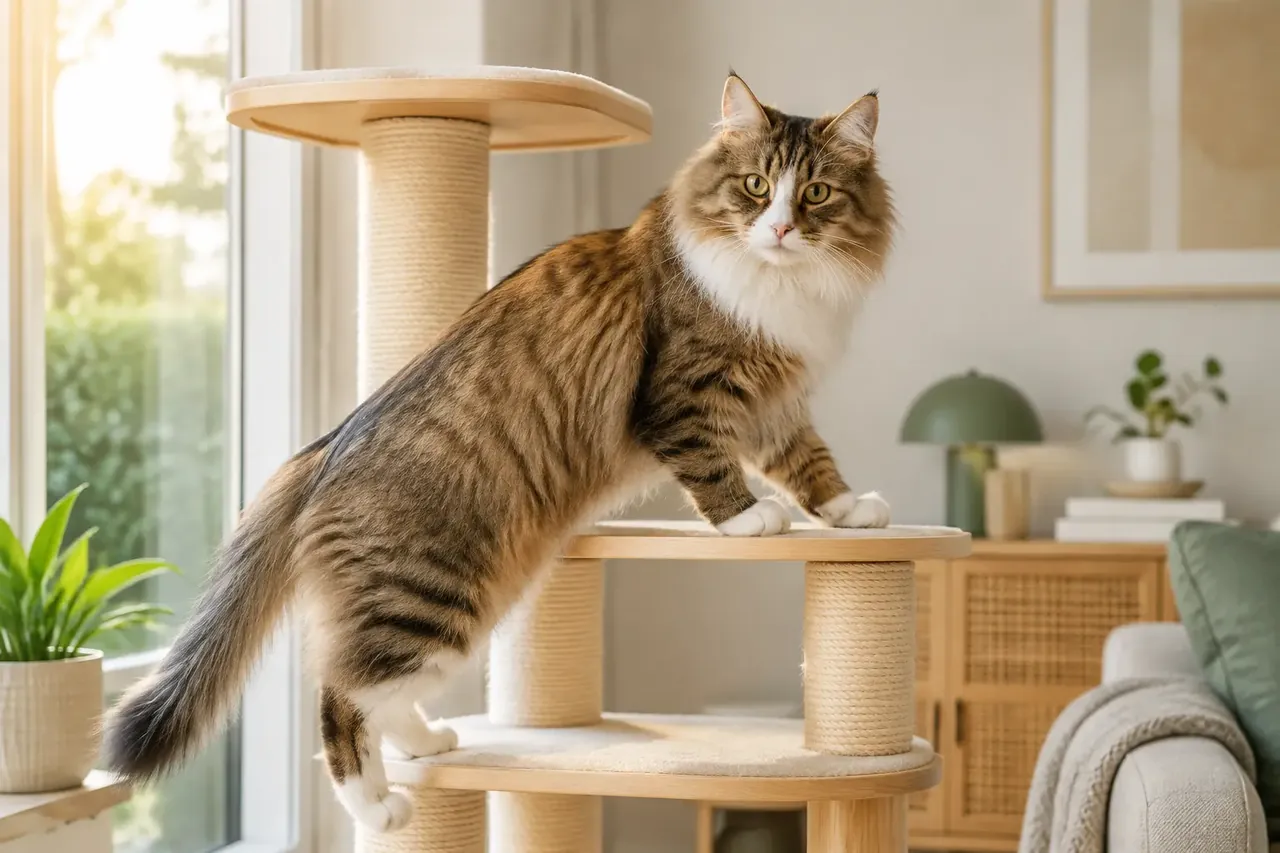
Press each platform from different directions and tighten components according to instructions. The base should not rock or slide, and fabric should not spin or bunch. Anchor tall furniture when required. Never place a tree where a fall could reach glass, a heater, stairs or an open window.
Make the route physically easy
Check jump height, platform size and whether the cat can turn around and descend without backing into a dead end. Add stable intermediate steps and nonslip access for kittens, seniors or cats with reduced mobility. Keep claws and paw fur maintained without forcing handling.
Keep good floor-level choices
Provide a clean bed, cardboard scratcher or covered hide at floor level as well as higher options. Cats need choice, not a requirement to use purchased furniture. Reward calm exploration but do not lift the cat onto the tree or remove every preferred floor bed.
When floor preference signals a change
Veterinary assessment is appropriate for a sudden stop in climbing with stiffness, hesitation, missed jumps, poor grooming, weakness or pain. A fall, inability to bear weight, collapse or breathing difficulty needs urgent care.
Your quick checklist
Loading saved progress…
Three simple things you can do
You do not have to change everything today. Pick one step that feels realistic, try it and see how your cat responds.
- 1Observe your cat’s individual baseline.
- 2Make one gentle change at a time.
- 3Ask a qualified professional when health or safety is involved.
Common mistakes
×Waiting for a dramatic symptom instead of noticing smaller changes from the cat’s normal routine.
×Changing several things at once, making it difficult to learn what actually helped.
×Treating general guidance as a substitute for advice from a veterinarian who knows the individual cat.
Questions cat people ask
Does every cat follow the same rule?+
No. Age, health, history, temperament and environment all change what works for an individual.
When should I seek professional help?+
Seek veterinary advice for sudden, persistent or concerning changes and urgent help for breathing difficulty, collapse, seizures, poisoning or urinary obstruction signs.
Still looking for the right answer?
Search the full EverYes Cats encyclopedia with your own words — a symptom, food, behaviour, breed or everyday question.
Checked, dated and transparent
- Prepared by
- EverYes Cats editorial team
- Last updated
- Source checked
- Primary reference
- FelineVMA: Feline Environmental Needs Guidelines ↗
We begin with the named reference, rewrite the information in plain language and add practical cat-parent steps. Urgent health statements are checked against veterinary sources. This guide has not been individually reviewed by a veterinarian unless explicitly stated. It provides education, not diagnosis or treatment.
How we choose and use sources →
Spotted something unclear or outdated? Tell us so we can review it.
Loading your saved choice…
A rainy day can include short scent searches, catchable prey play, cardboard exploration and simple food puzzles. Choose two or three activities that fit the cat's age and mobility, with rest and choice between sessions.
 02
 03
 05