The science of cat zoomies
Brief cat zoomies are usually normal bursts of sprinting after rest, play or litter-box use. Make the route safe and use daily hunt-style play; investigate episodes that include distress, pain or disorientation.
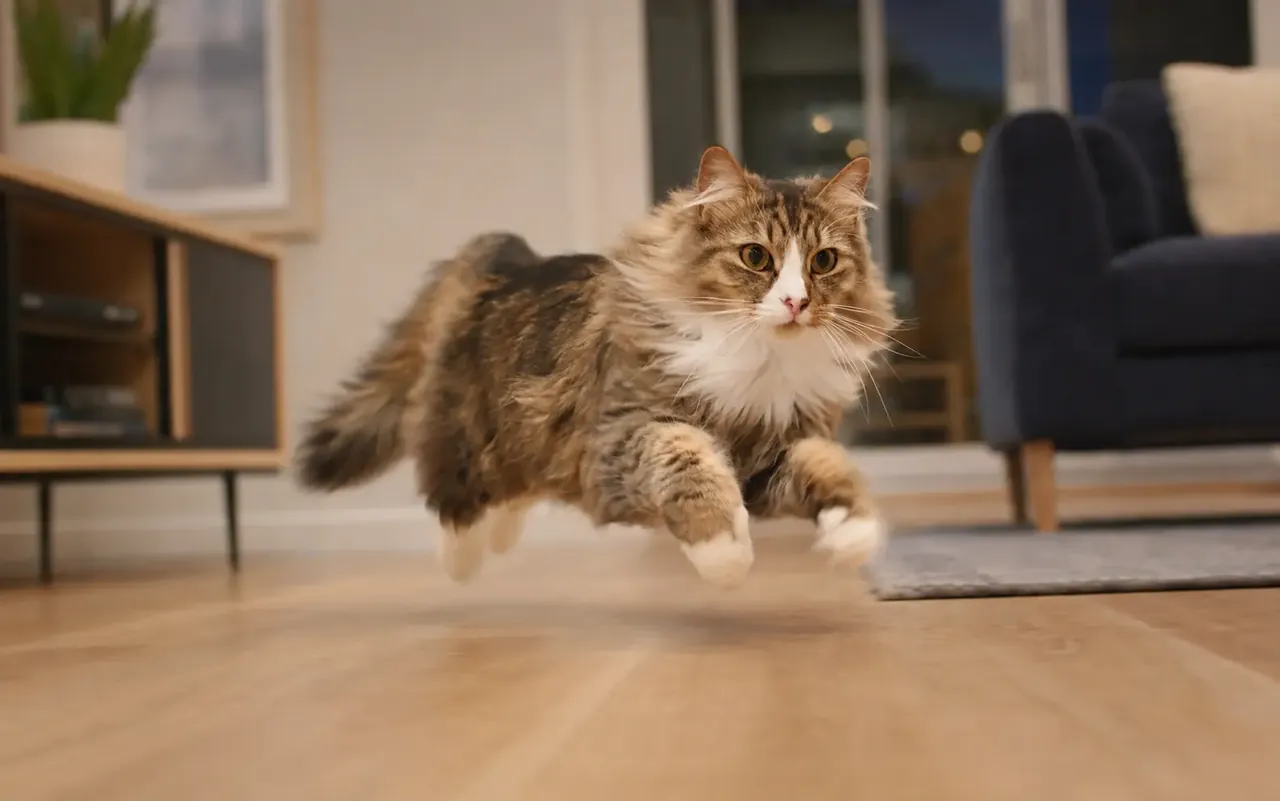 Topic illustration selected for this guide. Some learning images may be AI-assisted.
The science of cat zoomies — the quick answer
✓ Zoomies are usually normal brief activity
✓ Daily play can provide structured outlets
✓ Repeated distress or pain signs need attention
Short bursts of intense running are common, especially in young and indoor cats. They can release energy after rest or follow exciting events.
Built for bursts
Cats are sprinters rather than endurance runners. A sudden circuit through the house fits their natural movement style.
Common triggers
Dusk, dawn, using the litter box and a long nap can all precede a burst of activity.
Create a safe track
Remove unstable objects, offer interactive play and avoid chasing in a way that frightens the cat.
Give the energy a safe destination
Clear unstable objects from common running routes, secure rugs and close unsafe balcony or window access. Use a wand toy that can be stalked, chased and caught, then finish with a measured meal or treat. Store string toys after the session.
Separate fun from a warning sign
Normal zoomies are brief and the cat returns to ordinary behaviour. Contact a veterinarian when running is new and frantic, the cat cries, bites at the back or tail, slips repeatedly, seems confused or cannot settle afterward.
Your quick checklist
Your progress is saved on this device.
Three simple things you can do
You do not have to change everything today. Pick one step that feels realistic, try it and see how your cat responds.
- 1Offer interactive play before the usual zoomie time.
- 2Clear unstable objects from common running routes.
- 3Finish play with a catch and a calm transition.
Common mistakes
×Interpreting one movement without reading the ears, eyes, posture and situation together.
×Forcing interaction when the cat is asking for distance or time to observe.
×Using punishment, which can increase fear without teaching a safer alternative.
Questions cat people ask
Why after the litter box?+
The exact reason varies. Relief, arousal or a burst of energy may contribute, but pain or distress around toileting is not normal.
Do zoomies mean my cat needs another cat?+
Not necessarily. Social needs vary, and adding a cat is not a simple treatment for energy. Enrichment and interactive play are safer first steps.
Still looking for the right answer?
Search the full EverYes Cats encyclopedia with your own words — a symptom, food, behaviour, breed or everyday question.
Checked, dated and transparent
- Prepared by
- EverYes Cats editorial team
- Last updated
- 13 August 2026
- Source checked
- 13 August 2026
- Primary reference
- FelineVMA Healthy Feline Environment ↗
We begin with the named reference, rewrite the information in plain language and add practical cat-parent steps. Urgent health statements are checked against veterinary sources. This guide has not been individually reviewed by a veterinarian unless explicitly stated. It provides education, not diagnosis or treatment.
Spotted something unclear or outdated? Tell us so we can review it.
Your answer helps us improve the cat encyclopedia.
Hiding is a normal safety and rest behaviour, but new or prolonged hiding can be an early sign of pain, fear or illness. Compare appetite, litter use, movement and social contact with the cat’s baseline.