Should you rotate the location of cat scratchers?
Keep successful scratching stations where the cat already wakes, stretches, enters and marks. Rotate only an extra scratcher for novelty; moving every familiar option can make appropriate scratching harder, not more interesting.
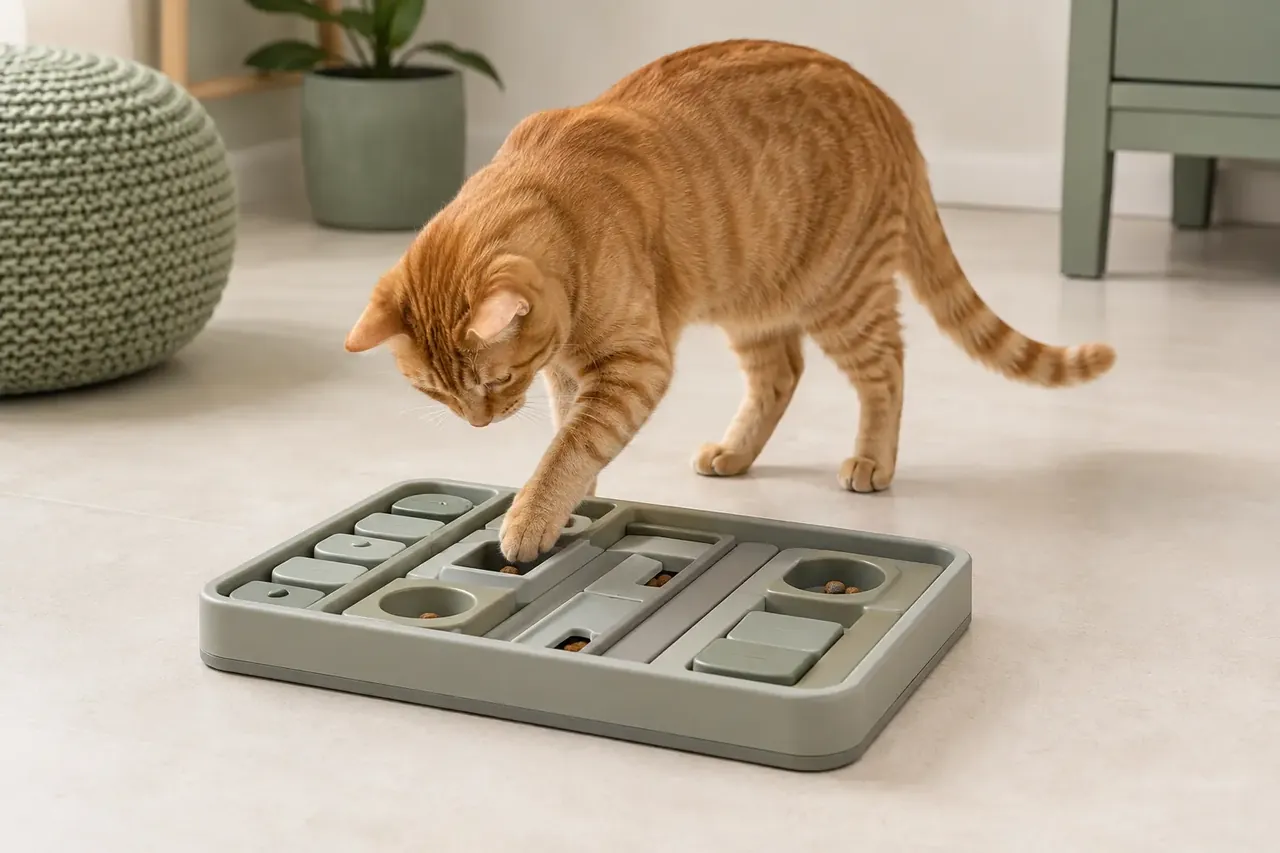 Topic illustration selected for this guide. Some learning images may be AI-assisted.
Should you rotate the location of cat scratchers — the quick answer
✓ Scratchers work best where cats already wake, enter, stretch and mark; frequent movement can make them less useful.
✓ Observe: Map current scratch marks and the times each surface is used.
✓ Try this: Keep successful stations stable and rotate only an extra scratcher for novelty.
Scratchers work best where cats already wake, enter, stretch and mark; frequent movement can make them less useful. The useful question is not only what the moment resembles, but whether it fits this cat’s normal pattern. Context, frequency, recovery and accompanying changes make the interpretation safer and more accurate.
Map where scratching already happens
Note surfaces used after sleep, greetings, play and doorway transitions. Scratching supports stretching, claw maintenance and scent or visual marking, so location is part of the resource. Place an appropriate scratcher directly beside a chosen furniture area before trying to redirect it.
Keep the proven stations stable
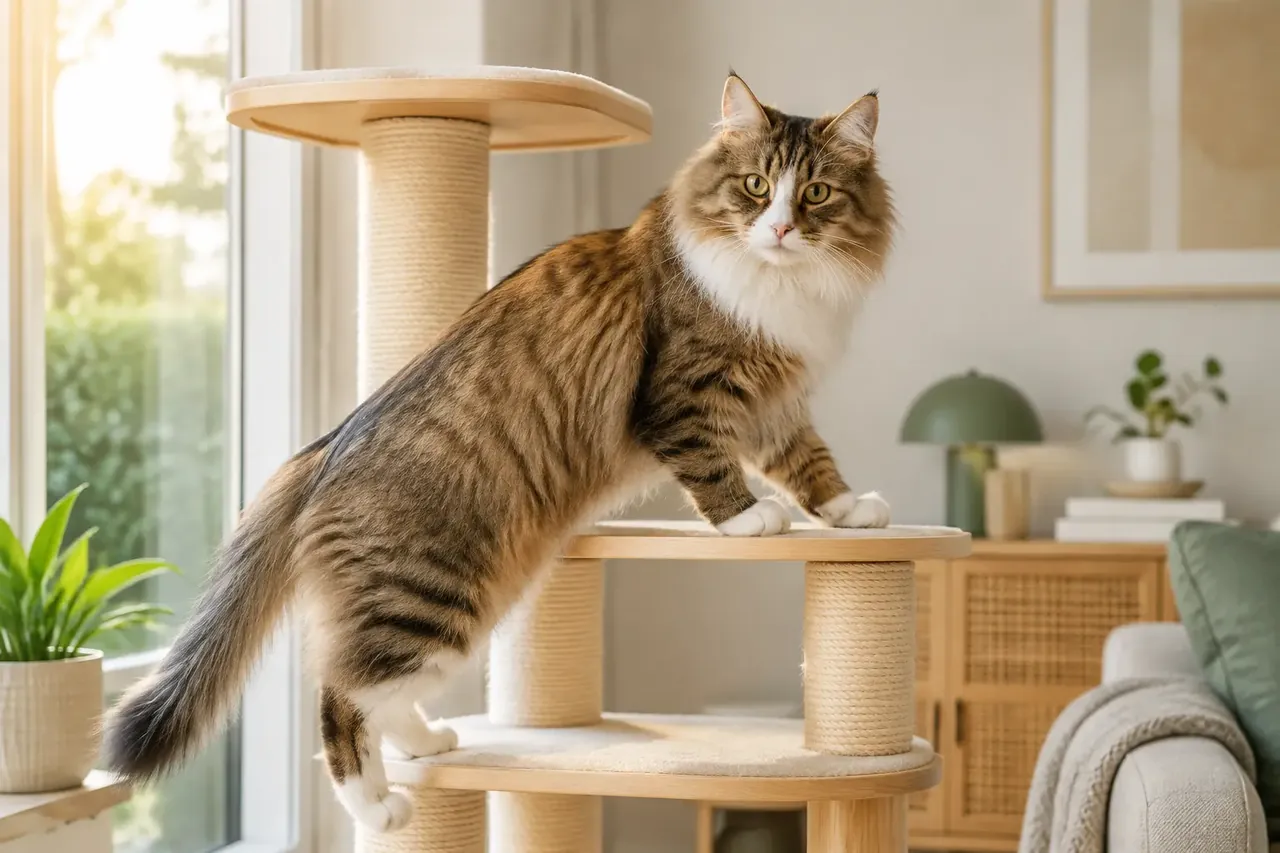
A tall stable post near a sleeping place or route may work because it is exactly there. Do not move it merely because it looks untidy. Ensure the cat can fully stretch and that the base does not wobble, slide or tip. Replace badly frayed or structurally weak units.
Rotate one optional scratcher
For novelty, move or swap a spare horizontal pad, cardboard surface or texture while leaving core stations untouched. Introduce one change at a time and compare voluntary use for several days. Catnip or silver vine is optional and should not be used to force contact.
Redirect without punishment
Protect furniture temporarily, reward use of the nearby scratcher and make it easy to choose. Do not shout, spray water, cover paws or physically drag claws over the surface. Punishment can create fear around the person or room without meeting the scratching need.
When scratching change matters
A sudden reduction in scratching with stiffness, reluctance to stretch, broken claws or reduced climbing may indicate pain. Repeated claw snagging, bleeding, swelling or limping deserves veterinary advice. Never declaw as a furniture-management solution.
Your quick checklist
Loading saved progress…
Three simple things you can do
You do not have to change everything today. Pick one step that feels realistic, try it and see how your cat responds.
- 1Observe your cat’s individual baseline.
- 2Make one gentle change at a time.
- 3Ask a qualified professional when health or safety is involved.
Common mistakes
×Waiting for a dramatic symptom instead of noticing smaller changes from the cat’s normal routine.
×Changing several things at once, making it difficult to learn what actually helped.
×Treating general guidance as a substitute for advice from a veterinarian who knows the individual cat.
Questions cat people ask
Does every cat follow the same rule?+
No. Age, health, history, temperament and environment all change what works for an individual.
When should I seek professional help?+
Seek veterinary advice for sudden, persistent or concerning changes and urgent help for breathing difficulty, collapse, seizures, poisoning or urinary obstruction signs.
Still looking for the right answer?
Search the full EverYes Cats encyclopedia with your own words — a symptom, food, behaviour, breed or everyday question.
Checked, dated and transparent
- Prepared by
- EverYes Cats editorial team
- Last updated
- Source checked
- Primary reference
- FelineVMA: Feline Environmental Needs Guidelines ↗
We begin with the named reference, rewrite the information in plain language and add practical cat-parent steps. Urgent health statements are checked against veterinary sources. This guide has not been individually reviewed by a veterinarian unless explicitly stated. It provides education, not diagnosis or treatment.
How we choose and use sources →
Spotted something unclear or outdated? Tell us so we can review it.
Loading your saved choice…
The floor may be cooler, steadier, easier to reach or better placed than the cat tree. Improve stability, routes and location while keeping choices at several heights; floor use is not a failure unless it reflects a new mobility change.
 02
 03
 06