Why cats knead with their paws
Kneading is usually a relaxed comfort behaviour carried forward from kittenhood. Claws may extend during the rhythm, so protect skin with a thick blanket instead of punishing the cat.
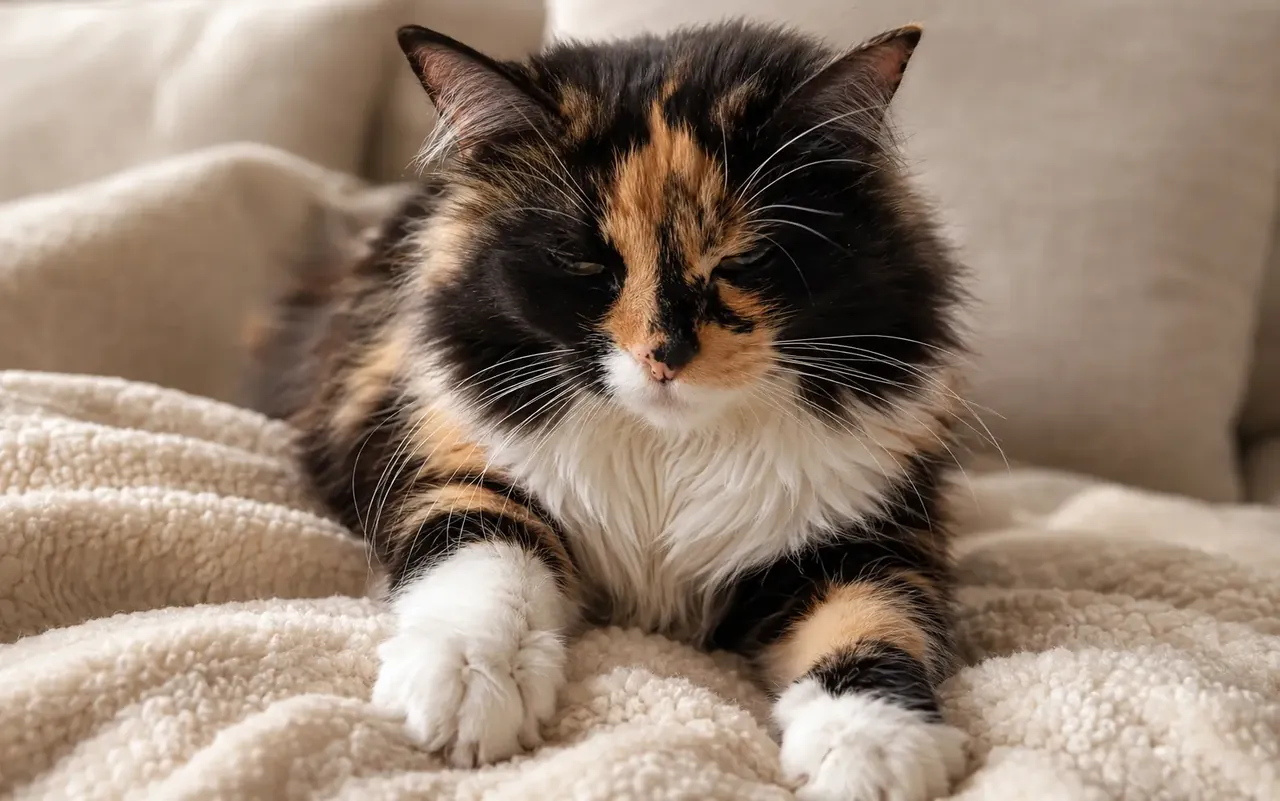 Topic illustration selected for this guide. Some learning images may be AI-assisted.
Why cats knead with their paws — the quick answer
✓ Kneading is usually a comfort behavior
✓ Claws may extend without aggressive intent
✓ A thick blanket can protect your lap
Alternating front paws against a soft surface is called kneading. It is linked with early nursing behavior and often continues into adulthood.
An early-life pattern
Kittens knead around the mother while nursing. Adult cats may repeat the motion when relaxed or sleepy.
Scent and settling
Paw glands add scent information, and kneading may help prepare a comfortable resting place.
Make it comfortable
Place a folded blanket between sharp claws and your legs. Avoid punishing a cat for a normal, relaxed behavior.
Read the whole kneading moment
A loose body, soft eyes, purring and settling support a comfortable interpretation. Kneading can also help a cat prepare a resting place and leave scent from the paws. It is not a reliable sign of one emotion on its own.
Know when the pattern deserves attention
New, frantic or persistent kneading paired with restlessness, vocalising, pain, appetite change or inability to settle deserves closer observation and veterinary advice. Do not restrain the paws or declaw a cat to solve normal kneading.
Your quick checklist
Your progress is saved on this device.
Three simple things you can do
You do not have to change everything today. Pick one step that feels realistic, try it and see how your cat responds.
- 1Place a thick washable blanket on favorite kneading spots.
- 2Keep claws maintained to reduce accidental scratches.
- 3Allow the cat to stop or move away without restraint.
Common mistakes
×Interpreting one movement without reading the ears, eyes, posture and situation together.
×Forcing interaction when the cat is asking for distance or time to observe.
×Using punishment, which can increase fear without teaching a safer alternative.
Questions cat people ask
Why does my cat drool while kneading?+
Some cats drool slightly during very relaxed kneading. New, heavy or persistent drooling should be discussed with a veterinarian.
Why does kneading sometimes hurt?+
Claws can extend during the alternating motion. Use a thicker barrier rather than scolding the cat.
Still looking for the right answer?
Search the full EverYes Cats encyclopedia with your own words — a symptom, food, behaviour, breed or everyday question.
Checked, dated and transparent
- Prepared by
- EverYes Cats editorial team
- Last updated
- 13 August 2026
- Source checked
- 13 August 2026
- Primary reference
- FelineVMA Healthy Feline Environment ↗
We begin with the named reference, rewrite the information in plain language and add practical cat-parent steps. Urgent health statements are checked against veterinary sources. This guide has not been individually reviewed by a veterinarian unless explicitly stated. It provides education, not diagnosis or treatment.
Spotted something unclear or outdated? Tell us so we can review it.
Your answer helps us improve the cat encyclopedia.
Cats need different nutrition, preventive care, home access and monitoring as they move from kittenhood through adulthood and the senior years. Age guides care, but the individual cat sets the pace.