Cat life stages explained
Cats need different nutrition, preventive care, home access and monitoring as they move from kittenhood through adulthood and the senior years. Age guides care, but the individual cat sets the pace.
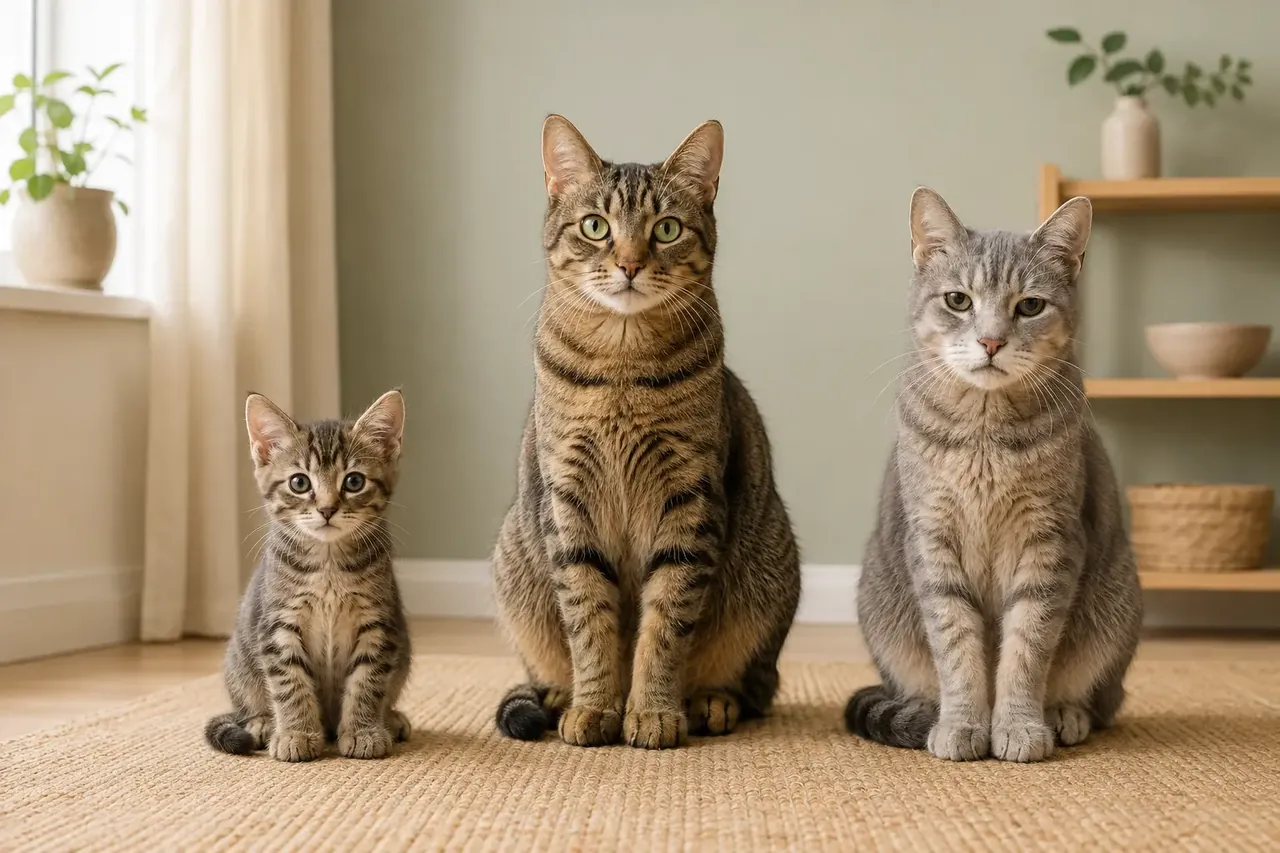 Topic illustration selected for this guide. Some learning images may be AI-assisted.
Cat life stages explained — the quick answer
✓ Kittens need growth-focused care and frequent learning
✓ Adults benefit from routine and weight monitoring
✓ Senior changes should not be dismissed as normal aging
Age influences nutrition, play, veterinary monitoring and the way a home should be arranged, but cats age as individuals.
Kitten and young adult
Early handling, safe exploration and play build skills. Food should match the growth life stage.
Mature adult
Consistent exercise, dental care and body-condition checks help catch gradual changes that are easy to miss.
Senior years
Easier access, warmth and more frequent health monitoring can support comfort. New behavior or mobility changes deserve investigation.
Use life stage to plan—not to dismiss change
Growth, reproduction status, body condition, activity and medical history all influence care. A mature or senior label should prompt closer monitoring, but reduced jumping, weight loss, poor grooming or increased thirst should not be accepted as age without assessment.
Build a baseline before something changes
Record weight, body condition, appetite, water, litter output, play, grooming, sleep and mobility while the cat is well. Consistent photos and notes make gradual changes easier to recognize and give the veterinary team more useful context.
Your quick checklist
Your progress is saved on this device.
Three simple things you can do
You do not have to change everything today. Pick one step that feels realistic, try it and see how your cat responds.
- 1Match preventive care, feeding and home setup to both age and individual health.
- 2Track weight, appetite, mobility, coat and behaviour throughout adulthood.
- 3Increase veterinary monitoring as recommended rather than waiting for obvious illness.
Common mistakes
×Treating every cat over one birthday threshold as medically identical.
×Continuing kitten food or portions without reviewing adult needs.
×Dismissing senior changes as inevitable ageing.
Questions cat people ask
When is a cat considered a senior?+
Guidelines use age ranges, but ageing is individual. Many care frameworks begin closer senior monitoring around ten years while adjusting for the cat's actual health.
Do indoor cats age differently?+
Indoor living changes some risks but does not stop ageing or disease. Preventive veterinary care remains important at every life stage.
Still looking for the right answer?
Search the full EverYes Cats encyclopedia with your own words — a symptom, food, behaviour, breed or everyday question.
Checked, dated and transparent
- Prepared by
- EverYes Cats editorial team
- Last updated
- 13 August 2026
- Source checked
- 13 August 2026
- Primary reference
- FelineVMA Healthy Feline Environment ↗
We begin with the named reference, rewrite the information in plain language and add practical cat-parent steps. Urgent health statements are checked against veterinary sources. This guide has not been individually reviewed by a veterinarian unless explicitly stated. It provides education, not diagnosis or treatment.
Spotted something unclear or outdated? Tell us so we can review it.
Your answer helps us improve the cat encyclopedia.
Cats often prefer the person who feels safest and most predictable—not simply the person who fills the bowl. Voice, scent, respectful handling and repeated positive routines all shape the bond.