Simple enrichment for indoor cats
Indoor enrichment should let a cat hunt, climb, hide, scratch, forage and choose when to participate. A simple rotating plan usually works better than buying many toys at once.
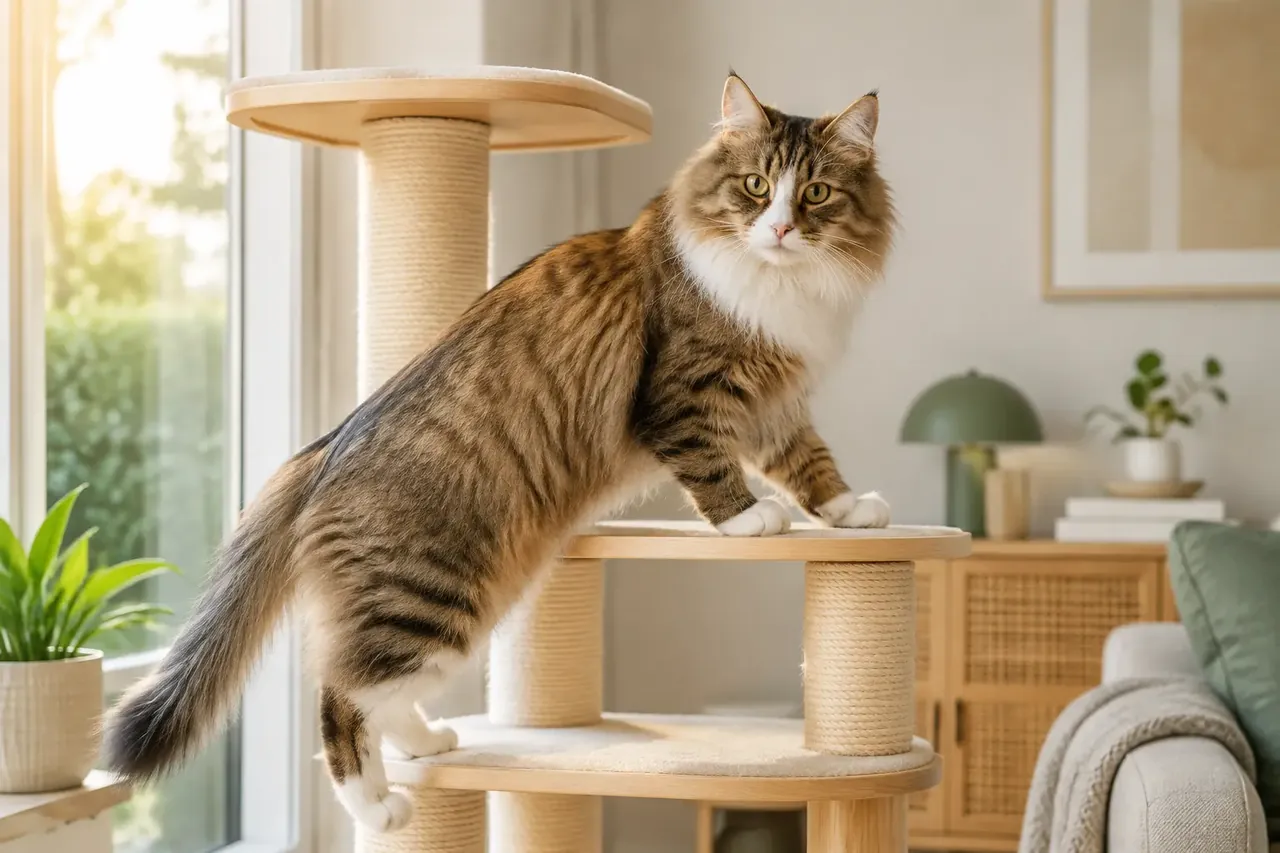
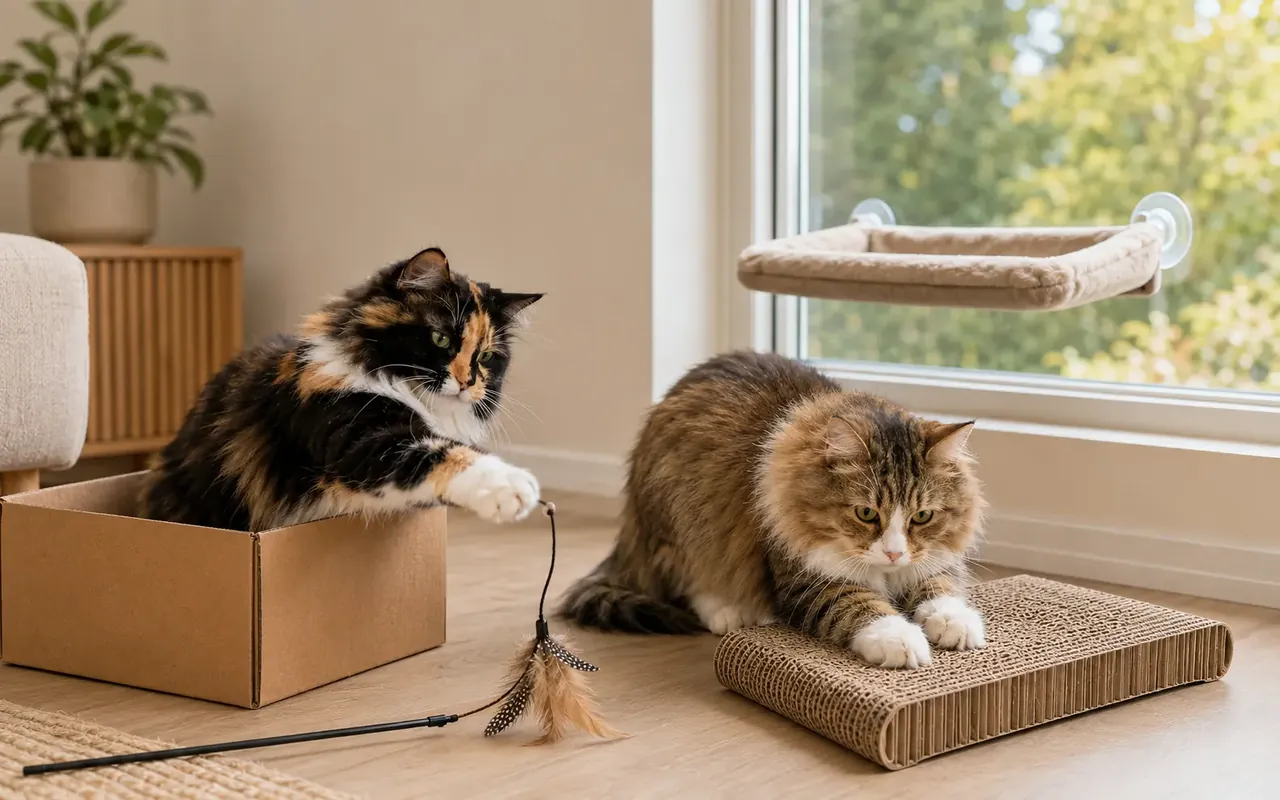 Topic illustration selected for this guide. Some learning images may be AI-assisted.
Simple enrichment for indoor cats — the quick answer
✓ Rotate toys instead of leaving every toy out
✓ Vertical space makes a home feel larger
✓ Short interactive play can be more useful than long sessions
Enrichment gives cats safe opportunities to climb, hunt, scratch, hide, observe and make choices. Small changes can be genuinely valuable.
Cover the five everyday needs
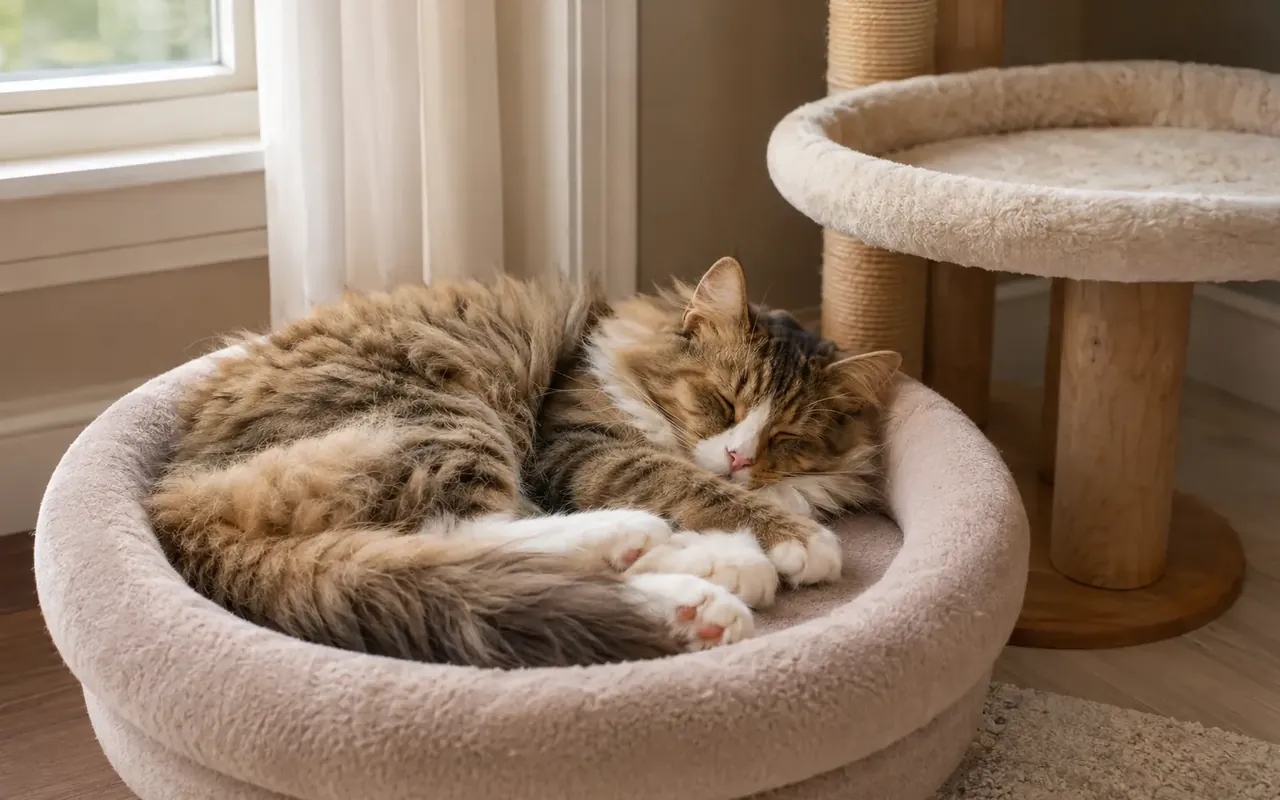
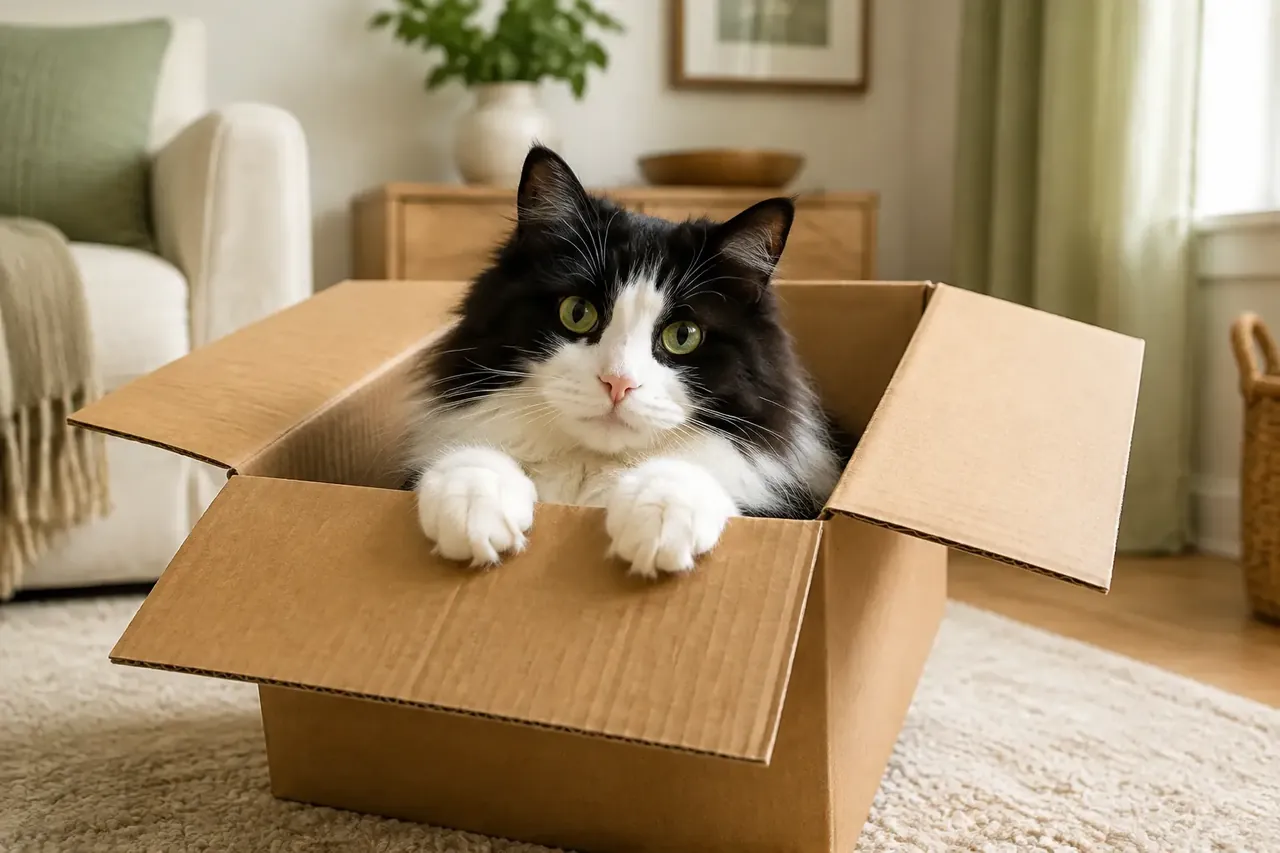
Provide a secure hiding place, an elevated resting option, stable scratching surfaces, separate food-water-litter locations and opportunities for play or foraging. Each resource needs an easy approach and exit so another pet cannot block it.
Complete a safe hunt sequence
Move a wand toy like prey: hide, pause, dart and allow successful catches. Finish with a small food reward or meal when appropriate. Use several short sessions rather than exhausting play, and store string, feathers and detachable parts after supervision.
Make food work gently
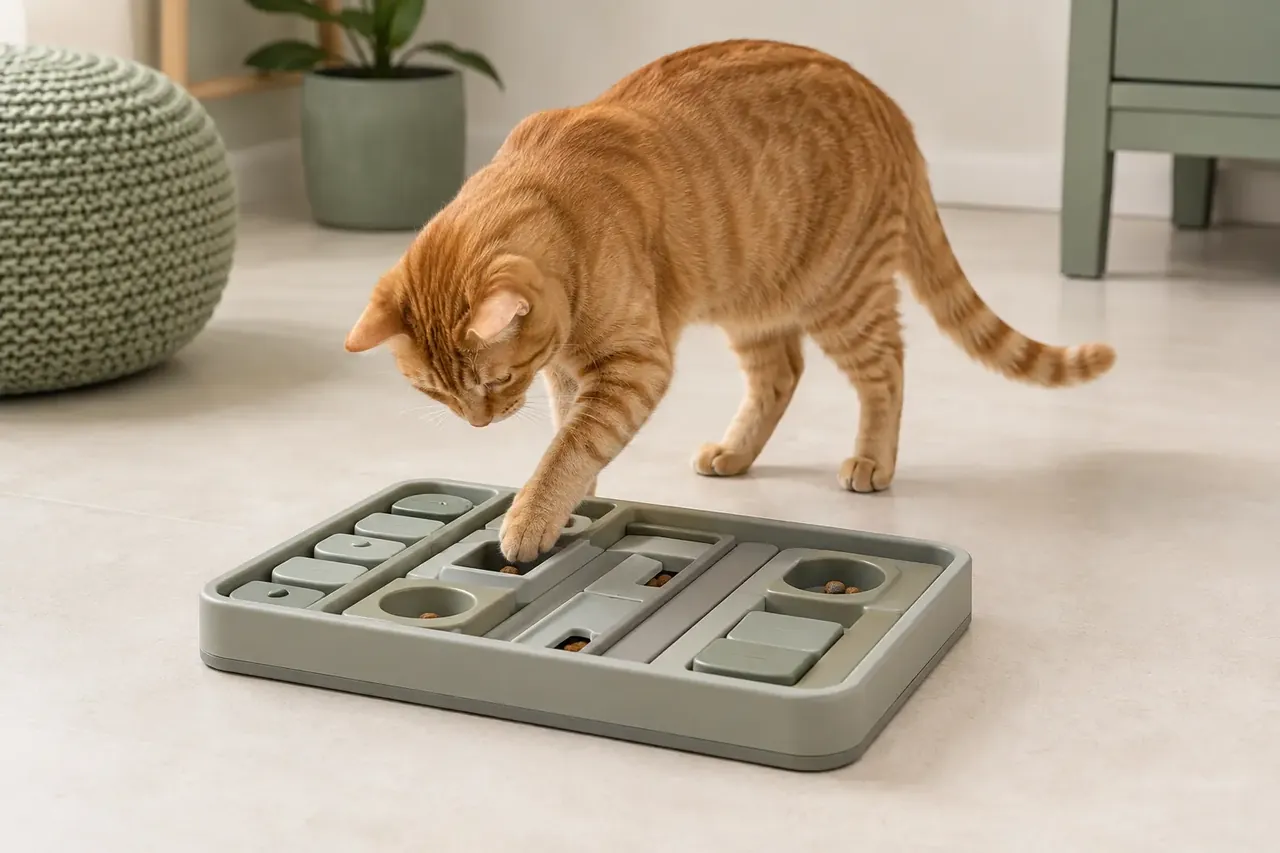
Use part of the measured daily ration in an easy puzzle, scattered search or several small feeding locations. Start simple enough for success and count the food within the normal allowance. Never make every meal difficult or use frustration as entertainment.
Fit the plan to the individual
A kitten, shy rescue, senior cat and cat with limited mobility need different heights, speeds and surfaces. Add non-slip access, low options and quiet observation opportunities. Participation is voluntary; watching can be enrichment too.
Rotate and measure what works
Leave favourite safe resources in place and rotate only a few toys, boxes or scent-safe activities. Record which options lead to relaxed use, play and normal recovery. Sudden loss of interest alongside appetite, mobility or behaviour change deserves veterinary advice.
Your quick checklist
Your progress is saved on this device.
Three simple things you can do
You do not have to change everything today. Pick one step that feels realistic, try it and see how your cat responds.
- 1Schedule two short interactive play sessions each day.
- 2Rotate a small selection of toys every few days.
- 3Add one safe elevated resting place with a useful view.
Common mistakes
×Buying many toys without learning how the cat prefers to play.
×Using hands as prey and accidentally teaching biting during play.
×Removing every hiding place in an attempt to make the cat more social.
Questions cat people ask
How long should a play session be?+
Several focused minutes can be valuable. Follow the cat’s interest and physical ability rather than forcing a fixed duration.
Can food puzzles frustrate cats?+
Yes if they begin too difficult. Start with easy access and increase the challenge only after the cat succeeds.
Still looking for the right answer?
Search the full EverYes Cats encyclopedia with your own words — a symptom, food, behaviour, breed or everyday question.
Checked, dated and transparent
- Prepared by
- EverYes Cats editorial team
- Last updated
- Source checked
- Primary reference
- FelineVMA Healthy Feline Environment ↗
We begin with the named reference, rewrite the information in plain language and add practical cat-parent steps. Urgent health statements are checked against veterinary sources. This guide has not been individually reviewed by a veterinarian unless explicitly stated. It provides education, not diagnosis or treatment.
How we choose and use sources →
Spotted something unclear or outdated? Tell us so we can review it.
Your answer helps us improve the cat encyclopedia.
A cat may favour the person whose voice, scent, movements and responses feel most familiar and predictable. Preference is shown through voluntary choices—not only lap sitting—and it can change with routines, health and experience.
 01
 02
 03
 04
 05