Read your cat’s ears and eyes
Read cat ears and eyes together with posture, muscle tension and context. Soft eyes and mobile neutral ears often fit comfort; flattened ears or a fixed stare mean pause and create space.
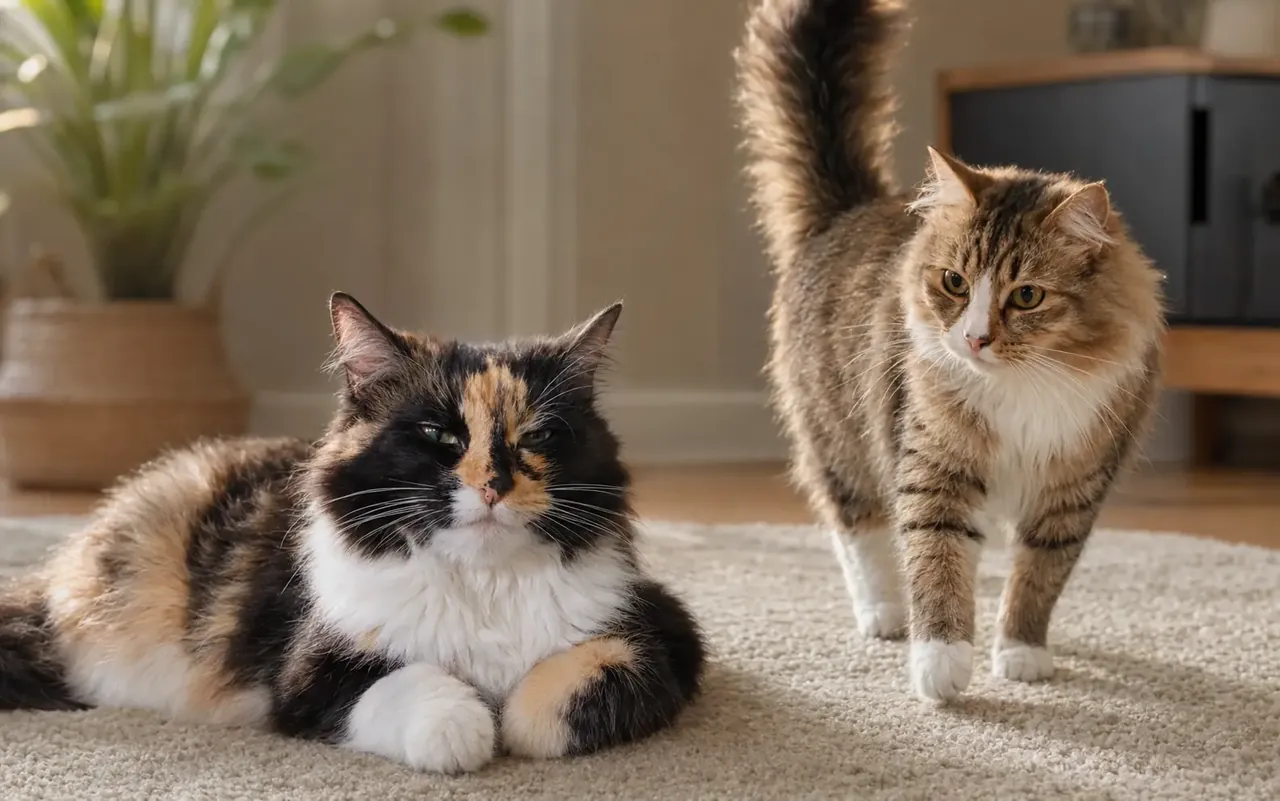 Topic illustration selected for this guide. Some learning images may be AI-assisted.
Read your cat’s ears and eyes — the quick answer
✓ Soft eyes and neutral ears often mean comfort
✓ Flattened ears usually ask for space
✓ Large pupils can mean play, fear or low light
You do not need to memorize dozens of poses. Start with three questions: Is the body loose or tense? Are the ears neutral or pulled back? Are the eyes soft or fixed?
Relaxed
A comfortable cat often has a loose body, softly open or partly closed eyes and ears facing forward or moving gently toward sounds.
Unsure or overstimulated
Ears rotating sideways, a growing stare and a tense body suggest the cat needs a pause. During petting, this is a good time to remove your hand.
Frightened or defensive
Flattened ears, very wide pupils, crouching or a puffed coat mean you should create distance and a clear escape route. Do not reach toward the cat.
Use three questions instead of one signal
Ask whether the body is loose or tense, whether the cat can move away and whether the expression changes when the situation changes. Large pupils can reflect low light, play, fear or pain, so pupil size alone cannot label the emotion.
Separate body language from an eye or ear problem
Squinting, redness, discharge, unequal pupils, a cloudy eye, head tilt, ear odour or persistent scratching are health signs rather than communication. Eye injuries can worsen quickly; seek veterinary advice promptly instead of applying human drops or cleaners.
Your quick checklist
Your progress is saved on this device.
Three simple things you can do
You do not have to change everything today. Pick one step that feels realistic, try it and see how your cat responds.
- 1Look at the body before focusing on one feature.
- 2Pause interaction when ears turn sideways or the stare hardens.
- 3Give a frightened cat distance and a clear way out.
Common mistakes
×Assuming large pupils always mean fear.
×Staring directly at a worried cat.
×Reading ears or eyes without checking posture and context.
Questions cat people ask
Why are my cat's pupils suddenly huge?+
Low light, play, excitement, fear and some medical problems can all enlarge pupils. Context and whether both eyes match matter.
What do sideways 'airplane ears' mean?+
They often show uncertainty, irritation or overstimulation. Pause and let the cat decide what happens next.
Still looking for the right answer?
Search the full EverYes Cats encyclopedia with your own words — a symptom, food, behaviour, breed or everyday question.
Checked, dated and transparent
- Prepared by
- EverYes Cats editorial team
- Last updated
- 13 August 2026
- Source checked
- 13 August 2026
- Primary reference
- FelineVMA Healthy Feline Environment ↗
We begin with the named reference, rewrite the information in plain language and add practical cat-parent steps. Urgent health statements are checked against veterinary sources. This guide has not been individually reviewed by a veterinarian unless explicitly stated. It provides education, not diagnosis or treatment.
Spotted something unclear or outdated? Tell us so we can review it.
Your answer helps us improve the cat encyclopedia.
A trill before jumping beside you is often a friendly greeting or attention signal. Upright tail, soft eyes and relaxed movement support that interpretation; voice or breathing changes need a health-first check.