What your cat’s tail may be saying
A cat’s tail adds useful context, but it never works as a translation key by itself. Read tail height and movement together with ears, eyes, muscle tension, distance and the situation.
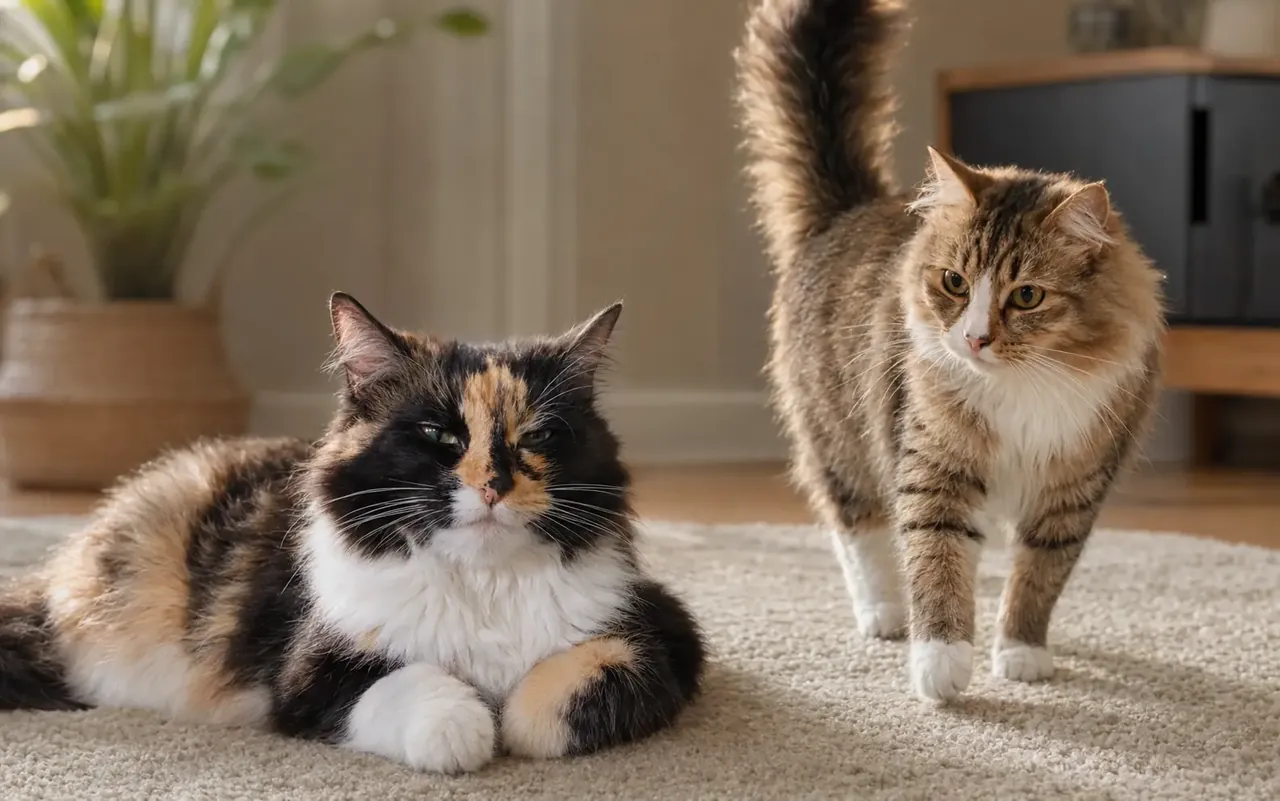 Topic illustration selected for this guide. Some learning images may be AI-assisted.
What your cat’s tail may be saying — the quick answer
✓ An upright tail often accompanies a friendly greeting
✓ Fast thrashing can signal high arousal
✓ A puffed tail usually means fear or alarm
A cat's tail adds important context to the rest of their body language. Read the tail together with the ears, eyes, posture and situation.
The greeting tail
Many relaxed cats approach familiar people with the tail held upright, sometimes with a soft curve at the tip.
Movement has meaning
A slowly moving tip can show focus, while forceful swishing or thumping often means the cat is becoming overstimulated.
Give space when unsure
A tucked or puffed tail, tense body and flattened ears are good reasons to pause and let the cat choose distance.
Separate shape from movement
An upright tail often accompanies a friendly approach, while a tucked or puffed tail can reflect fear. Slow tip movement may fit focused watching; forceful swishing or thumping often signals rising arousal. Speed, tension and the rest of the body change the meaning.
Use the tail to stop earlier
When tail movement becomes sharper during petting or play, pause and give space before the cat needs to hiss, swat or leave. New tail guarding, reduced movement or pain when the tail is touched deserves veterinary assessment.
Your quick checklist
Your progress is saved on this device.
Three simple things you can do
You do not have to change everything today. Pick one step that feels realistic, try it and see how your cat responds.
- 1Observe the tail together with ear position and muscle tension.
- 2Pause petting when the tail begins forceful swishing.
- 3Give a puffed or tucked-tail cat a clear route away.
Common mistakes
×Interpreting one movement without reading the ears, eyes, posture and situation together.
×Forcing interaction when the cat is asking for distance or time to observe.
×Using punishment, which can increase fear without teaching a safer alternative.
Questions cat people ask
Does a wagging tail mean a happy cat?+
Not in the same way as many dogs. Strong swishing often signals arousal, frustration or overstimulation, though context still matters.
What does a curved tip mean?+
A soft curve on an upright tail often appears in relaxed greetings, but it should still be read with the rest of the body.
Still looking for the right answer?
Search the full EverYes Cats encyclopedia with your own words — a symptom, food, behaviour, breed or everyday question.
Checked, dated and transparent
- Prepared by
- EverYes Cats editorial team
- Last updated
- 13 August 2026
- Source checked
- 13 August 2026
- Primary reference
- FelineVMA Healthy Feline Environment ↗
We begin with the named reference, rewrite the information in plain language and add practical cat-parent steps. Urgent health statements are checked against veterinary sources. This guide has not been individually reviewed by a veterinarian unless explicitly stated. It provides education, not diagnosis or treatment.
Spotted something unclear or outdated? Tell us so we can review it.
Your answer helps us improve the cat encyclopedia.
A trill before jumping beside you is often a friendly greeting or attention signal. Upright tail, soft eyes and relaxed movement support that interpretation; voice or breathing changes need a health-first check.