Understanding cat scent marking
Cats communicate with scent through facial rubbing, scratching, urine and other signals. Friendly marking can make a home familiar, while new spraying or toileting changes need a different response.
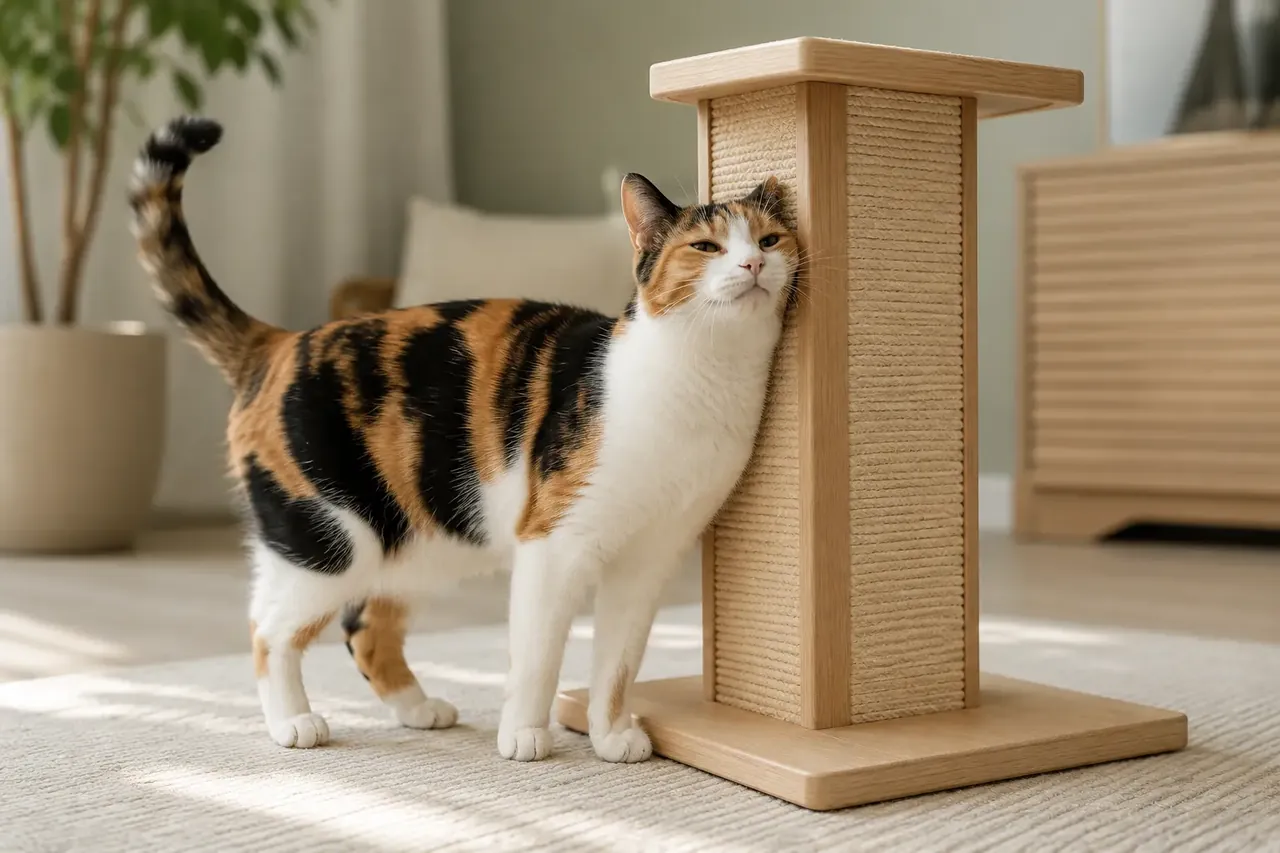 Topic illustration selected for this guide. Some learning images may be AI-assisted.
Understanding cat scent marking — the quick answer
✓ Rubbing often adds familiar social scent
✓ Scratching leaves scent and a visible mark
✓ Harsh cleaning can remove reassuring signals
Cats leave scent information in ways humans barely notice. Facial rubbing and scratching can help map familiar individuals, objects and routes.
The friendly head rub
When a relaxed cat rubs the cheeks or forehead on you, furniture or another familiar cat, they are adding scent to a known social space.
Scratching is communication
A scratcher near entrances or sleeping areas works well because these are meaningful places for stretching and marking.
Clean thoughtfully
Clean soiled areas properly, but avoid heavily fragranced products throughout every familiar resting zone at once.
Tell familiar rubbing from urine marking
Cheek rubbing and scratching usually add scent to important social routes. Urine spraying often involves a small amount on a vertical surface with the tail raised, while a puddle on a horizontal surface may be toileting. Record posture and location without punishing the cat.
Protect reassuring scent while cleaning safely
Clean urine thoroughly with an appropriate odour-neutralising product, but avoid replacing every familiar scent with strong fragrance at once. Provide stable scratchers, resting places and separate resources. Sudden urine marking also warrants a veterinary check.
Your quick checklist
Your progress is saved on this device.
Three simple things you can do
You do not have to change everything today. Pick one step that feels realistic, try it and see how your cat responds.
- 1Place sturdy scratchers near entrances, sleeping areas and other meaningful routes.
- 2Let relaxed facial rubbing happen without immediately wiping every contacted surface.
- 3Clean soiled areas thoroughly but preserve familiar bedding and resting scents elsewhere.
Common mistakes
×Punishing rubbing or scratching that serves normal communication needs.
×Using strong fragrance throughout every familiar area at the same time.
×Assuming urine marking is purely behavioural without a veterinary check.
Questions cat people ask
Why does my cat rub its face on me?+
Relaxed cheek or forehead rubbing can add familiar scent to a social space and often accompanies friendly interaction. Read the whole body for context.
Is scratching a form of scent marking?+
Yes. Scratching leaves both a visible mark and scent from glands in the paws, while also stretching muscles and maintaining claws.
Still looking for the right answer?
Search the full EverYes Cats encyclopedia with your own words — a symptom, food, behaviour, breed or everyday question.
Checked, dated and transparent
- Prepared by
- EverYes Cats editorial team
- Last updated
- 13 August 2026
- Source checked
- 13 August 2026
- Primary reference
- FelineVMA Healthy Feline Environment ↗
We begin with the named reference, rewrite the information in plain language and add practical cat-parent steps. Urgent health statements are checked against veterinary sources. This guide has not been individually reviewed by a veterinarian unless explicitly stated. It provides education, not diagnosis or treatment.
Spotted something unclear or outdated? Tell us so we can review it.
Your answer helps us improve the cat encyclopedia.
A trill before jumping beside you is often a friendly greeting or attention signal. Upright tail, soft eyes and relaxed movement support that interpretation; voice or breathing changes need a health-first check.