How can a hallway become cat enrichment?
A hallway can support safe movement, scratching and short play when routes remain clear. Use stable floor-level stations and removable activities without turning a narrow passage into a blocking or trip hazard.
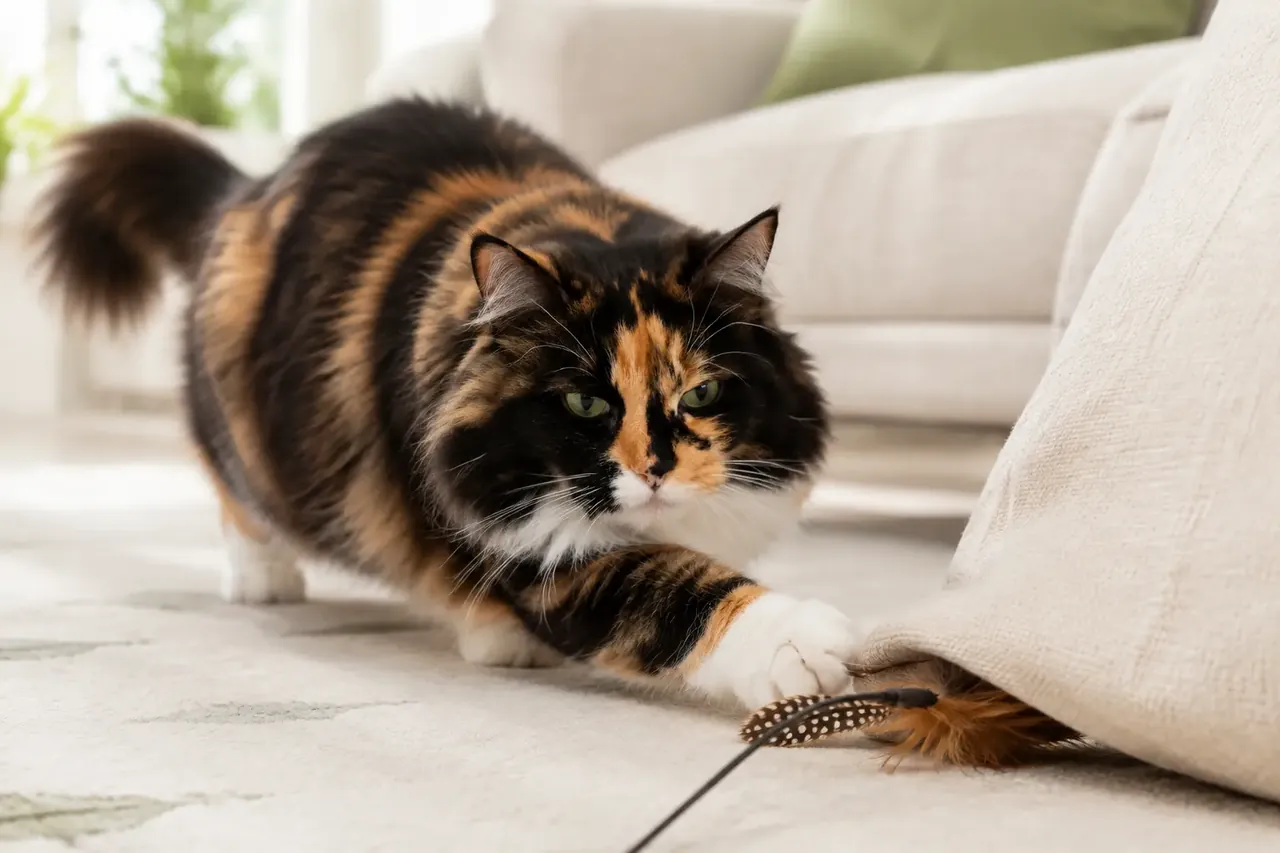 Topic illustration selected for this guide. Some learning images may be AI-assisted.
How can a hallway become cat enrichment — the quick answer
✓ A narrow route can support short chases, scent trails and movement between safe stations.
✓ Observe first: Identify slippery floors, blind corners, doors and people who may be tripped.
✓ Act safely: Add nonslip runners, a few treat searches and brief wand-toy trails that end in a catch.
A narrow route can support short chases, scent trails and movement between safe stations.. This guide helps you separate an ordinary individual habit from a change worth acting on. Read the whole cat, the timing and the wider pattern rather than relying on one isolated sign.
What to observe
Map human traffic, doors, stairs, lighting and where each cat pauses or accelerates. Note whether a resident cat blocks the route or whether slippery flooring limits running. The best enrichment supports passage rather than occupying the only escape path.
What to do now
Add one stable scratcher, a low tunnel with two exits or a short treat-search route along the edge. Keep fire exits, door swings and walking width open. Use non-slip backing and test every item before allowing fast play.
Build vertical interest carefully
Wall shelves can add usable space only when professionally secure, appropriately spaced and clear of doors, glass and weak fittings. Provide more than one descent route and do not create a high dead end where one cat can trap another.
Rotate low-clutter activities
Use a few hidden treats, boxes or supervised wand routes, then remove them after the session. Avoid strings across the passage, loose rugs, laser-only play and automatic toys that activate near feet. Keep children and visitors aware of temporary setups.
When to contact a veterinarian
Repeated slipping, reluctance to cross, limping, collision, pain or a new inability to jump needs veterinary assessment. Any fall, breathing difficulty, collapse or major injury is urgent.
Your quick checklist
Loading saved progress…
Three simple things you can do
You do not have to change everything today. Pick one step that feels realistic, try it and see how your cat responds.
- 1Observe your cat’s individual baseline.
- 2Make one gentle change at a time.
- 3Ask a qualified professional when health or safety is involved.
Common mistakes
×Waiting for a dramatic symptom instead of noticing smaller changes from the cat’s normal routine.
×Changing several things at once, making it difficult to learn what actually helped.
×Treating general guidance as a substitute for advice from a veterinarian who knows the individual cat.
Questions cat people ask
Does every cat follow the same rule?+
No. Age, health, history, temperament and environment all change what works for an individual.
When should I seek professional help?+
Seek veterinary advice for sudden, persistent or concerning changes and urgent help for breathing difficulty, collapse, seizures, poisoning or urinary obstruction signs.
Still looking for the right answer?
Search the full EverYes Cats encyclopedia with your own words — a symptom, food, behaviour, breed or everyday question.
Checked, dated and transparent
- Prepared by
- EverYes Cats editorial team
- Last updated
- Source checked
- Primary reference
- International Cat Care: Making Your Home Cat Friendly ↗
We begin with the named reference, rewrite the information in plain language and add practical cat-parent steps. Urgent health statements are checked against veterinary sources. This guide has not been individually reviewed by a veterinarian unless explicitly stated. It provides education, not diagnosis or treatment.
How we choose and use sources →
Spotted something unclear or outdated? Tell us so we can review it.
Loading your saved choice…
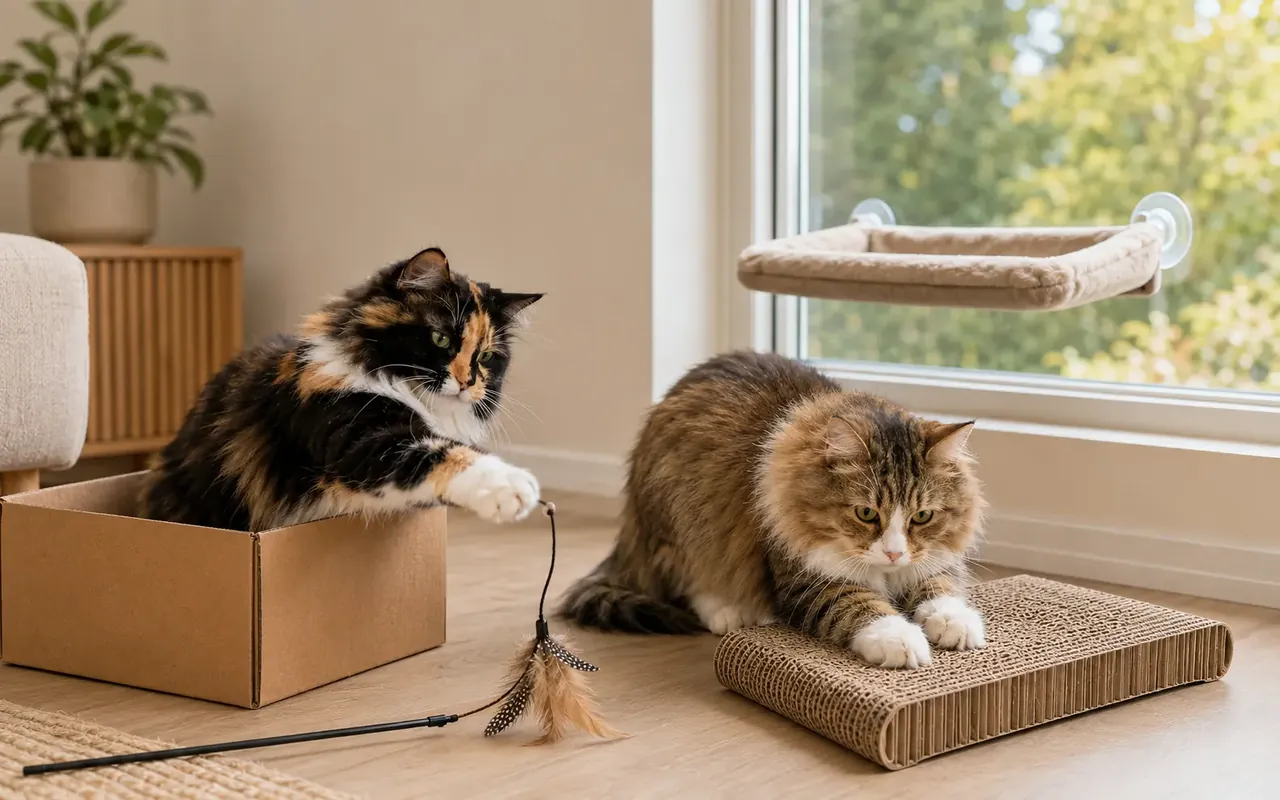
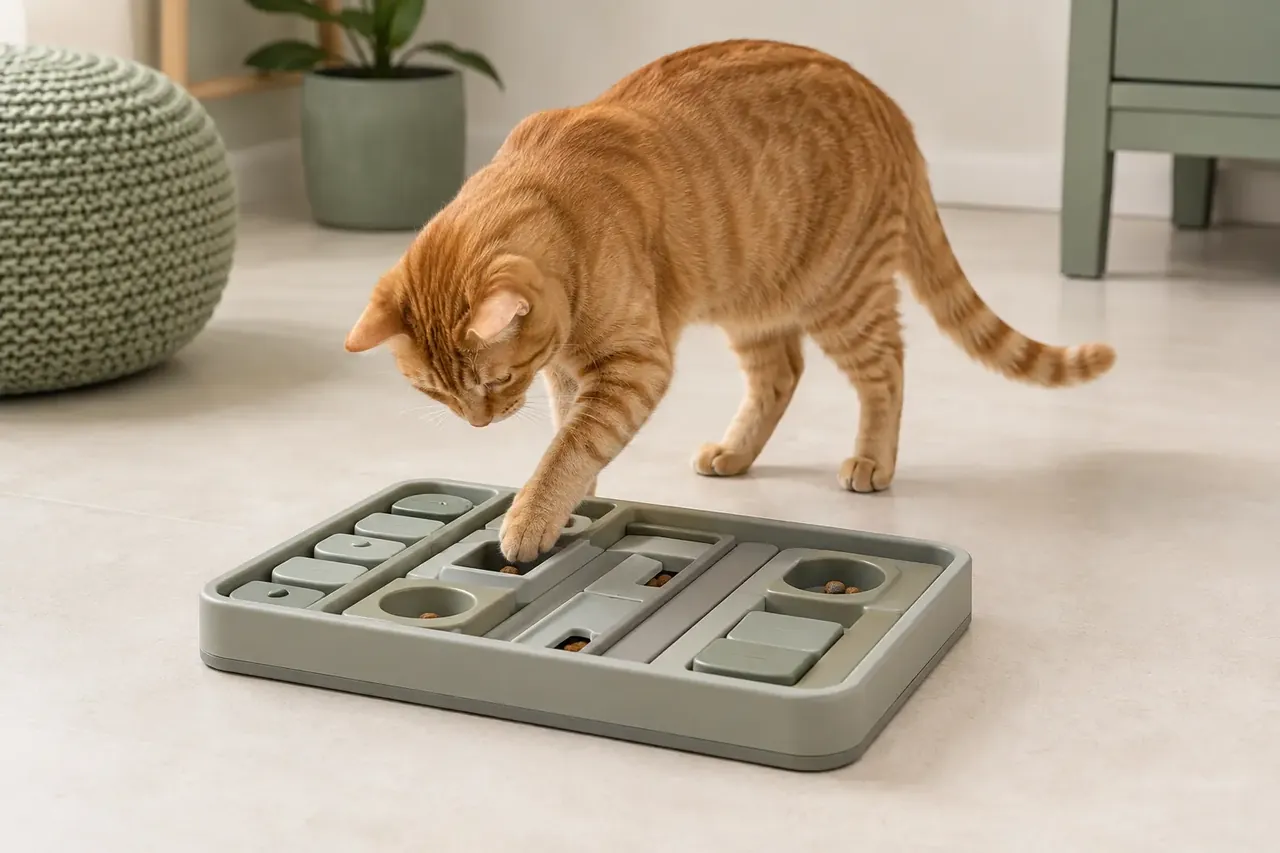
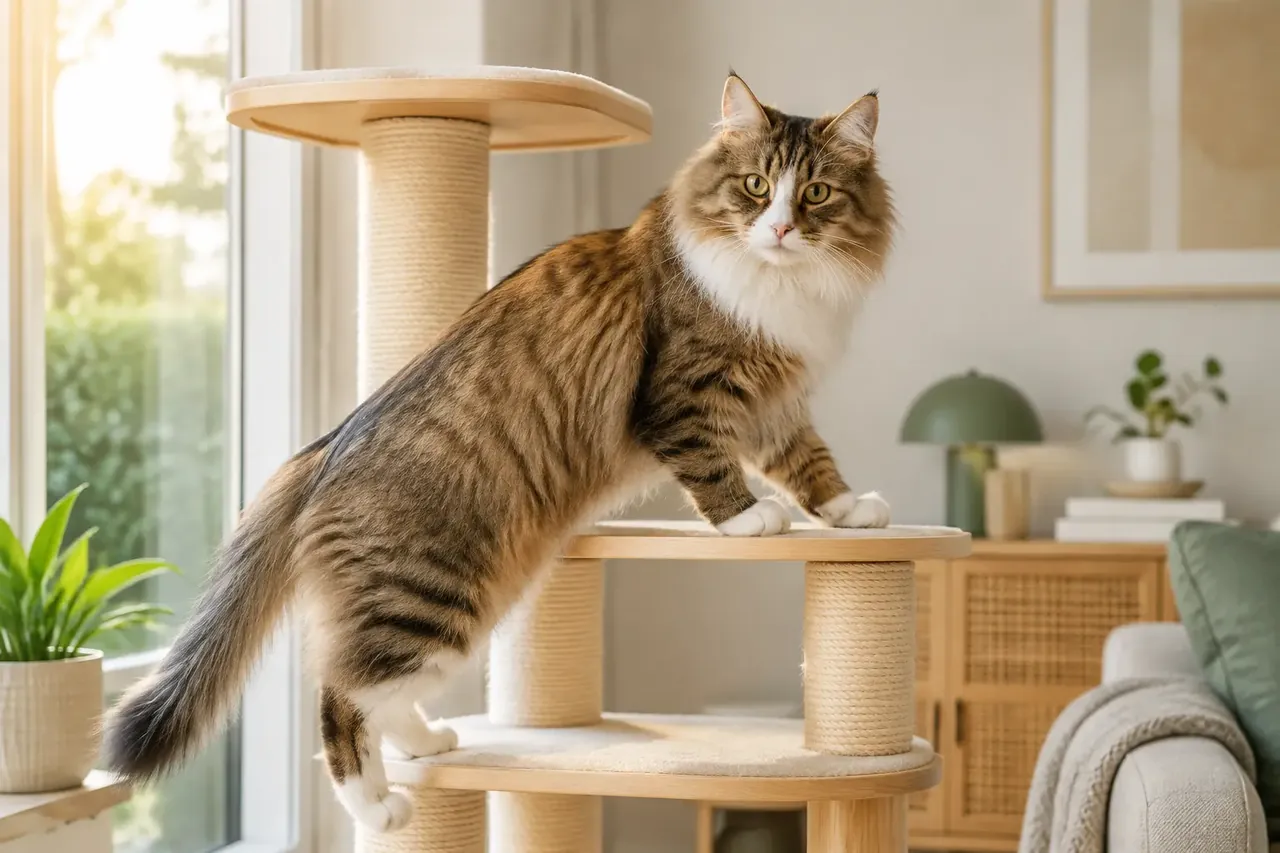
A rainy day can include short scent searches, catchable prey play, cardboard exploration and simple food puzzles. Choose two or three activities that fit the cat's age and mobility, with rest and choice between sessions.
 01
 02
 03
 04