Why does my cat chew cardboard boxes?
Cats may chew cardboard because its texture, scent, sound and resistance invite play, scratching and investigation. Shredding and spitting pieces out is different from swallowing them; repeated non-food eating can indicate pica and creates a blockage risk.
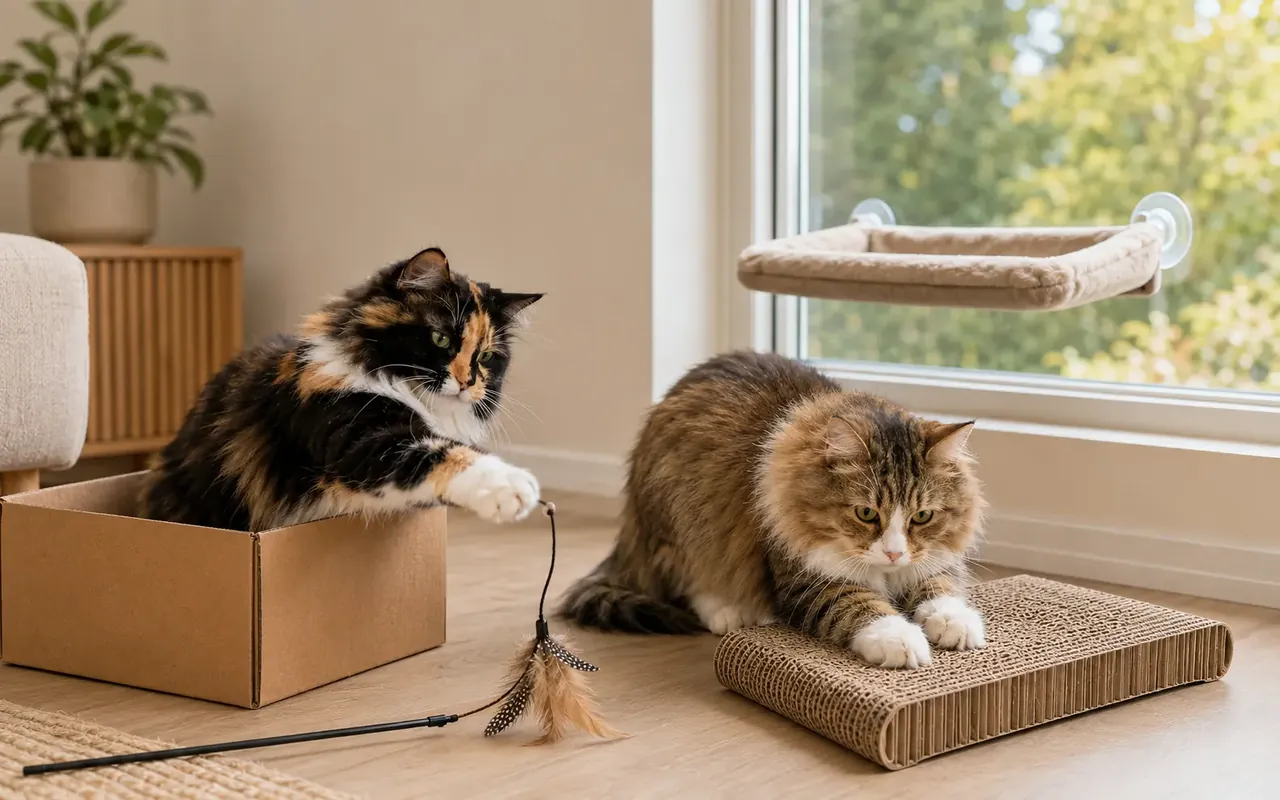
 Topic illustration selected for this guide. Some learning images may be AI-assisted.
Why does my cat chew cardboard boxes — the quick answer
✓ Texture, play, investigation and stress relief can all contribute, but swallowing pieces is unsafe.
✓ Observe first: Check whether the cat spits pieces out, eats them or targets other nonfood items.
✓ Act safely: Remove damaged boxes, offer safe chew alternatives and increase appropriate play.
Texture, play, investigation and stress relief can all contribute, but swallowing pieces is unsafe.. This guide helps you separate an ordinary individual habit from a change worth acting on. Read the whole cat, the timing and the wider pattern rather than relying on one isolated sign.
The short answer
Texture, play, investigation and stress relief can all contribute, but swallowing pieces is unsafe.. Context matters: age, health, environment and what happened immediately beforehand can change the meaning.
What to observe
Check whether the cat spits pieces out, eats them or targets other nonfood items. A short written note or video can reveal patterns that memory misses.
How to read the situation
Compare the behaviour with your cat’s own normal. Frequency, duration, intensity, recovery and changes in appetite, movement, sleep, grooming or litter use are more useful than a single moment.
What to do now
Remove damaged boxes, offer safe chew alternatives and increase appropriate play.
What not to do
Do not punish, frighten, restrain or use human medication to test a theory. Avoid forcing contact or repeating a trigger simply to film the response.
When to contact a veterinarian
Repeated nonfood eating, vomiting, constipation or appetite change needs veterinary assessment.
What to record
Write down when it started, how often it happens, possible triggers, food and water intake, litter-box output and any other change. Bring clear photos or a short video when safe.
First tell shredding from swallowing
Watch what happens to each piece. A cat may bite, tear and spit out cardboard as part of play or scratching, while another cat chews and consumes fragments. Check the floor, mouth movements and stool without deliberately encouraging more chewing. Repeated swallowing, targeting several non-food materials or searching for cardboard to eat is not simply a quirky box habit and should be discussed with a veterinarian.
DEEPER GUIDE5 more detailed sectionsOpen +
Why cardboard is so rewarding
Corrugated cardboard compresses under teeth and claws, produces sound and releases familiar paper and household scents. A box also combines chewing with hiding, rubbing and scratching, so the behaviour may be exploration, play or an established self-rewarding routine. Kittens may investigate with the mouth, but teething does not make swallowed material safe. No single motive applies to every cat.
Check the box before leaving it out
Remove staples, tape, string, plastic windows, labels with loose adhesive and any contaminated packaging. Discard boxes that held chemicals, strong-smelling products, raw food or unknown substances. Choose sturdy clean cardboard and remove it once edges become soggy or fragments break away. Supervise at first so you know whether your cat shreds, spits or swallows.
Offer a safer match for the behaviour
Provide a stable cardboard scratcher, durable cat-safe toys and short interactive play sessions that allow stalking, catching and biting an appropriate target. Rotate rather than constantly add items, and keep meals, rest and play predictable when chewing increases during household stress. A safe alternative should match the preferred action; a cat that wants to tear a flat surface may ignore an unrelated toy.
Do not punish or use deterrents carelessly
Shouting, spraying water or chasing can increase stress without addressing the reward or medical cause. Do not apply essential oils, hot sauce, bitter human products or household chemicals to a box. Remove unsafe material calmly, redirect to an appropriate activity and reward use of the safer option. If chewing is frequent, record timing, triggers, diet, appetite and other materials targeted.
Know the signs of pica or obstruction
Contact a veterinarian about repeated ingestion of cardboard or other non-food material, especially with appetite, weight, dental, digestive or behaviour changes. Vomiting, repeated retching, abdominal pain, lethargy, reduced appetite, constipation, diarrhoea or little stool after possible ingestion needs prompt advice. Breathing trouble, collapse, severe pain or suspected string ingestion is urgent; never pull string from the mouth or anus.
Your quick checklist
Loading saved progress…
Three simple things you can do
You do not have to change everything today. Pick one step that feels realistic, try it and see how your cat responds.
- 1Remove staples, tape, labels and loose fragments before offering a sturdy box.
- 2Supervise until you know whether the cat only shreds or actually swallows pieces.
- 3Provide scratchers and robust toys that match the preferred tearing texture.
Common mistakes
×Leaving shipping materials with staples, string or adhesive attached.
×Assuming swallowing cardboard is harmless because the material is paper-based.
×Punishing chewing without offering a safe outlet or checking for pica.
Questions cat people ask
Why is cardboard so appealing to cats?+
It holds scent, resists claws and teeth, makes noise and offers a changing surface for scratching, hiding and investigation.
What if my cat eats the cardboard?+
Prevent further access. Repeated ingestion can indicate pica and pieces can contribute to obstruction; vomiting, pain, reduced appetite or poor stool needs urgent veterinary advice.
Still looking for the right answer?
Search the full EverYes Cats encyclopedia with your own words — a symptom, food, behaviour, breed or everyday question.
Checked, dated and transparent
- Prepared by
- EverYes Cats editorial team
- Last updated
- Source checked
- Primary reference
- International Cat Care ↗
We begin with the named reference, rewrite the information in plain language and add practical cat-parent steps. Urgent health statements are checked against veterinary sources. This guide has not been individually reviewed by a veterinarian unless explicitly stated. It provides education, not diagnosis or treatment.
How we choose and use sources →
Spotted something unclear or outdated? Tell us so we can review it.
Loading your saved choice…
A short catchable play session before a measured meal can create a predictable hunt–eat–rest routine. Keep it voluntary and moderate, and never delay necessary food, medication or care to complete the sequence.
 01
 02
 03