How often should an adult cat play each day?
Most adult cats benefit from several brief opportunities to stalk, chase and catch each day, adjusted to health, mobility, interest and natural activity peaks.
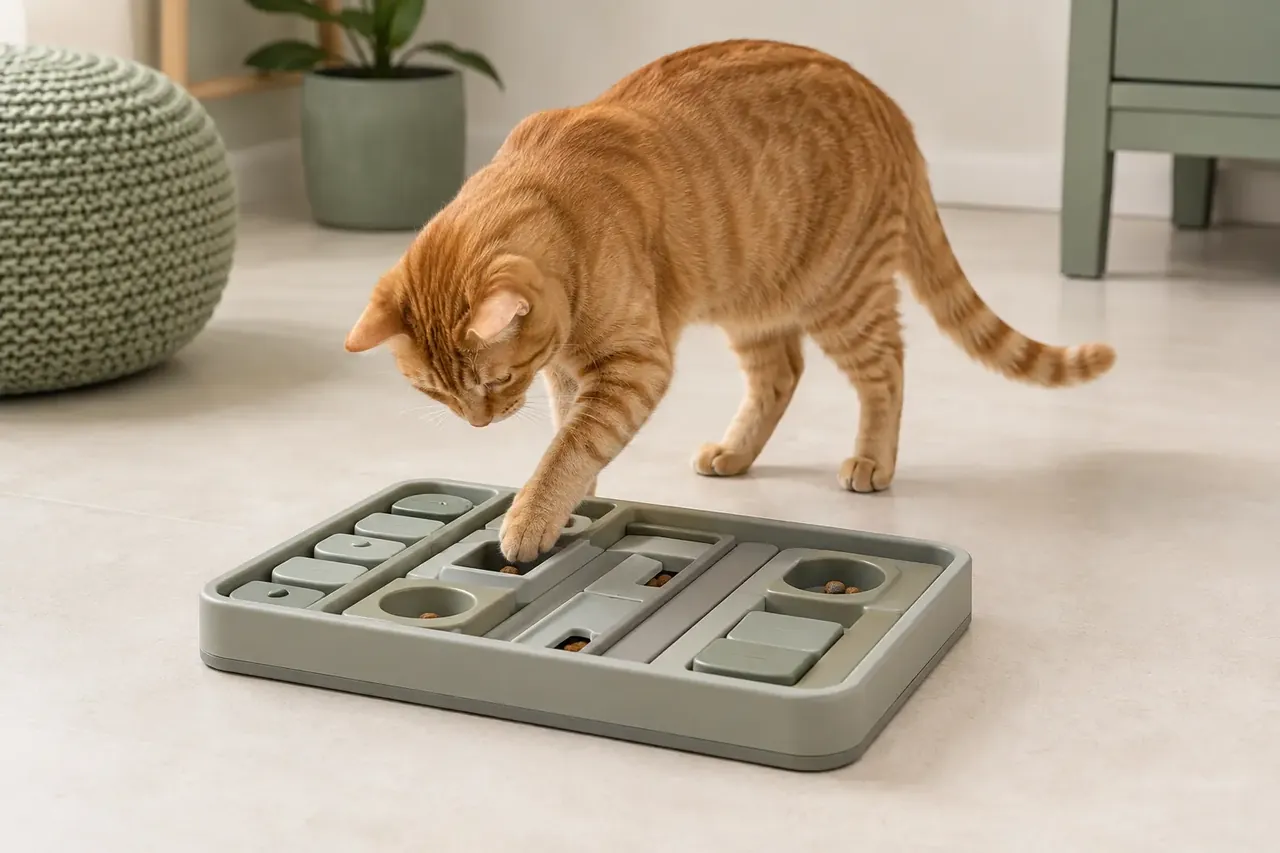
 Topic illustration selected for this guide. Some learning images may be AI-assisted.
How often should an adult cat play each day — the quick answer
✓ Most cats benefit from several short opportunities matched to their interest, health and natural activity peaks.
✓ Observe: Track whether play ends satisfied or frustrated and whether mobility changes.
✓ Try this: Offer brief catchable sessions at predictable times and vary prey movement.
Most cats benefit from several short opportunities matched to their interest, health and natural activity peaks. The useful question is not only what the moment resembles, but whether it fits this cat’s normal pattern. Context, frequency, recovery and accompanying changes make the interpretation safer and more accurate.
Start with short predictable sessions
Offer a few minutes around times the cat is naturally alert, often morning or evening. One engaged minute is more useful than forcing a long session after interest disappears.
Complete the hunting sequence
Move a suitable wand toy away, behind cover and with pauses, then allow catches. Keep hands out of the game and store strings, feathers and small parts after supervision.
Adjust to the individual
Senior cats, cats with pain or cats carrying excess weight may prefer slower floor-level movement and more pauses. Multi-cat homes often need separate play so one cat cannot control the only toy.
Use change as health information
A sudden fall in play, reluctance to jump, stiffness, poor coordination or appetite change deserves veterinary assessment. Stop for coughing, weakness or panting; open-mouth breathing is urgent.
Your quick checklist
Loading saved progress…
Three simple things you can do
You do not have to change everything today. Pick one step that feels realistic, try it and see how your cat responds.
- 1Observe your cat’s individual baseline.
- 2Make one gentle change at a time.
- 3Ask a qualified professional when health or safety is involved.
Common mistakes
×Waiting for a dramatic symptom instead of noticing smaller changes from the cat’s normal routine.
×Changing several things at once, making it difficult to learn what actually helped.
×Treating general guidance as a substitute for advice from a veterinarian who knows the individual cat.
Questions cat people ask
Does every cat follow the same rule?+
No. Age, health, history, temperament and environment all change what works for an individual.
When should I seek professional help?+
Seek veterinary advice for sudden, persistent or concerning changes and urgent help for breathing difficulty, collapse, seizures, poisoning or urinary obstruction signs.
Still looking for the right answer?
Search the full EverYes Cats encyclopedia with your own words — a symptom, food, behaviour, breed or everyday question.
Checked, dated and transparent
- Prepared by
- EverYes Cats editorial team
- Last updated
- Source checked
- Primary reference
- AAHA/AAFP Feline Life Stage Guidelines ↗
We begin with the named reference, rewrite the information in plain language and add practical cat-parent steps. Urgent health statements are checked against veterinary sources. This guide has not been individually reviewed by a veterinarian unless explicitly stated. It provides education, not diagnosis or treatment.
How we choose and use sources →
Spotted something unclear or outdated? Tell us so we can review it.
Loading your saved choice…
A short catchable play session before a measured meal can create a predictable hunt–eat–rest routine. Keep it voluntary and moderate, and never delay necessary food, medication or care to complete the sequence.
 01
 02
 03