Straining in the litter box: urine or stool?
How to recognise a possible urinary blockage and act without delay.
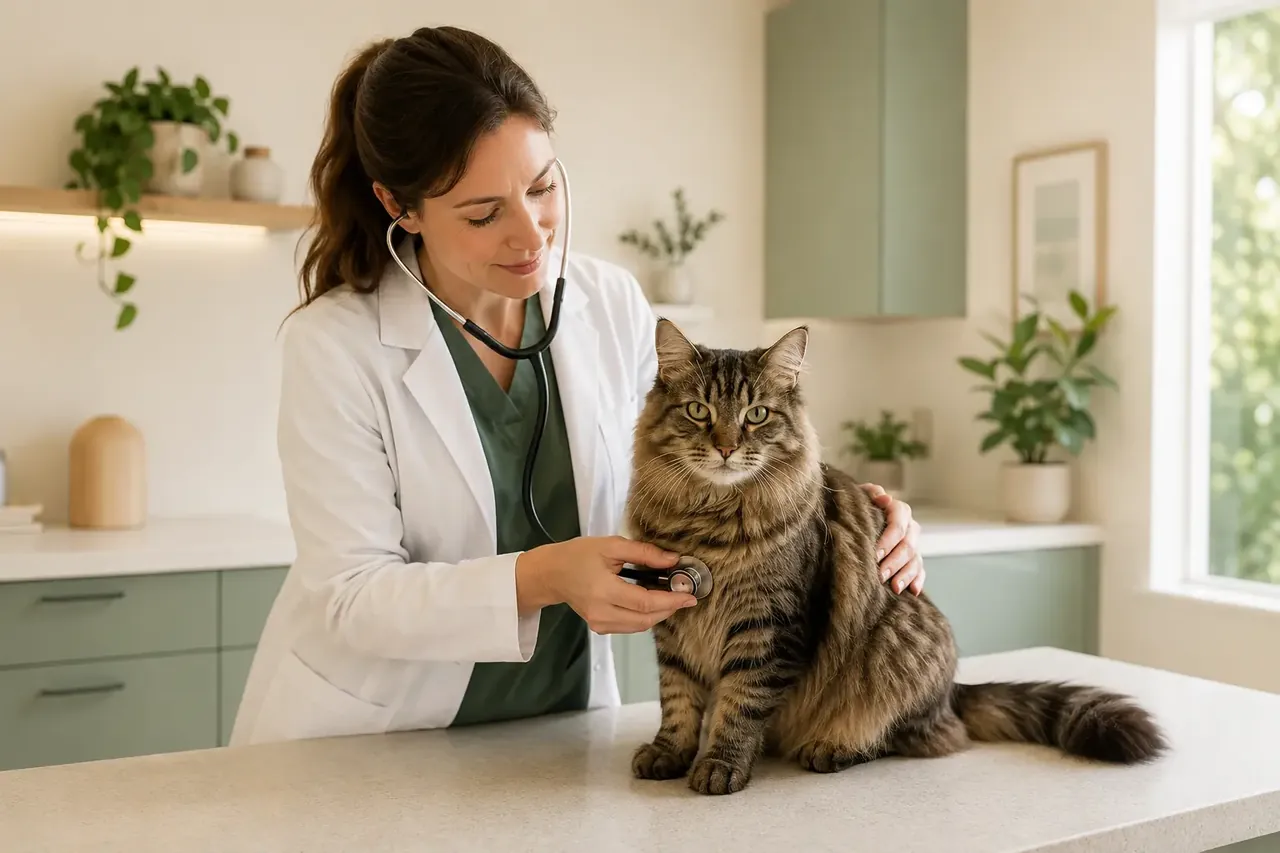 Topic illustration selected for this guide. Some learning images may be AI-assisted.
This sign can be urgent. Call a veterinarian or emergency clinic now for individual triage; do not wait for this article to diagnose the cause.
Straining in the litter box: urine or stool — the quick answer
✓ Little or no urine is an emergency
✓ Do not wait overnight to see whether it passes
✓ Never press the abdomen or give leftover medicine
✓ Bring the cat in a carrier and call ahead
Repeated squatting with little or no urine can be a life-threatening urethral obstruction, especially in male cats. Owners may mistake it for constipation. If you cannot confirm normal urine, treat the situation as urgent.
Signs of urinary obstruction
Repeated box visits, straining, crying, licking the genital area, restlessness, vomiting, hiding or passing only drops can occur. A blocked cat may deteriorate rapidly.
Urine versus constipation
Both can involve squatting and discomfort. Look for normal-sized urine clumps, but do not delay care while trying to decide. A clinic can examine the bladder and determine the cause.
What to do immediately
Call an emergency veterinarian, say that your cat may be unable to urinate, and leave promptly. Keep the cat quiet in a carrier. Do not squeeze the belly, force water or try to express the bladder.
After urgent causes are ruled out
Lower urinary tract disease has several possible causes. Follow the veterinary plan for pain relief, diet, water intake, litter access and environmental changes rather than using a universal home remedy.
Your quick checklist
Your progress is saved on this device.
What to do now
Do not use this guide to delay care. Start with the first step and follow the veterinary professional's instructions.
- 1Check immediately whether there is a recent normal urine clump, but do not delay while trying to be certain.
- 2Call an emergency veterinarian and say that the cat may be unable to urinate, especially for a male cat.
- 3Transport in a secure carrier without pressing the abdomen, forcing water or giving leftover medication.
Common mistakes
×Assuming straining is constipation when urine output is uncertain.
×Waiting overnight to see whether a blockage passes.
×Squeezing the bladder area or trying to express urine at home.
Questions cat people ask
How can I tell urinary blockage from constipation?+
Both may cause repeated squatting and distress. Normal-sized urine clumps are useful information, but a clinic must determine the cause; little or no urine should be treated as an emergency.
Can a blocked cat still pass a few drops?+
Yes. Passing drops does not rule out serious obstruction. Repeated attempts, crying, genital licking, vomiting, restlessness or collapse requires immediate veterinary care.
Still looking for the right answer?
Search the full EverYes Cats encyclopedia with your own words — a symptom, food, behaviour, breed or everyday question.
Checked, dated and transparent
- Prepared by
- EverYes Cats editorial team
- Last updated
- 7 August 2026
- Source checked
- 7 August 2026
- Primary reference
- FelineVMA urolithiasis consensus ↗
We begin with the named reference, rewrite the information in plain language and add practical cat-parent steps. Urgent health statements are checked against veterinary sources. This guide has not been individually reviewed by a veterinarian unless explicitly stated. It provides education, not diagnosis or treatment.
Spotted something unclear or outdated? Tell us so we can review it.
Your answer helps us improve the cat encyclopedia.
Fast breathing while a cat is truly resting or asleep can be serious. Count chest rises for a full minute and contact a veterinarian promptly when the rate is persistently abnormal.