Cat diarrhea: hydration, hygiene and red flags
One soft stool may be monitored in an otherwise well adult cat, but repeated diarrhoea, blood or illness signs require veterinary advice—sooner for kittens and seniors.
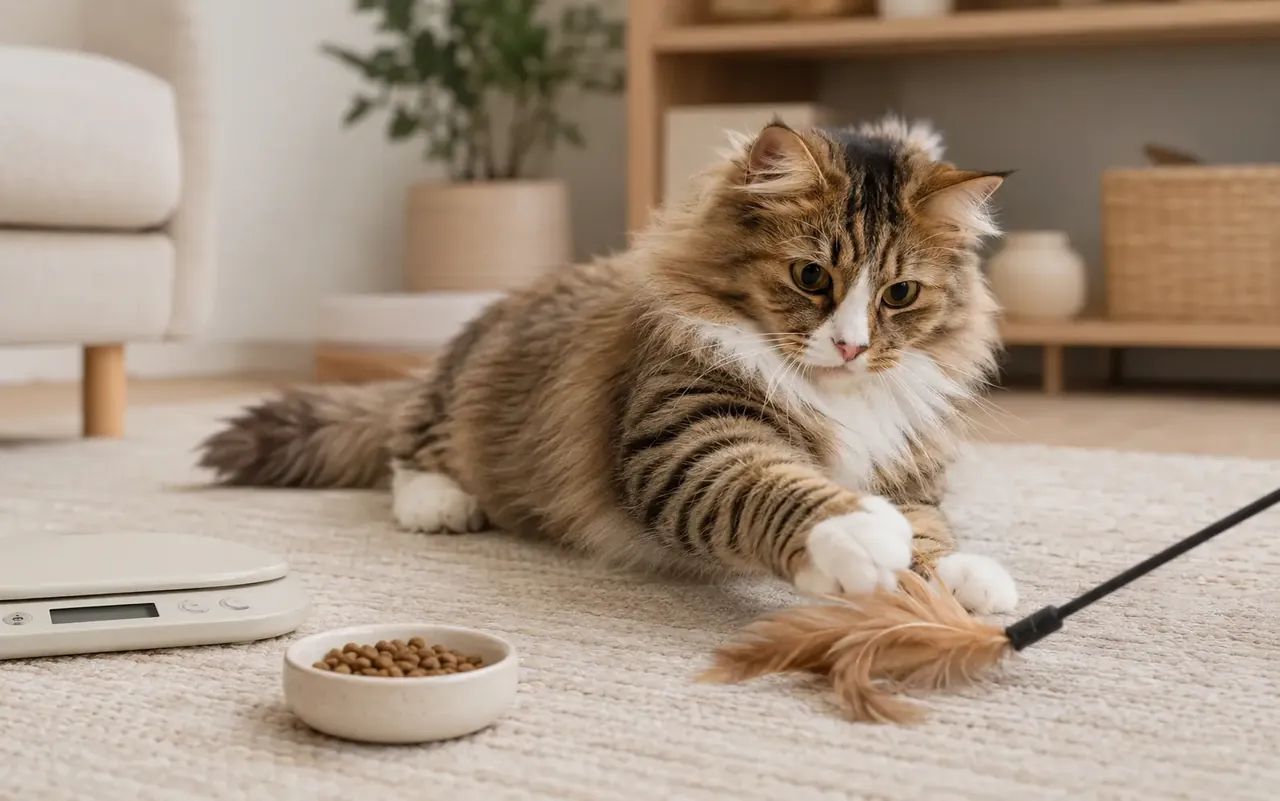 Topic illustration selected for this guide. Some learning images may be AI-assisted.
Cat diarrhea: hydration, hygiene and red flags — the quick answer
✓ Keep fresh water available
✓ Do not fast a cat without veterinary instruction
✓ Kittens and seniors can deteriorate faster
✓ Bring a fresh stool sample when requested
Diarrhea describes a sign, not a diagnosis. A mild isolated change may settle, but persistence, blood, vomiting or a cat that feels unwell deserves veterinary attention.
Protect hydration, record the stool and keep clean
Diarrhea is a sign, not a diagnosis. A clear description and the cat’s overall condition help decide whether brief monitoring or faster care is appropriate.
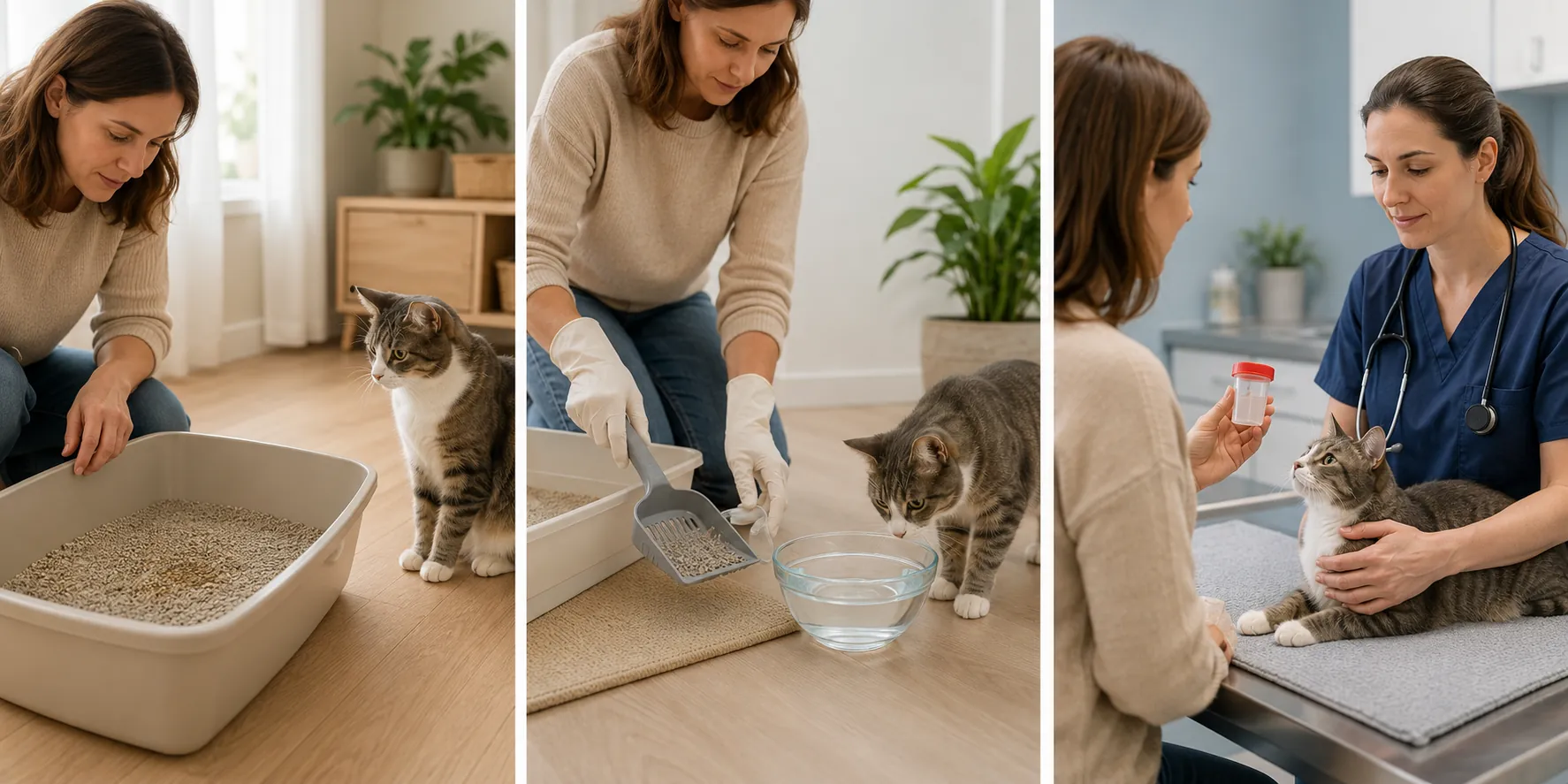
- 1Describe the change
Record frequency, colour, consistency, mucus, blood and straining along with appetite, vomiting, activity, diet changes, travel and medication.
- 2Keep water and familiar food available
Continue accessible fresh water and the familiar complete diet unless a veterinarian advises otherwise; use gloves, wash hands and keep litter tools separate when needed.
- 3Bring a sample only when requested
Contact a veterinarian for persistence and sooner for kittens, seniors, blood, repeated vomiting, pain, poor appetite, lethargy or dehydration; store a fresh sample exactly as the clinic directs.
Describe, do not diagnose
Record frequency, colour, consistency, mucus or blood and whether the cat strains. Note diet changes, scavenging, parasites, travel, stress and medication.
Protect hydration
Keep water easy to access and continue a familiar complete diet unless your veterinarian advises a change. Do not use human anti-diarrheal medicine.
Keep the home clean
Scoop promptly, wash hands and clean accidents safely. Use separate litter tools when another pet is ill, particularly until infectious causes have been considered.
When to call
Contact a veterinarian if diarrhea persists beyond a day or two, and sooner for blood, repeated vomiting, poor appetite, pain, lethargy, dehydration, a very young kitten, senior cat or known illness.
What to check first
Record frequency, colour, blood, vomiting, appetite, water intake, diet changes and possible toxin or foreign-body exposure.
What to do next
Keep fresh water available, preserve the normal diet unless advised otherwise and collect a fresh sample if the clinic requests it. Weakness, dehydration, repeated vomiting, black stool, significant blood or diarrhoea in a young kitten needs prompt care.
Your quick checklist
Your progress is saved on this device.
Three simple things you can do
You do not have to change everything today. Pick one step that feels realistic, try it and see how your cat responds.
- 1Photograph or describe frequency, colour, consistency, mucus, blood and straining, and save a fresh sample if the clinic requests one.
- 2Keep fresh water available and continue familiar complete food unless a veterinarian advises otherwise.
- 3Contact a veterinarian sooner for kittens, seniors, blood, repeated vomiting, poor appetite, pain, lethargy or dehydration.
Common mistakes
×Fasting a cat or giving human anti-diarrheal medication without instruction.
×Changing several foods and supplements at once.
×Handling litter without good hand hygiene when an infectious cause is possible.
Questions cat people ask
How long can I monitor mild diarrhea?+
An otherwise well adult cat with one mild episode may be monitored briefly, but persistence beyond a day or two deserves advice. Vulnerable cats or systemic signs need earlier care.
What should I feed a cat with diarrhea?+
Do not improvise a prolonged unbalanced diet. Keep the usual complete food available unless your veterinarian recommends a specific transition or therapeutic plan.
Still looking for the right answer?
Search the full EverYes Cats encyclopedia with your own words — a symptom, food, behaviour, breed or everyday question.
Checked, dated and transparent
- Prepared by
- EverYes Cats editorial team
- Last updated
- 14 August 2026
- Source checked
- 14 August 2026
- Primary reference
- Cornell Feline Health Center: Diarrhea ↗
We begin with the named reference, rewrite the information in plain language and add practical cat-parent steps. Urgent health statements are checked against veterinary sources. This guide has not been individually reviewed by a veterinarian unless explicitly stated. It provides education, not diagnosis or treatment.
Spotted something unclear or outdated? Tell us so we can review it.
Your answer helps us improve the cat encyclopedia.
How to recognise a possible urinary blockage and act without delay.