Cat symptom guide: Sudden weight loss
Unplanned weight loss in a cat is a reason to arrange a veterinary examination, even when appetite still looks normal. Confirm the trend, measure actual intake and record related changes without delaying care to run a long home experiment.
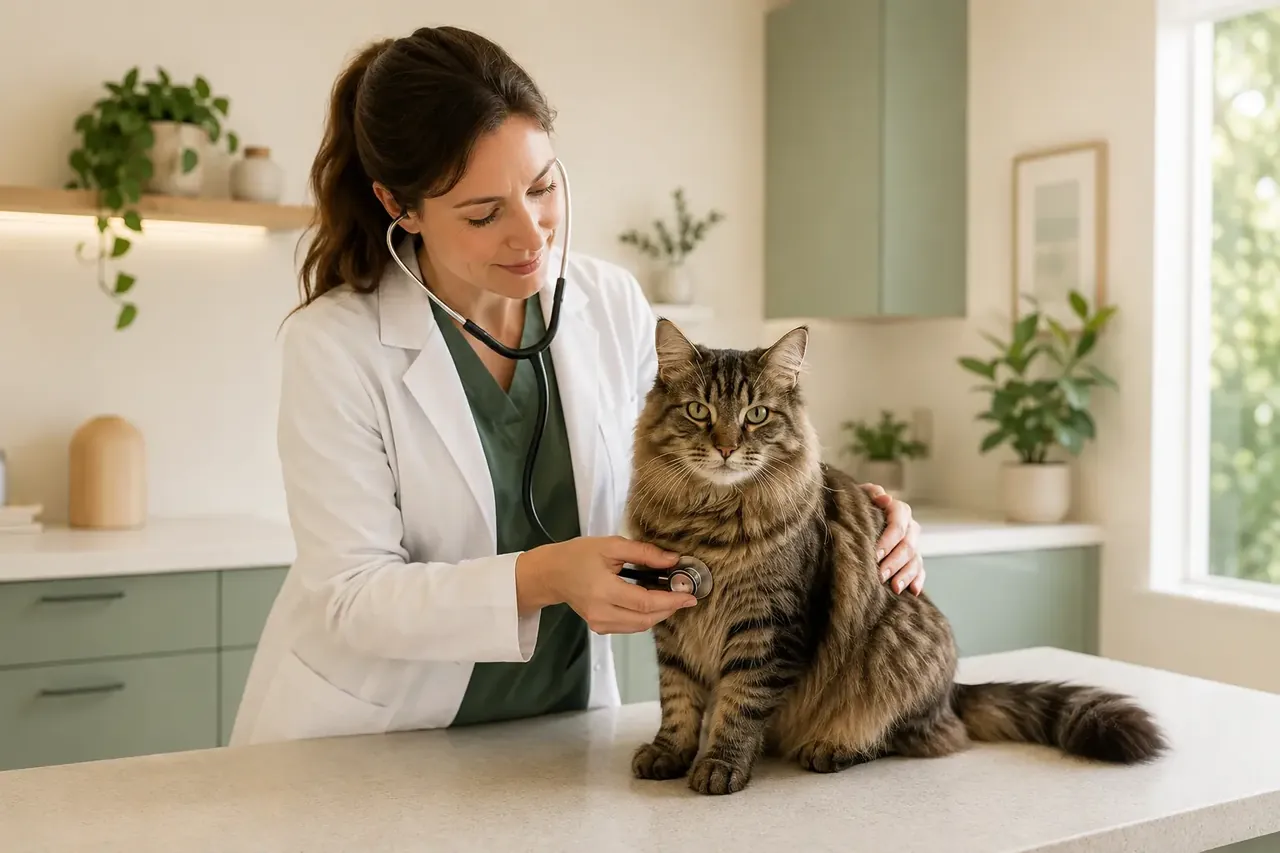 Topic illustration selected for this guide. Some learning images may be AI-assisted.
Cat symptom guide: Sudden weight loss — the quick answer
✓ Watch the whole pattern
✓ Book a veterinary check and bring recent weights and feeding amounts.
✓ Record timing, frequency and related changes
A symptom is information, not a diagnosis. Visible or measured loss deserves investigation even when appetite seems normal. When in doubt, a veterinary professional can triage the situation using your cat's age, history and current signs.
What this sign can look like
Visible or measured loss deserves investigation even when appetite seems normal.
What to do now
Book a veterinary check and bring recent weights and feeding amounts.
Useful information for the clinic
Note when it began, frequency, appetite, drinking, litter use, medication and possible exposures. Take a short video only if it is safe and does not delay care.
Confirm the change without waiting for it to become obvious
A thick coat can hide loss of fat and muscle. Use the same reliable scale at a similar time, record the date and weight, and compare photographs only as supporting context. Feel and appearance cannot replace a veterinary body- and muscle-condition assessment. One unexpected reading can be checked, but a downward trend or newly prominent spine, hips or shoulders should not be watched for weeks.
Separate appetite from calories actually eaten
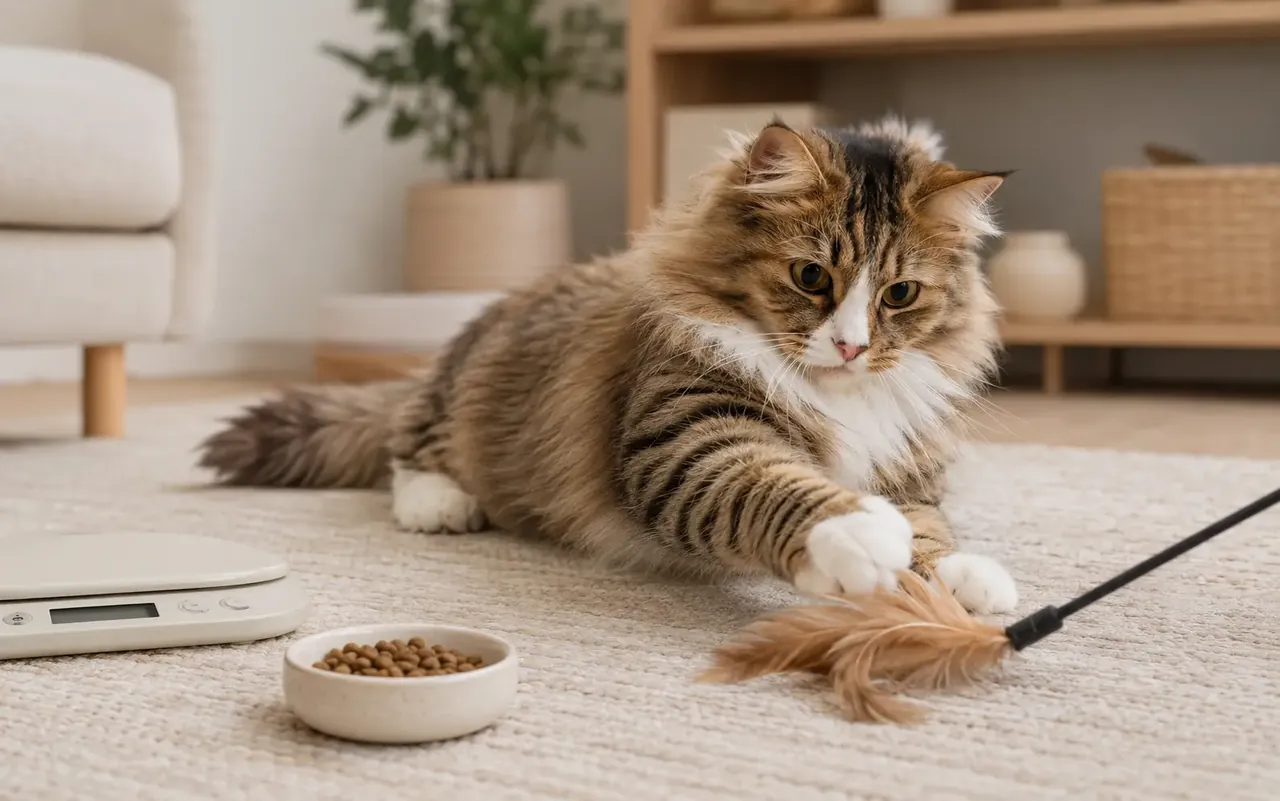
Write down the measured amount offered and what remains rather than describing appetite as good or bad. Note whether the cat approaches food, chews comfortably, drops pieces, walks away, vomits or eats more than usual. In a multi-cat home, feed separately long enough to identify the individual intake. Keep the normal complete diet available unless the veterinary team gives different instructions.
Record the pattern around the weight loss
Useful accompanying details include thirst, urine volume, stool, vomiting, activity, grooming, swallowing, breath, medication and diet changes. Increased hunger with weight loss is different from eating less because the mouth hurts or nausea develops, but neither pattern identifies one cause at home. Age changes the likely questions; it does not make unexplained loss normal.
Know when the situation becomes urgent
Seek urgent veterinary help for breathing difficulty, collapse, severe weakness, repeated vomiting, inability to keep water down, a swollen or painful abdomen, pale or blue-grey gums, or repeated litter-box straining with little or no urine. Contact the clinic promptly when a cat stops eating, loses weight rapidly or has several changes together. Do not force-feed or give human medicine.
Prepare for an efficient veterinary visit
Bring the dated weight record, food amounts, medication and supplement list, and a short timeline of the first change. The veterinarian may recommend an examination and tests based on age, history and findings; different dental, metabolic, kidney, intestinal and other conditions can look similar from home. Ask how often to reweigh and which change should trigger an earlier recheck.
Your quick checklist
Loading saved progress…
Three simple things you can do
You do not have to change everything today. Pick one step that feels realistic, try it and see how your cat responds.
- 1Weigh the cat on the same scale and record the date rather than relying on appearance alone.
- 2Measure food offered and eaten and note thirst, urine, vomiting, stool and activity.
- 3Arrange a veterinary assessment promptly for unexpected loss, especially in a senior cat.
Common mistakes
×Adding unlimited calories without checking the reason for weight loss.
×Assuming a normal appetite rules out illness.
×Waiting until a thick coat no longer hides muscle loss.
Questions cat people ask
Why is my cat suddenly losing weight?+
Dental disease, hyperthyroidism, diabetes, kidney or intestinal disease, cancer and other conditions can contribute. Examination and testing are needed because outward signs overlap.
Is weight loss urgent if my cat still eats?+
It still needs prompt assessment. Eating well while losing weight is an important pattern, and urgent care is appropriate when loss accompanies weakness, repeated vomiting, breathing trouble or refusal to eat.
Still looking for the right answer?
Search the full EverYes Cats encyclopedia with your own words — a symptom, food, behaviour, breed or everyday question.
Checked, dated and transparent
- Prepared by
- EverYes Cats editorial team
- Last updated
- Source checked
- Primary reference
- Merck Veterinary Manual: Feeding Practices in Small Animals ↗
We begin with the named reference, rewrite the information in plain language and add practical cat-parent steps. Urgent health statements are checked against veterinary sources. This guide has not been individually reviewed by a veterinarian unless explicitly stated. It provides education, not diagnosis or treatment.
How we choose and use sources →
Spotted something unclear or outdated? Tell us so we can review it.
Loading your saved choice…
A cat that starts limping may have a paw injury, torn claw, bite, fracture, joint pain or another painful condition. Restrict running and jumping, observe without forcing the leg and arrange veterinary assessment.
 01
 02
 06