Cat vomiting: one episode or a bigger concern?
What to record, what not to give and when repeated vomiting needs care.
 Topic illustration selected for this guide. Some learning images may be AI-assisted.
Cat vomiting: one episode or a bigger concern — the quick answer
✓ Repeated vomiting is not normal
✓ Never give human anti-nausea medicine
✓ Blood, weakness or inability to keep water down needs prompt care
✓ A photo and timeline help the clinic
Vomiting has many causes, from a brief stomach upset to obstruction or systemic illness. Frequency, the cat's overall condition and accompanying changes are more informative than the appearance of one episode.
Record the episode without guessing the cause
The number of episodes and the cat’s overall condition matter more than the appearance of one spot. Keep water available and never improvise human medicine.
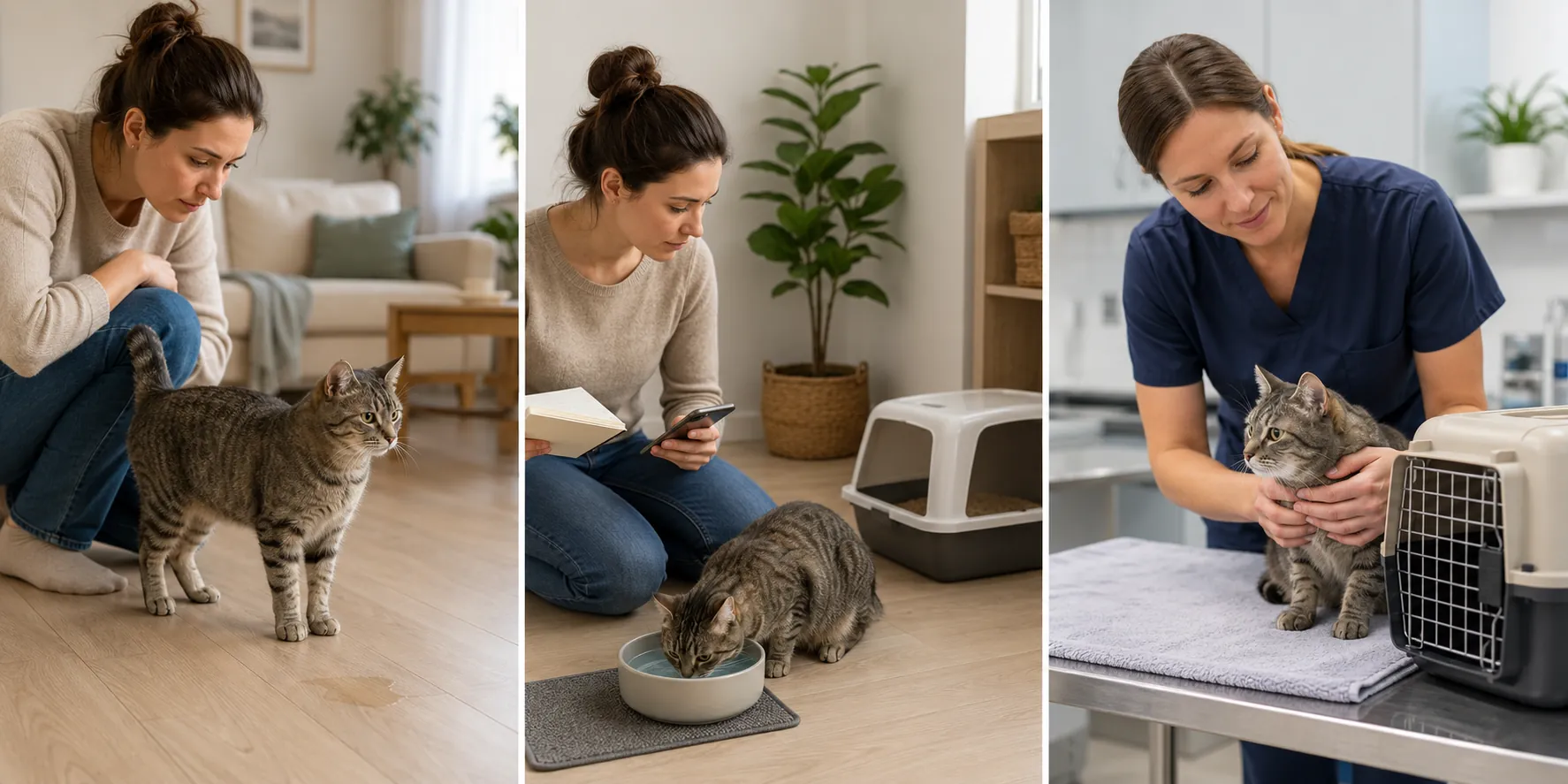
- 1Count and observe
Note the time, abdominal effort, contents and whether your cat returns to normal behaviour, while checking for blood, pain, weakness or a swollen abdomen.
- 2Build the full timeline
Record meals, appetite, water, urine, stool, medication and access to string, plants, toxins or spoiled food; a safe photo or video may help the clinic.
- 3Call for repeated or serious signs
Seek prompt advice for repeated vomiting, poor appetite or diarrhea, and urgent care for blood, collapse, severe pain, toxin or foreign-object risk, or inability to keep water down.
Vomiting or regurgitation?
Vomiting usually includes nausea and abdominal effort. Regurgitation is often passive and may bring up undigested food soon after eating. A video can help a veterinarian distinguish them.
Record the episode
Note time, number of episodes, relation to meals, contents, appetite, stool, water, urine, medications and access to string, plants or spoiled food.
Safe short-term steps
Remove access to suspected hazards and call for advice. Keep water available unless a veterinarian says otherwise. Do not give oils, peroxide, antacids or human medicine.
Red flags
Seek prompt care for repeated episodes, blood, pain, bloating, weakness, reduced appetite, diarrhea, thirst or urination changes, or possible foreign-body or toxin exposure.
Your quick checklist
Your progress is saved on this device.
Three simple things you can do
You do not have to change everything today. Pick one step that feels realistic, try it and see how your cat responds.
- 1Record the time, number of episodes, relation to food, contents and the cat's behaviour between episodes.
- 2Check appetite, water, urine, stool and access to string, plants, medication or spoiled food.
- 3Call promptly for repeated vomiting, blood, pain, weakness, poor appetite, suspected toxin or inability to keep water down.
Common mistakes
×Calling repeated vomiting normal because the cat sometimes produces hairballs.
×Giving peroxide, oil, antacids or human anti-nausea medicine.
×Removing water or fasting a cat without veterinary instruction.
Questions cat people ask
How can I tell vomiting from regurgitation?+
Vomiting commonly includes nausea and abdominal effort; regurgitation is often more passive and may occur soon after eating. A safe short video can help your veterinarian distinguish them.
When is one vomiting episode an emergency?+
One episode can still be urgent with blood, severe pain, weakness, collapse, breathing change, a swollen abdomen or suspected string, toxin or foreign-object exposure.
Still looking for the right answer?
Search the full EverYes Cats encyclopedia with your own words — a symptom, food, behaviour, breed or everyday question.
Checked, dated and transparent
- Prepared by
- EverYes Cats editorial team
- Last updated
- 7 August 2026
- Source checked
- 7 August 2026
- Primary reference
- Cornell Feline Health Center: Vomiting ↗
We begin with the named reference, rewrite the information in plain language and add practical cat-parent steps. Urgent health statements are checked against veterinary sources. This guide has not been individually reviewed by a veterinarian unless explicitly stated. It provides education, not diagnosis or treatment.
Spotted something unclear or outdated? Tell us so we can review it.
Your answer helps us improve the cat encyclopedia.
Fast breathing while a cat is truly resting or asleep can be serious. Count chest rises for a full minute and contact a veterinarian promptly when the rate is persistently abnormal.