Constipation in cats: signs, causes and safe action
Constipation can cause hard infrequent stool, repeated straining and discomfort, but urinary blockage can look similar and is an emergency.
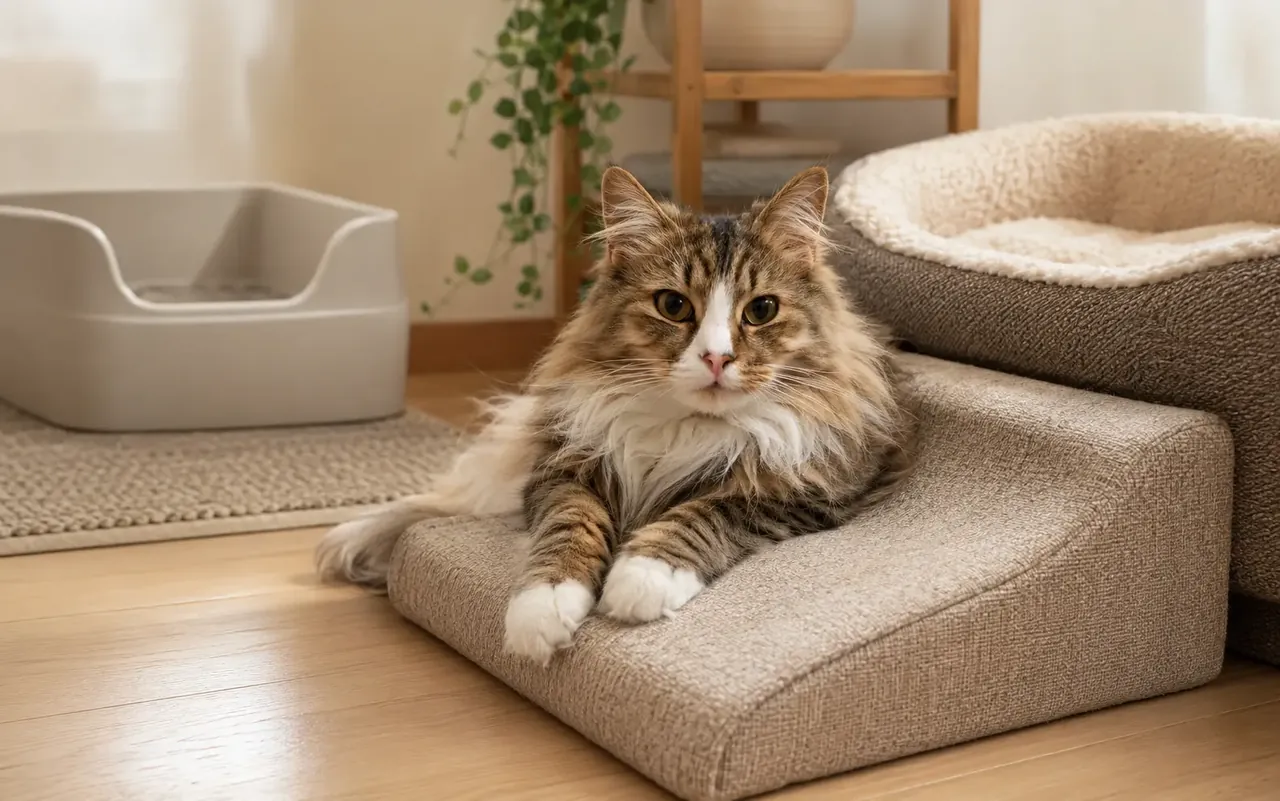 Topic illustration selected for this guide. Some learning images may be AI-assisted.
Constipation in cats: signs, causes and safe action — the quick answer
✓ No urine or only drops is an emergency
✓ Do not give human laxatives
✓ Hydration and movement matter but do not replace diagnosis
✓ Repeated constipation needs a veterinary plan
Small hard stools, repeated attempts and painful defecation may indicate constipation. But straining can also be a urinary blockage, so first confirm whether normal urine is being produced.
Check urine first when a cat strains
Constipation and urinary blockage can look similar from home. Little or no urine is an emergency, so do not assume repeated litter-box attempts are only about stool.
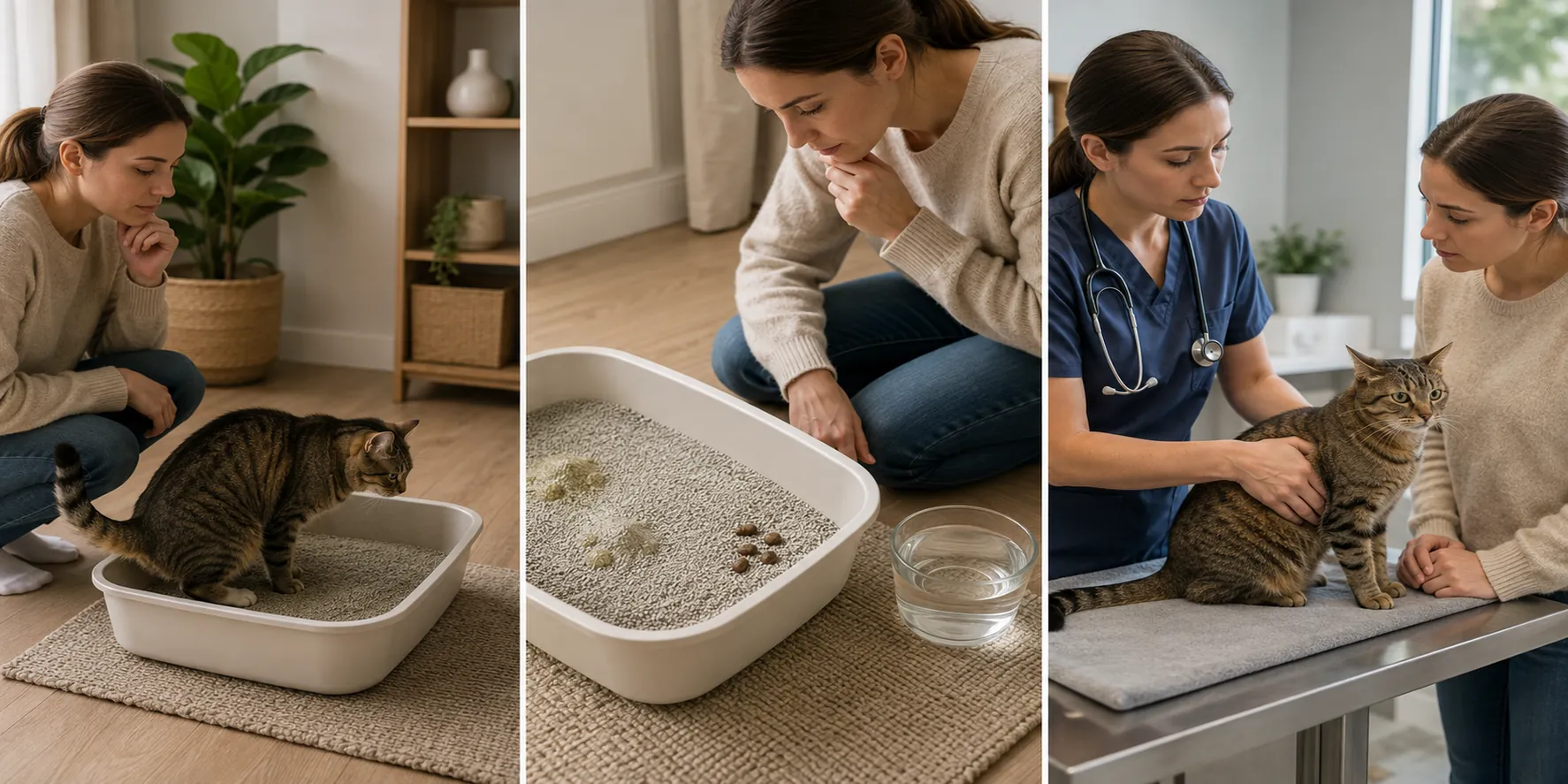
- 1Confirm whether urine is produced
Look for a recent normal-sized urine clump while counting attempts, but do not delay emergency care if urine is absent, only drops appear or you cannot tell.
- 2Record stool without home remedies
Note the last normal bowel movement, stool size and hardness, appetite, vomiting and pain; keep water accessible and give no oils, enemas or laxatives without veterinary instruction.
- 3Escalate pain, vomiting or persistence
Seek urgent care for no urine, marked pain, weakness, vomiting or a swollen abdomen, and contact the clinic for persistent straining, no stool, reduced appetite or repeated hard stools.
Inspect the litter evidence
Record stool size, hardness and timing as well as urine clumps. Video repeated straining if safe. Do not rely only on posture to decide whether the problem is stool or urine.
Consider contributing factors
Dehydration, pain, reduced activity, hair ingestion, medication, pelvic narrowing and intestinal disease can contribute. Recurrence is not simply a litter-box habit.
Safe support
Keep water available, offer the cat's usual wet food if normally tolerated and make the tray easy to reach. Do not give oils, enemas or laxatives without veterinary instruction.
Escalate appropriately
Seek urgent care for no urine, vomiting, marked pain, weakness or a swollen abdomen. Contact the clinic for persistent straining, no stool, reduced appetite or recurrent hard stools.
What to check first
Confirm whether urine is passing and record stool timing, appetite, vomiting, hydration and posture. Do not assume every tray strain is constipation.
What to do next
Call a veterinarian for repeated straining or no normal stool, and follow advice on examination, hydration and treatment. Do not give human laxatives or enemas. Little or no urine, vomiting, severe pain, collapse or a swollen abdomen requires urgent care.
Your quick checklist
Your progress is saved on this device.
Three simple things you can do
You do not have to change everything today. Pick one step that feels realistic, try it and see how your cat responds.
- 1Confirm whether the cat is passing urine, because urinary straining can look similar and may be an emergency.
- 2Record stool frequency, appetite, vomiting, pain and medications.
- 3Contact a veterinarian promptly for repeated straining, no stool, vomiting or lethargy.
Common mistakes
×Giving human laxatives or enemas.
×Assuming every litter-box strain is constipation.
×Waiting when a male cat may be unable to urinate.
Questions cat people ask
How long can a cat go without pooping?+
Normal frequency varies, but repeated straining, discomfort, vomiting, appetite loss or an unusual delay needs veterinary advice rather than a fixed waiting rule.
Can I give my cat an enema at home?+
No. Some human enema products are dangerous to cats, and the cause and severity need professional assessment.
Still looking for the right answer?
Search the full EverYes Cats encyclopedia with your own words — a symptom, food, behaviour, breed or everyday question.
Checked, dated and transparent
- Prepared by
- EverYes Cats editorial team
- Last updated
- 14 August 2026
- Source checked
- 14 August 2026
- Primary reference
- Cornell Feline Health Center ↗
We begin with the named reference, rewrite the information in plain language and add practical cat-parent steps. Urgent health statements are checked against veterinary sources. This guide has not been individually reviewed by a veterinarian unless explicitly stated. It provides education, not diagnosis or treatment.
Spotted something unclear or outdated? Tell us so we can review it.
Your answer helps us improve the cat encyclopedia.
A frightened cat may seek a familiar-smelling place, but sitting can also accompany urinary or digestive discomfort. Learn what to check, what to change safely and when professional help matters.