A beginner’s guide to puzzle feeders
A good cat puzzle feeder begins easy, uses part of the measured daily food and lets the cat succeed quickly. Increase difficulty only while the cat stays engaged rather than frustrated.
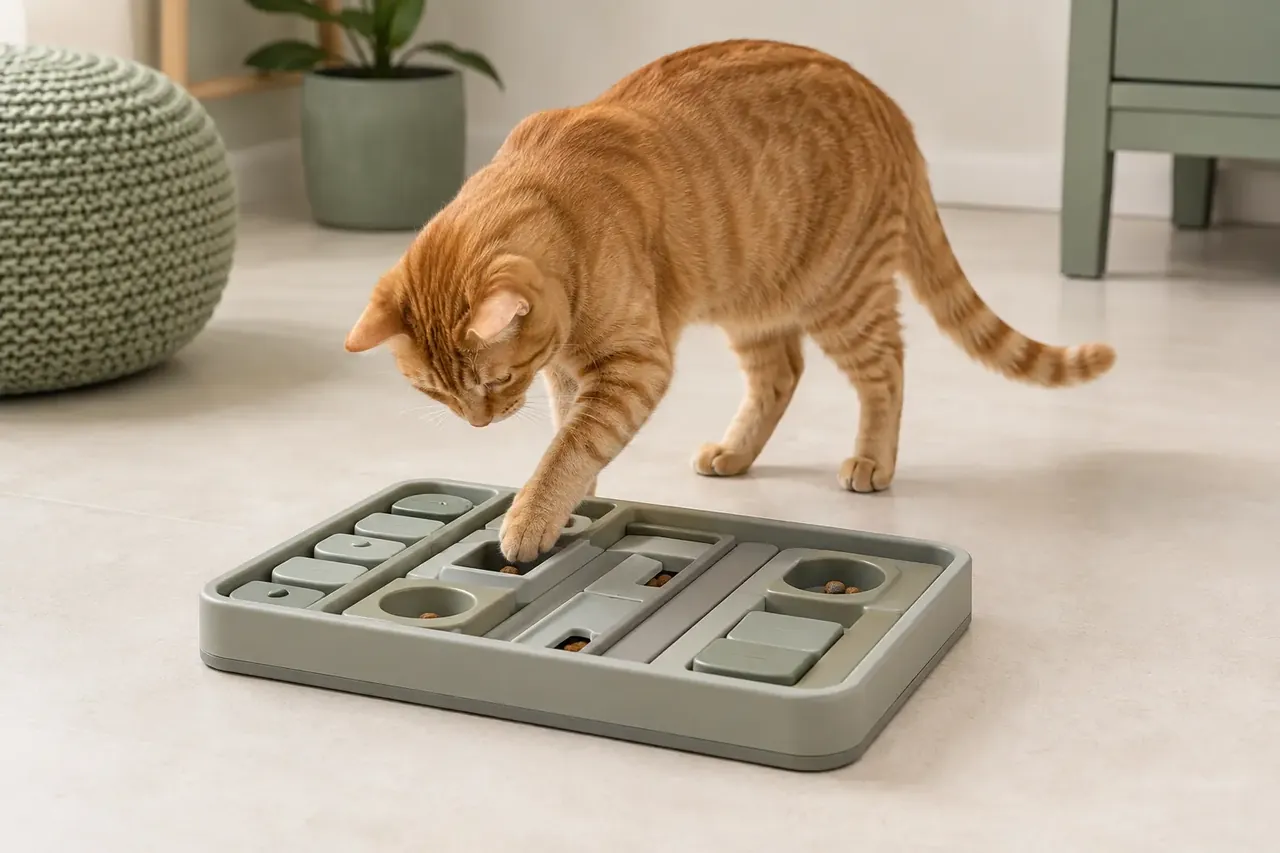 Topic illustration selected for this guide. Some learning images may be AI-assisted.
A beginner’s guide to puzzle feeders — the quick answer
✓ Use part of the normal daily food amount
✓ Begin with an easy visible reward
✓ Different cats prefer different puzzle styles
Puzzle feeders add searching and paw work to mealtime. The best puzzle begins easy enough that the cat succeeds.
Make the first puzzle easy to win
A puzzle should invite exploration, not create hunger or frustration.
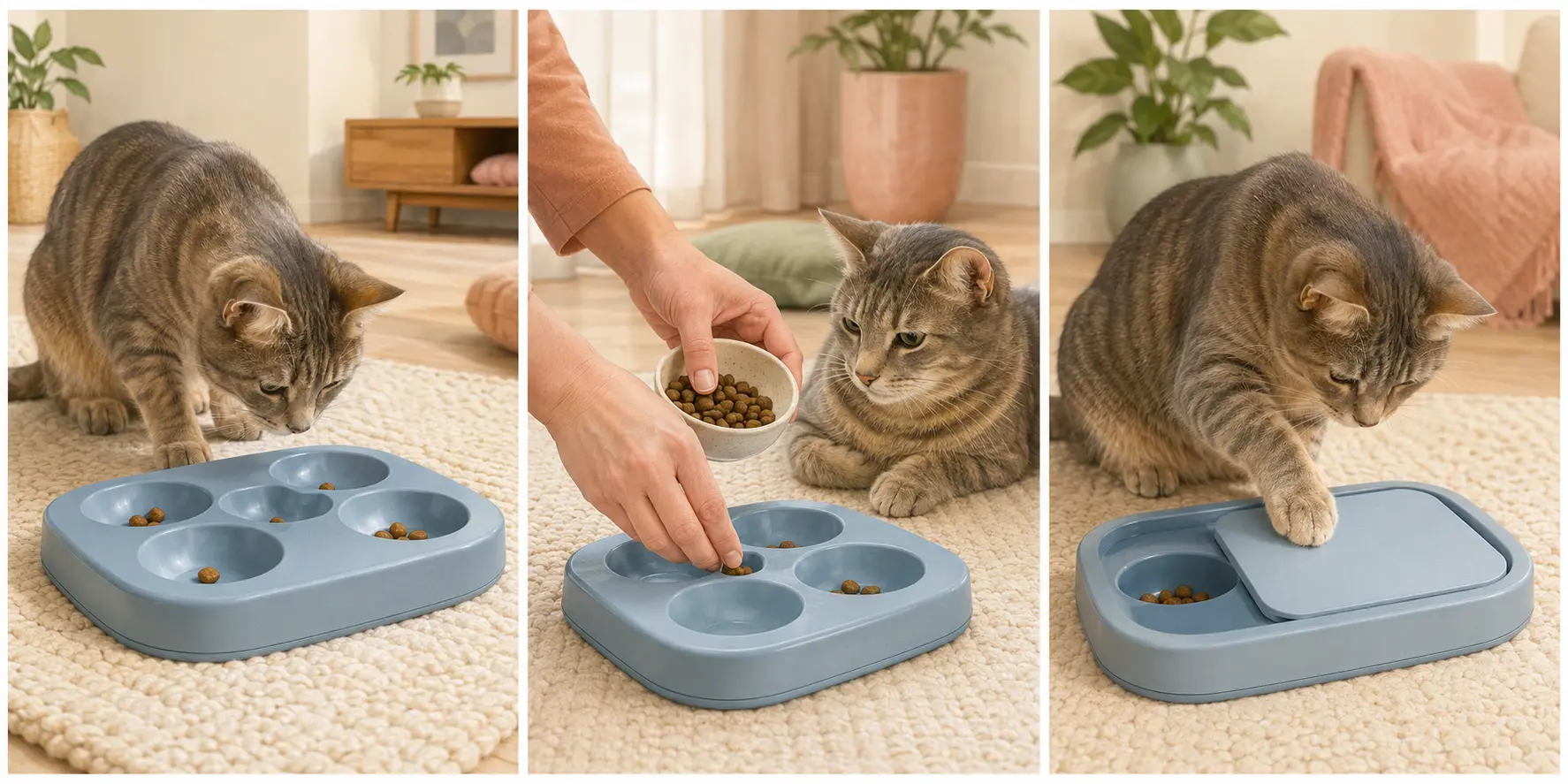
- 1Start open and simple
Choose a stable washable puzzle where food is visible and easy to reach with one paw.
- 2Use measured food
Take food from the normal daily ration and supervise the first attempts without moving the cat's paw.
- 3Increase one challenge
Add one lid, deeper cup or moving part only after your cat solves the easier version confidently.
Start simple
Place food in an open egg carton or shallow puzzle so one paw movement produces a reward.
Increase difficulty slowly
Add lids, deeper wells or movement only after the cat understands the task. Frustration is not enrichment.
Keep it clean
Choose washable food-safe materials and remove damaged homemade puzzles or loose pieces.
Match the puzzle to the cat
A paw-focused cat may enjoy sliding pieces, while another prefers sniffing through a shallow forage tray. Use wide, stable, washable equipment and adapt for kittens, seniors, flat-faced cats or limited mobility. Supervise homemade puzzles for loose or chewable parts.
Read success and frustration
Sniffing, pawing, pausing and returning can be normal problem-solving. Repeated biting at the device, frantic pawing, walking away hungry or resource guarding means the task should be made easier or separated from other cats.
Your quick checklist
Your progress is saved on this device.
Three simple things you can do
You do not have to change everything today. Pick one step that feels realistic, try it and see how your cat responds.
- 1Begin with part of the normal meal visible in an open, stable puzzle.
- 2Increase only one difficulty feature after the cat succeeds repeatedly.
- 3Use washable food-safe materials and supervise homemade puzzles for damage.
Common mistakes
×Starting with a puzzle so difficult that the cat gives up.
×Adding puzzle food on top of the measured daily ration.
×Using small detachable pieces, sharp edges or uncleanable materials.
Questions cat people ask
What is the easiest puzzle feeder for a beginner cat?+
A shallow tray, open egg-carton style feeder or food scattered among large safe obstacles lets one simple paw movement produce a reward.
What if my cat refuses to use a puzzle feeder?+
Make it easier, use familiar food and offer a normal meal option so the cat does not go hungry. Not every cat enjoys every puzzle style.
Still looking for the right answer?
Search the full EverYes Cats encyclopedia with your own words — a symptom, food, behaviour, breed or everyday question.
Checked, dated and transparent
- Prepared by
- EverYes Cats editorial team
- Last updated
- 13 August 2026
- Source checked
- 13 August 2026
- Primary reference
- FelineVMA Healthy Feline Environment ↗
We begin with the named reference, rewrite the information in plain language and add practical cat-parent steps. Urgent health statements are checked against veterinary sources. This guide has not been individually reviewed by a veterinarian unless explicitly stated. It provides education, not diagnosis or treatment.
Spotted something unclear or outdated? Tell us so we can review it.
Your answer helps us improve the cat encyclopedia.
Price does not predict whether movement, texture, size and sound match an individual cat’s hunting preferences..