How much sleep do cats need?
Many cats rest for much of the day in a mix of naps and light dozing. The meaningful question is whether sleep, waking, appetite, movement or interaction has changed from that cat’s normal pattern.
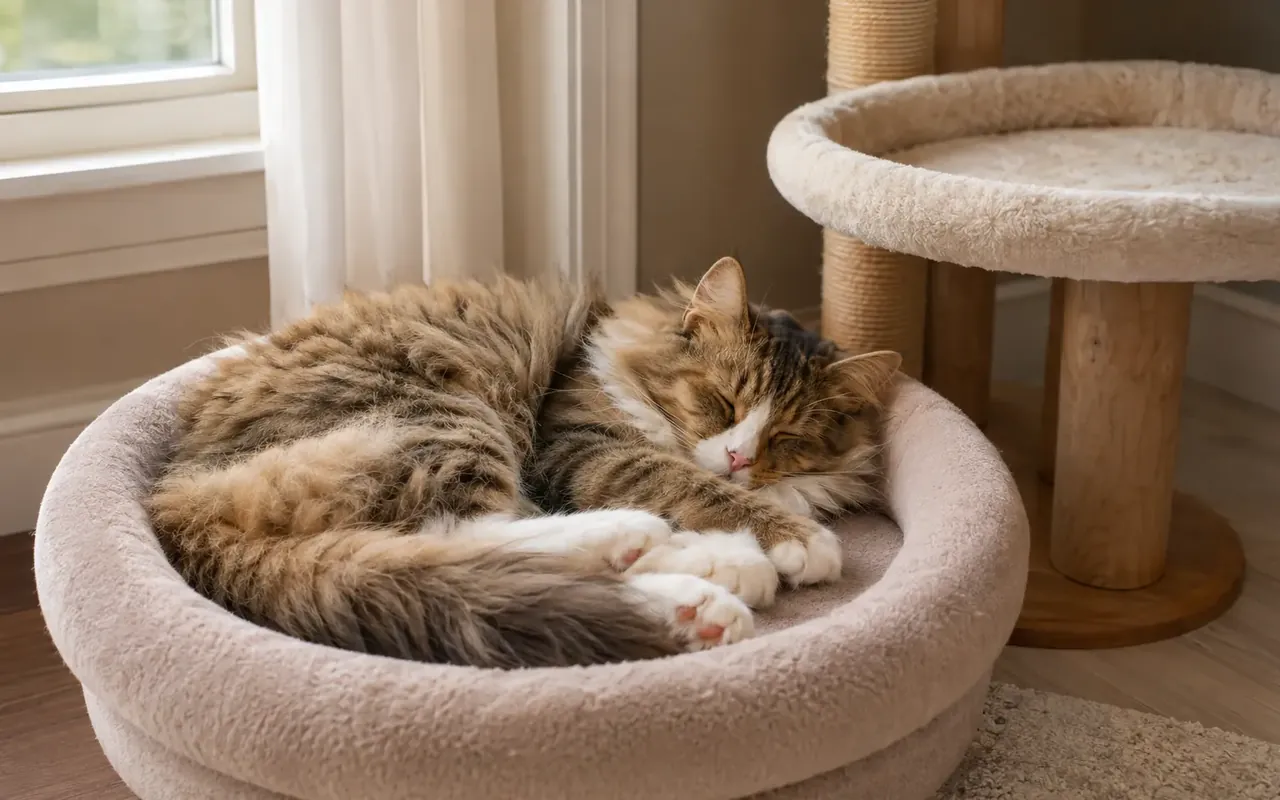 Topic illustration selected for this guide. Some learning images may be AI-assisted.
How much sleep do cats need — the quick answer
✓ Cats naturally rest in many short periods
✓ Kittens and seniors may sleep more
✓ A sudden sleep change can matter
Many adult cats sleep or rest for a large part of the day. Age, activity, weather, health and household routine all influence the total.
Light sleep counts
Cats often doze while remaining responsive to sounds. Not every quiet hour is deep sleep.
Age changes the pattern
Kittens need rest for growth, while older cats may sleep more but should still move comfortably and engage normally.
Notice the difference
Contact a veterinarian if increased sleep comes with weakness, appetite change, hiding, breathing changes or reduced mobility.
Distinguish rest from reduced responsiveness
A dozing cat may rotate ears, change position and wake readily for familiar activity. Concern rises when a cat is difficult to wake, weak, hiding, breathing differently or no longer interested in food, play or ordinary routines.
Compare like with like
Track sleep across similar days while noting age, temperature, household activity and medication. Kittens and senior cats may rest more, but a sudden persistent increase or inability to settle deserves veterinary advice, especially with another change.
Your quick checklist
Your progress is saved on this device.
Three simple things you can do
You do not have to change everything today. Pick one step that feels realistic, try it and see how your cat responds.
- 1Learn your cat’s normal sleep locations and active times.
- 2Provide several warm, quiet resting choices.
- 3Track sleep changes alongside appetite, mobility and engagement.
Common mistakes
×Waiting for a dramatic symptom instead of noticing smaller changes from the cat’s normal routine.
×Changing several things at once, making it difficult to learn what actually helped.
×Treating general guidance as a substitute for advice from a veterinarian who knows the individual cat.
Questions cat people ask
Is my cat sleeping because they are bored?+
Possibly, but cats naturally rest extensively. Offer enrichment and judge the response during normal active periods.
Why does my cat wake me before dawn?+
Cats often become active around dawn. Scheduled evening play, a small meal and an automatic feeder may help reshape the routine.
Still looking for the right answer?
Search the full EverYes Cats encyclopedia with your own words — a symptom, food, behaviour, breed or everyday question.
Checked, dated and transparent
- Prepared by
- EverYes Cats editorial team
- Last updated
- 13 August 2026
- Source checked
- 13 August 2026
- Primary reference
- FelineVMA Healthy Feline Environment ↗
We begin with the named reference, rewrite the information in plain language and add practical cat-parent steps. Urgent health statements are checked against veterinary sources. This guide has not been individually reviewed by a veterinarian unless explicitly stated. It provides education, not diagnosis or treatment.
Spotted something unclear or outdated? Tell us so we can review it.
Your answer helps us improve the cat encyclopedia.
A new bed may smell unfamiliar, feel unstable or sit in the wrong location. Cats choose beds by safety, temperature and texture—not price.