A swollen or distended abdomen in cats
A newly enlarged or tight abdomen can reflect gas, stool, fluid, organ enlargement, pregnancy, bleeding or urinary disease. Do not press on it; record the timeline and seek urgent care for pain, breathing difficulty, weakness or little to no urine.
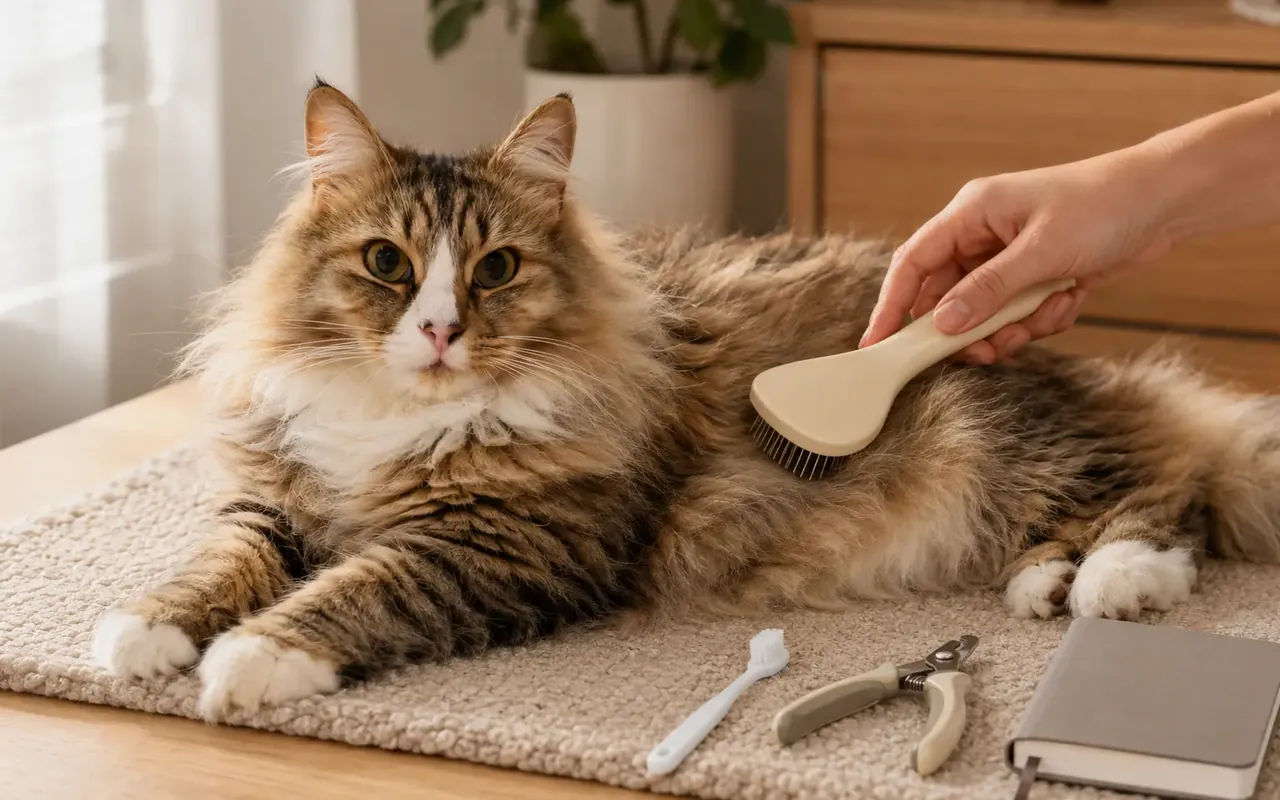 Topic illustration selected for this guide. Some learning images may be AI-assisted.
This sign can be urgent. Call a veterinarian or emergency clinic now for individual triage; do not wait for this article to diagnose the cause.
A swollen or distended abdomen in cats — the quick answer
✓ Do not press firmly on the abdomen; keep the cat quiet and contact a veterinarian.
✓ A sudden painful or tight abdomen, retching, breathing difficulty, pale gums, collapse or no urine is an emergency.
✓ This information supports observation and does not replace veterinary diagnosis.
Assess onset, firmness, pain, breathing, eating, stool, urine and whether the cat may be pregnant. This guide explains what to record, what not to do and when veterinary care becomes urgent.
Describe the change without pressing
View the cat from above and the side while standing naturally. Note whether enlargement is sudden or gradual, even or one-sided, soft-looking or tense, and compare with recent photographs and weight. Do not squeeze, massage or repeatedly lift the cat under the abdomen to test for pain.
Check breathing, urine and digestive signs
Record appetite, vomiting, retching, stool, litter-box visits, urine-clump size, thirst and energy. Watch breathing at rest without handling. Repeated straining with drops or no urine can indicate urinary obstruction, while a tight painful belly, pale gums or breathing difficulty can accompany other emergencies.
Do not diagnose pregnancy, fat or worms at home
Body fat, pregnancy, parasites, constipation, enlarged organs, masses and abdominal fluid can create similar outlines. A pot-bellied kitten still needs an age-appropriate veterinary plan. Do not give dewormer, laxatives, oil, diuretics or reduced food merely from appearance.
Arrange veterinary examination
Contact a clinic promptly for a new, persistent or increasing abdominal enlargement. The veterinarian may combine examination with urine, blood, faecal or imaging tests because the outside shape cannot reveal what occupies the abdomen. Report neuter status, possible mating, medication, trauma and access to string or toxins.
Recognise emergency combinations
Seek emergency care for sudden swelling with pain, repeated unproductive retching, breathing effort, pale or blue-grey gums, collapse, major weakness, trauma, repeated vomiting or inability to pass urine. Do not offer a large meal or wait for the abdomen to reduce when these signs are present.
Support safe transport
Keep the cat quiet on one level and use a carrier with a flat stable base. Support the chest and pelvis rather than compressing the abdomen. Bring photos of the earlier body shape, medication details and observations of the last normal meal, stool and urine without delaying urgent departure.
Your quick checklist
Loading saved progress…
What to do now
Do not use this guide to delay care. Start with the first step and follow the veterinary professional's instructions.
- 1Observe your cat’s individual baseline.
- 2Make one gentle change at a time.
- 3Ask a qualified professional when health or safety is involved.
Common mistakes
×Waiting for a dramatic symptom instead of noticing smaller changes from the cat’s normal routine.
×Changing several things at once, making it difficult to learn what actually helped.
×Treating general guidance as a substitute for advice from a veterinarian who knows the individual cat.
Questions cat people ask
Does every cat follow the same rule?+
No. Age, health, history, temperament and environment all change what works for an individual.
When should I seek professional help?+
Seek veterinary advice for sudden, persistent or concerning changes and urgent help for breathing difficulty, collapse, seizures, poisoning or urinary obstruction signs.
Still looking for the right answer?
Search the full EverYes Cats encyclopedia with your own words — a symptom, food, behaviour, breed or everyday question.
Checked, dated and transparent
- Prepared by
- EverYes Cats editorial team
- Last updated
- Source checked
- Primary reference
- Merck Veterinary Manual: Digestive Disorders of Cats ↗
We begin with the named reference, rewrite the information in plain language and add practical cat-parent steps. Urgent health statements are checked against veterinary sources. This guide has not been individually reviewed by a veterinarian unless explicitly stated. It provides education, not diagnosis or treatment.
How we choose and use sources →
Spotted something unclear or outdated? Tell us so we can review it.
Loading your saved choice…
A broken cat tooth may expose sensitive tissue or hide damage below the gumline even when the cat still eats. Prevent hard chewing, do not test or file the tooth and arrange a veterinary dental assessment; facial trauma, jaw misalignment or heavy bleeding is urgent.
 01
 02
 03