Why is my cat losing balance?
A cat that suddenly stumbles, circles or falls needs prompt veterinary assessment. Keep the cat on floor level in a padded safe area, record eye and head movement only if this does not delay care, and treat inability to stand, seizures, toxin exposure or breathing difficulty as an emergency.
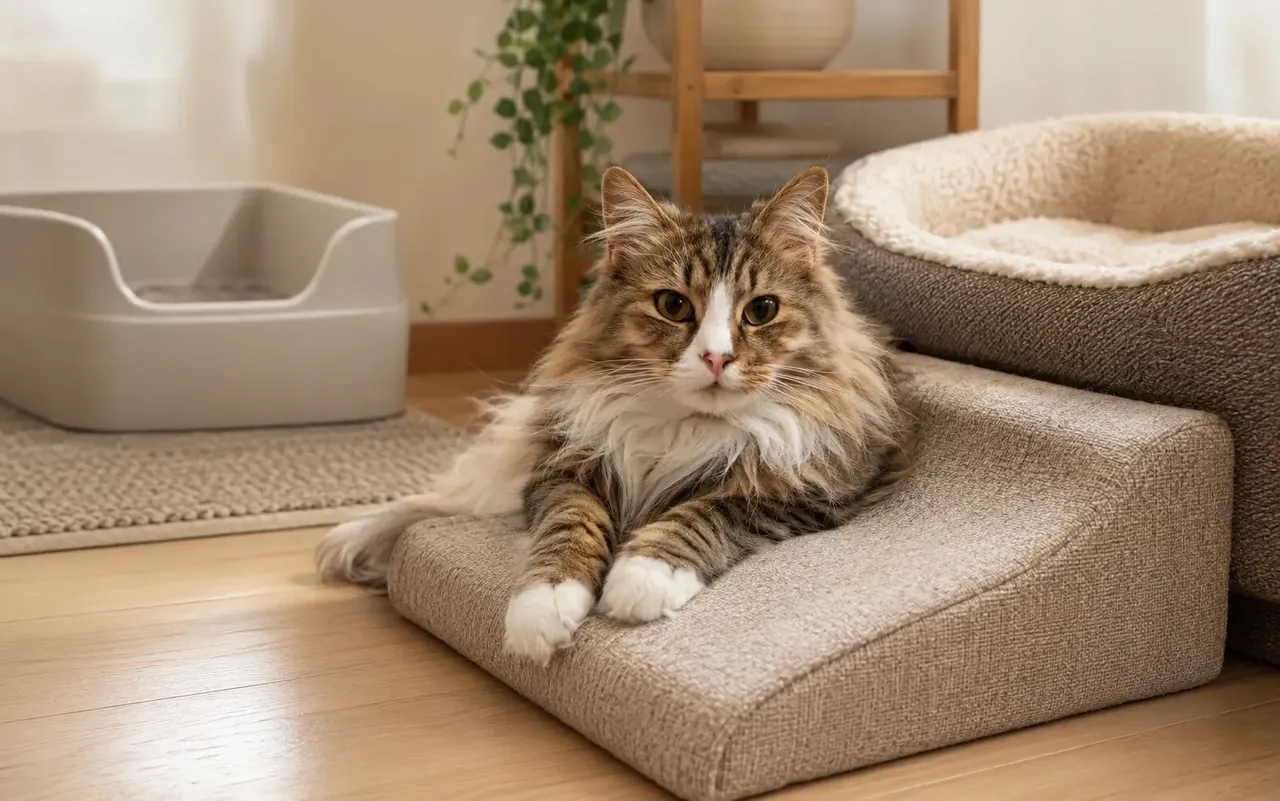
 Topic illustration selected for this guide. Some learning images may be AI-assisted.
This sign can be urgent. Call a veterinarian or emergency clinic now for individual triage; do not wait for this article to diagnose the cause.
Why is my cat losing balance — the quick answer
✓ Place the cat in a padded carrier on the floor and seek prompt veterinary care.
✓ Collapse, seizures, toxin exposure, breathing difficulty or inability to stand is immediate emergency care.
✓ This information supports observation and does not replace veterinary diagnosis.
Observe stumbling, circling, falling, weakness, abnormal eyes and whether all limbs are affected. This guide explains what to record, what not to do and when veterinary care becomes urgent.
Protect the cat from falls immediately
Block stairs, balconies, high furniture and water hazards and place the cat in a quiet floor-level room or padded carrier. Do not encourage walking to test coordination or hold the cat upright. Sudden imbalance can cause panic, rolling and injury, so minimise movement and dim bright visual stimulation while contacting a veterinarian. Keep other animals and children away from the observation area.
Observe the whole pattern from a distance
Note which direction the cat falls or circles, any head tilt, rapid eye movements, vomiting, facial droop, weakness and whether all four limbs move. Record exact onset and possible falls, medicines, pest products or other toxins. A short video can help distinguish patterns, but stop filming and travel when the cat is distressed or deteriorating. Never provoke walking for comparison.
Do not assume every case is harmless vestibular disease
Inner-ear and vestibular disorders can produce dramatic imbalance, but neurologic disease, toxins, trauma, low blood sugar, anemia and other illness can appear similar. Some idiopathic vestibular cases improve, yet that conclusion requires examination. Improvement over an hour is not a safe reason to cancel veterinary advice after a sudden severe event, especially when the cat has other symptoms.
Avoid intake and home medication when swallowing is uncertain
Nausea and poor coordination can make swallowing unsafe. Do not syringe fluids, force food or give motion-sickness medicine, antihistamine or leftover prescriptions. Keep the cat comfortably positioned with the airway clear and follow the clinic's individual instructions about intake. The veterinarian may assess gait, reflexes, eyes, ears, blood pressure and general health and recommend testing or imaging.
Use emergency care for severe combinations
Inability to rise, repeated rolling, seizures, collapse, profound weakness, pale or blue-grey gums, breathing difficulty, major trauma or suspected poisoning requires emergency care. Call ahead and transport in a level padded carrier. Do not open the carrier outdoors or allow the cat to walk from the car into the clinic. Bring packaging for any possible medicine or chemical exposure.
Your quick checklist
Loading saved progress…
What to do now
Do not use this guide to delay care. Start with the first step and follow the veterinary professional's instructions.
- 1Observe your cat’s individual baseline.
- 2Make one gentle change at a time.
- 3Ask a qualified professional when health or safety is involved.
Common mistakes
×Waiting for a dramatic symptom instead of noticing smaller changes from the cat’s normal routine.
×Changing several things at once, making it difficult to learn what actually helped.
×Treating general guidance as a substitute for advice from a veterinarian who knows the individual cat.
Questions cat people ask
Does every cat follow the same rule?+
No. Age, health, history, temperament and environment all change what works for an individual.
When should I seek professional help?+
Seek veterinary advice for sudden, persistent or concerning changes and urgent help for breathing difficulty, collapse, seizures, poisoning or urinary obstruction signs.
Still looking for the right answer?
Search the full EverYes Cats encyclopedia with your own words — a symptom, food, behaviour, breed or everyday question.
Checked, dated and transparent
- Prepared by
- EverYes Cats editorial team
- Last updated
- Source checked
- Primary reference
- Cornell Feline Health Center: Vestibular Syndrome ↗
We begin with the named reference, rewrite the information in plain language and add practical cat-parent steps. Urgent health statements are checked against veterinary sources. This guide has not been individually reviewed by a veterinarian unless explicitly stated. It provides education, not diagnosis or treatment.
How we choose and use sources →
Spotted something unclear or outdated? Tell us so we can review it.
Loading your saved choice…
Drooling can follow brief relaxation or a bad taste, but new, persistent or heavy drooling can signal dental pain, nausea, toxin exposure, an oral injury or another problem.
 01
 02
 03
 04
 05