A sudden head tilt in cats
A new persistent head tilt can accompany inner-ear, balance or neurological disease. Prevent falls, record eye and walking changes and contact a veterinarian the same day.
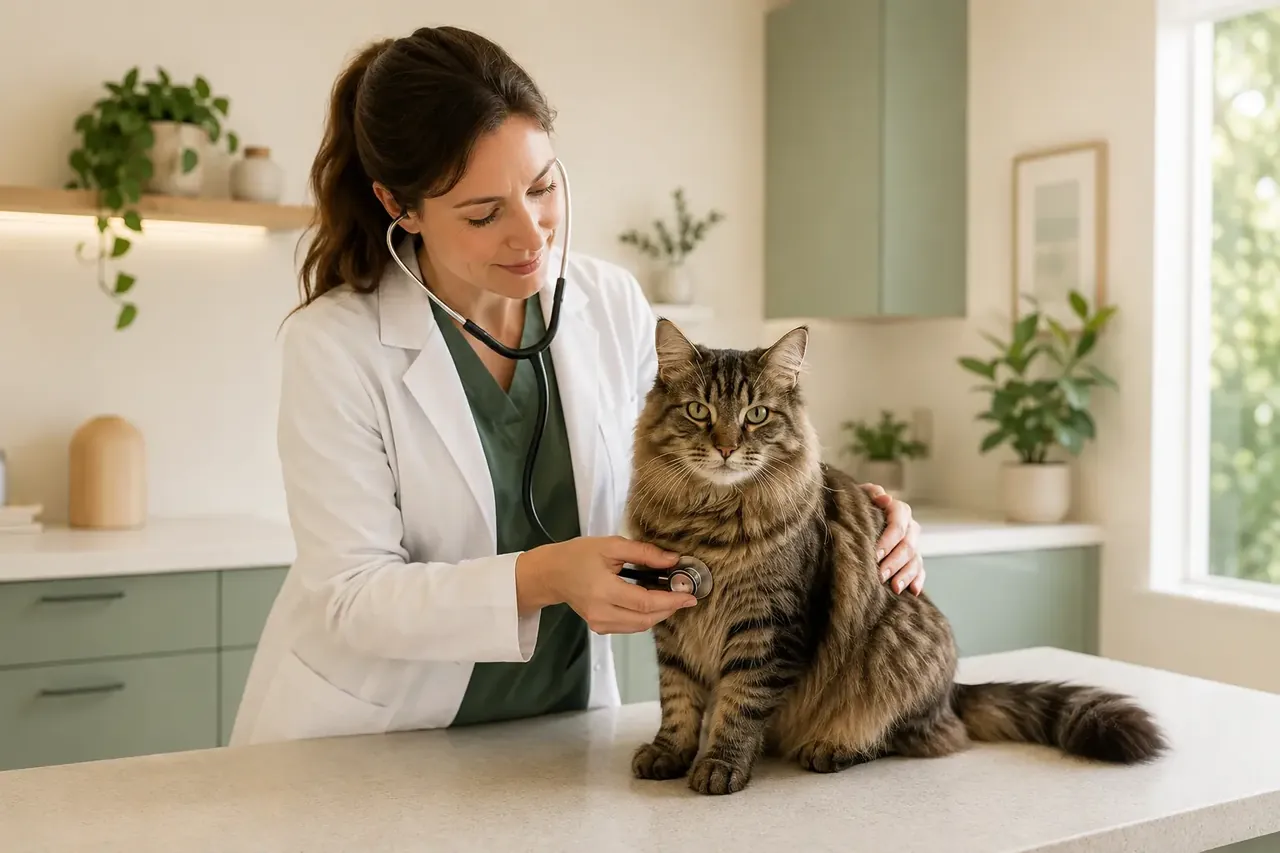 Topic illustration selected for this guide. Some learning images may be AI-assisted.
This sign can be urgent. Call a veterinarian or emergency clinic now for individual triage; do not wait for this article to diagnose the cause.
A sudden head tilt in cats — the quick answer
✓ Confine the cat safely away from stairs and contact a veterinarian the same day.
✓ Inability to stand, seizures, severe weakness, breathing changes or recent trauma is an emergency.
✓ This information supports observation and does not replace veterinary diagnosis.
Note tilt direction, walking, eye movements, vomiting, ear signs and the exact time it began. This guide explains what to record, what not to do and when veterinary care becomes urgent.
Confirm a tilt rather than a resting pose
Observe while the cat is awake and trying to sit or walk. Note which ear is lower, whether the body leans or circles and the exact time the change began. Do not hold the head straight, manipulate the neck or repeatedly reposition the cat to test whether the tilt returns.
Watch eyes, balance and awareness together
Record rapid side-to-side, vertical or rotating eye movements, falling, rolling, nausea, vomiting and difficulty reaching food or water. Also note facial asymmetry, pupil changes, confusion, weakness and seizure activity. A short natural video can show the pattern more accurately than memory.
Create a fall-safe temporary space
Confine the cat gently to one padded level away from stairs, balconies and high furniture. Keep a low-sided litter tray, water and familiar bedding close without forcing movement. Use a secure carrier for transport and support the body if the cat cannot remain upright.
Do not clean or medicate the ear blindly
Ear and neurological causes can look similar. Do not insert cotton buds, flush the ear or use leftover drops, human travel-sickness medicine or sedatives. A damaged eardrum or the wrong product can worsen problems, and apparent ear debris does not prove it caused the tilt.
Arrange same-day veterinary assessment
A sudden head tilt merits prompt contact even when the cat remains alert. Examination may evaluate ears, eye movements, posture, nerves and other systems, with further tests guided by findings. Do not wait several days for a presumed harmless vestibular episode to resolve without advice.
Escalate severe combined signs
Seek emergency care for inability to stand, repeated rolling, collapse, seizures, severe weakness, breathing changes, major trauma, toxin exposure, unequal fixed pupils or reduced consciousness. Continue the plan even if vomiting stops or balance briefly improves during transport preparation.
Your quick checklist
Loading saved progress…
What to do now
Do not use this guide to delay care. Start with the first step and follow the veterinary professional's instructions.
- 1Observe your cat’s individual baseline.
- 2Make one gentle change at a time.
- 3Ask a qualified professional when health or safety is involved.
Common mistakes
×Waiting for a dramatic symptom instead of noticing smaller changes from the cat’s normal routine.
×Changing several things at once, making it difficult to learn what actually helped.
×Treating general guidance as a substitute for advice from a veterinarian who knows the individual cat.
Questions cat people ask
Does every cat follow the same rule?+
No. Age, health, history, temperament and environment all change what works for an individual.
When should I seek professional help?+
Seek veterinary advice for sudden, persistent or concerning changes and urgent help for breathing difficulty, collapse, seizures, poisoning or urinary obstruction signs.
Still looking for the right answer?
Search the full EverYes Cats encyclopedia with your own words — a symptom, food, behaviour, breed or everyday question.
Checked, dated and transparent
- Prepared by
- EverYes Cats editorial team
- Last updated
- Source checked
- Primary reference
- Cornell Feline Health Center: Vestibular Syndrome ↗
We begin with the named reference, rewrite the information in plain language and add practical cat-parent steps. Urgent health statements are checked against veterinary sources. This guide has not been individually reviewed by a veterinarian unless explicitly stated. It provides education, not diagnosis or treatment.
How we choose and use sources →
Spotted something unclear or outdated? Tell us so we can review it.
Loading your saved choice…
A sudden strong urine smell can reflect a dirty box or concentrated urine, but persistent change with thirst, larger clumps, frequent attempts, blood or illness needs veterinary assessment. Odour alone cannot diagnose infection, diabetes or kidney disease.
 01
 02
 03
 04