Create a cat-safe balcony
A balcony is safe for a cat only when every opening is securely enclosed with animal-appropriate materials. Supervision alone cannot reliably prevent a fall or escape.
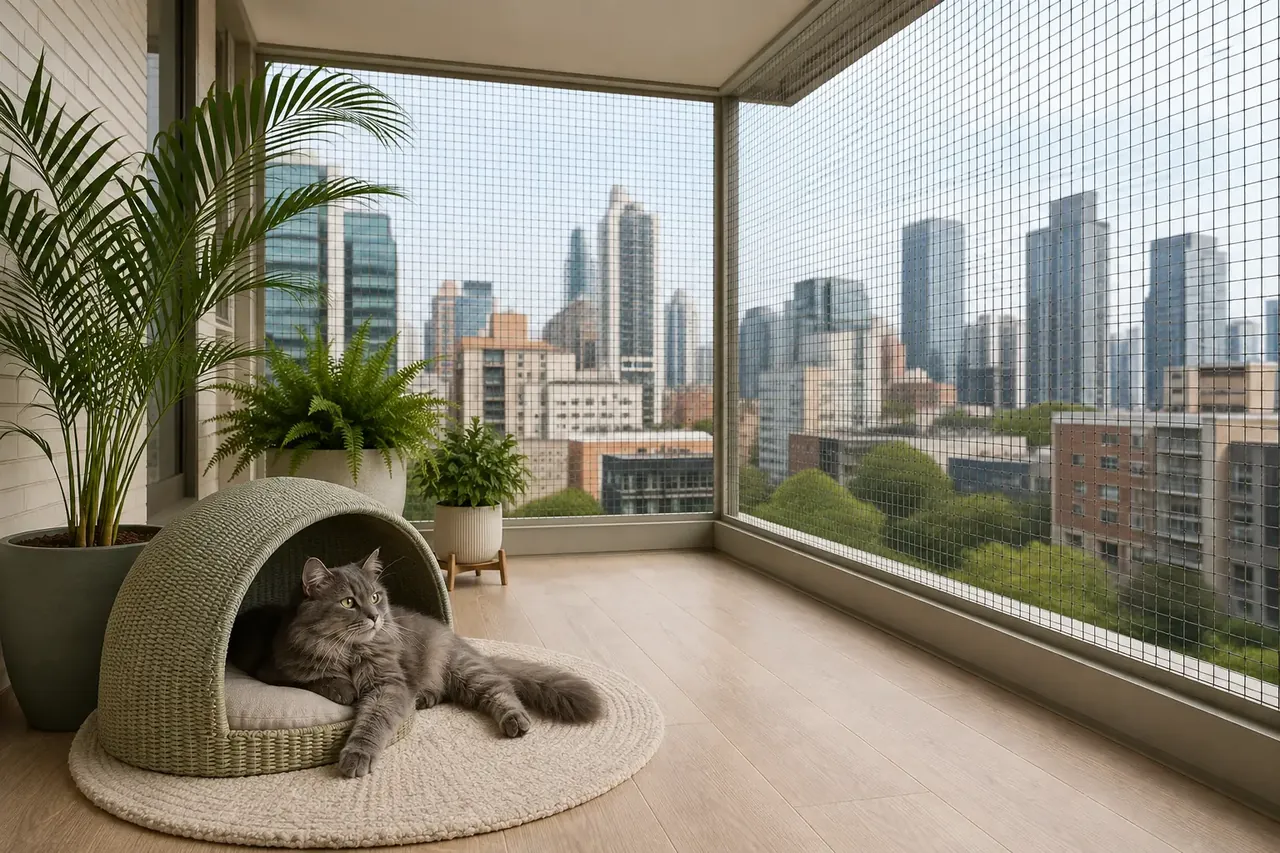 Topic illustration selected for this guide. Some learning images may be AI-assisted.
Create a cat-safe balcony — the quick answer
✓ Never rely on a cat understanding height danger
✓ Inspect every edge and attachment point
✓ Provide shade, water and supervision
An ordinary balcony is not automatically safe for a cat. A secure catio or professionally fitted netting can create outdoor enrichment without escape or falling risk.
Secure the whole balcony before access
A partial screen is not enough. Every edge, gap, door and attachment point matters.
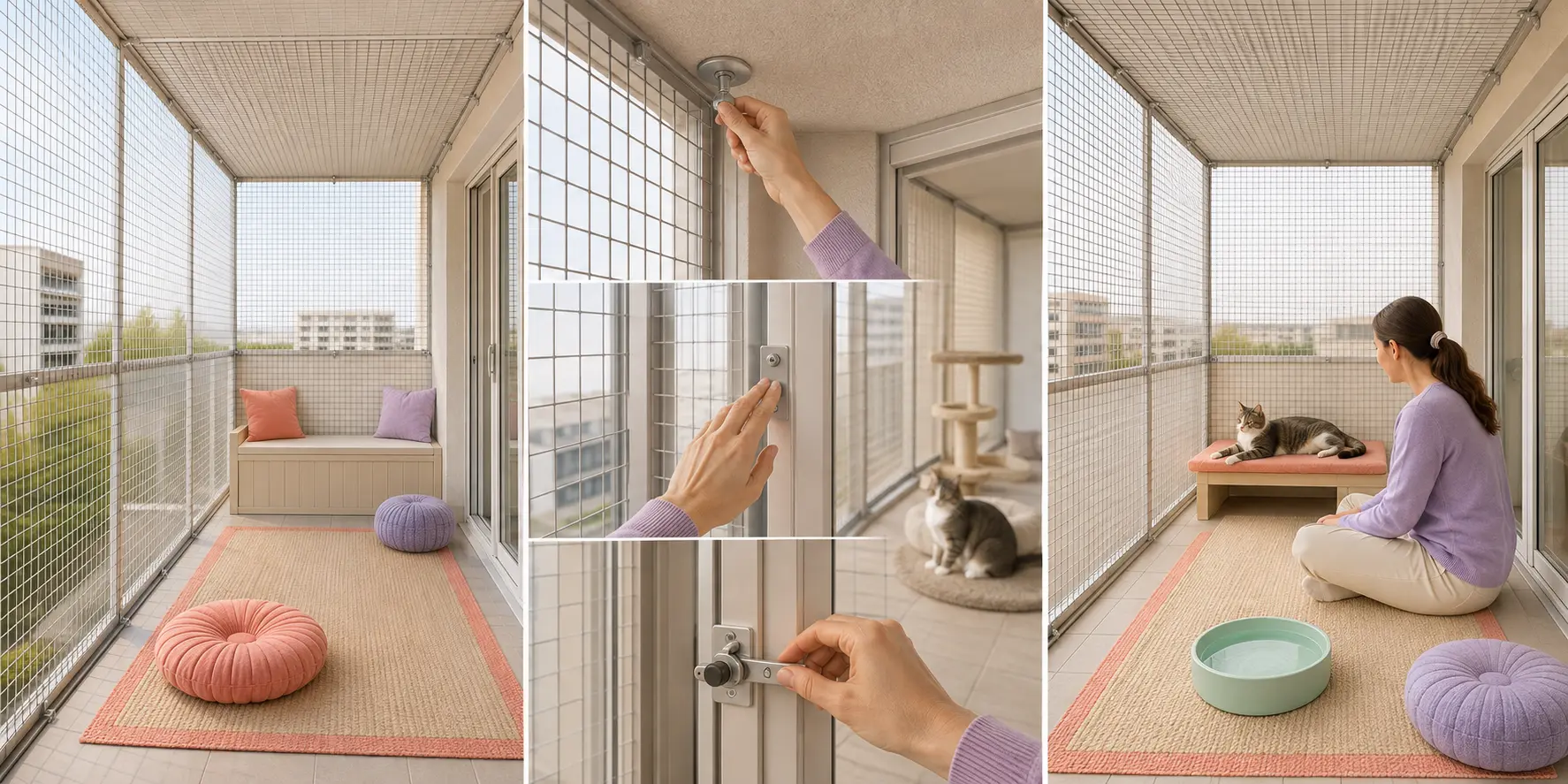
- 1Enclose floor to ceiling
Use a professionally secure cat-proof barrier across every open side and overhead escape route.
- 2Inspect every connection
Check corners, fixings, gaps and the door latch before each use and after wind or maintenance.
- 3Add shade and supervision
Provide water, shade and stable resting places, then supervise access and avoid unsafe plants.
Secure the whole boundary
Cover gaps from floor to ceiling with materials designed and fitted for animal containment. Check doors and neighboring access points.
Plan for weather
Add shade, a dry retreat and fresh water. Avoid hot surfaces and never leave a cat outside in unsafe temperatures.
Inspect regularly
Weather and chewing can weaken materials. Check fasteners, mesh and gaps before each season.
Secure from floor to ceiling
Inspect rail gaps, corners, doors, neighboring access and attachment points. Use a professionally designed catio or containment system suited to the building and local rules. Ordinary insect screen, loose netting and assumptions about a cat’s balance are not safety barriers.
Check weather as carefully as the enclosure
Provide shade, fresh water and an immediate indoor retreat. Metal, glass and dark floors can become dangerously hot, while wind can move furniture or weaken fittings. Reinspect fasteners and material condition regularly and after severe weather.
Your quick checklist
Your progress is saved on this device.
Three simple things you can do
You do not have to change everything today. Pick one step that feels realistic, try it and see how your cat responds.
- 1Secure the entire boundary from floor to ceiling with professionally suitable containment.
- 2Inspect mesh, fasteners, doors, neighboring access and every gap before use.
- 3Provide shade, fresh water, a dry retreat and supervision in safe temperatures.
Common mistakes
×Relying on a cat's balance or supposed understanding of heights.
×Using loose insect screen or improvised netting not designed for containment.
×Leaving a cat outside during dangerous heat, wind or cold.
Questions cat people ask
Will a cat know not to jump from a balcony?+
No safety plan should rely on that. Prey, fear, slipping and curiosity can override caution, so the balcony needs complete physical containment.
Is ordinary insect screen enough for a balcony?+
Usually it is not designed to resist climbing, chewing or impact. Use a professionally appropriate cat-containment solution and inspect it regularly.
Still looking for the right answer?
Search the full EverYes Cats encyclopedia with your own words — a symptom, food, behaviour, breed or everyday question.
Checked, dated and transparent
- Prepared by
- EverYes Cats editorial team
- Last updated
- 13 August 2026
- Source checked
- 13 August 2026
- Primary reference
- Cornell Feline Health Center: Common Cat Hazards ↗
We begin with the named reference, rewrite the information in plain language and add practical cat-parent steps. Urgent health statements are checked against veterinary sources. This guide has not been individually reviewed by a veterinarian unless explicitly stated. It provides education, not diagnosis or treatment.
Spotted something unclear or outdated? Tell us so we can review it.
Your answer helps us improve the cat encyclopedia.
During renovation, cats need a closed dust-free safe zone away from open doors, tools, fumes, debris and unfamiliar workers.