How do you create a safe balcony-door routine with a cat?
A safe balcony routine combines floor-to-ceiling cat-proof screening, supervised access and a consistent check before the door moves. A training cue cannot replace a physical barrier.
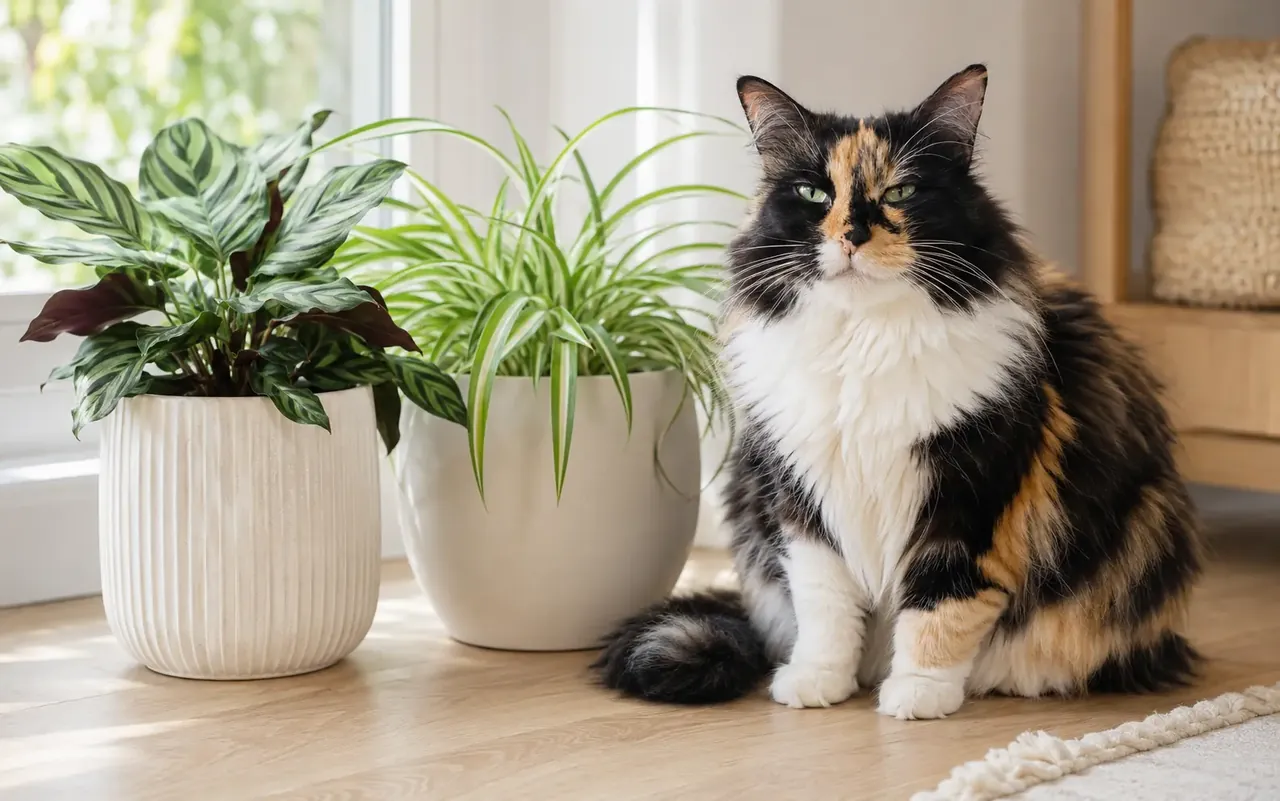 Topic illustration selected for this guide. Some learning images may be AI-assisted.
How do you create a safe balcony-door routine with a cat — the quick answer
✓ A consistent barrier-and-check sequence reduces escape risk when people move between indoor and outdoor space.
✓ Observe: Identify who opens the door, where the cat waits and every gap in screening.
✓ Try this: Teach a station away from the door and open it only after confirming secure cat-proof screening.
A consistent barrier-and-check sequence reduces escape risk when people move between indoor and outdoor space. The useful question is not only what the moment resembles, but whether it fits this cat’s normal pattern. Context, frequency, recovery and accompanying changes make the interpretation safer and more accurate.
Secure the balcony first
Use firmly fixed mesh or screening suitable for cat pressure with no climb-through, squeeze-through or entanglement gaps. Check edges, railings, overhead routes, furniture launch points and the route back indoors.
Create a waiting station
Teach a mat or perch several steps inside using rewards while the door remains closed. Practise approaching, touching the handle and stepping away before progressing to brief openings behind a secure barrier.
Use the same opening checklist
Locate every cat, confirm screening and latch condition, clear the threshold and check that no visitor controls another door. Open only after the cat is at the safe station and close before releasing the reward routine.
Supervise without false confidence
Stay present during access and end it if the cat climbs screening, fixates on escape or becomes frustrated. Do not rely on a lead, insect screen, high floor, verbal cue or the belief that cats always land safely.
If a fall occurs
A cat that falls from a balcony needs immediate veterinary assessment even if it walks afterward. Breathing difficulty, bleeding, collapse, pain or inability to use a limb is an emergency; transport with minimal handling in a secure carrier.
Your quick checklist
Loading saved progress…
Three simple things you can do
You do not have to change everything today. Pick one step that feels realistic, try it and see how your cat responds.
- 1Observe your cat’s individual baseline.
- 2Make one gentle change at a time.
- 3Ask a qualified professional when health or safety is involved.
Common mistakes
×Waiting for a dramatic symptom instead of noticing smaller changes from the cat’s normal routine.
×Changing several things at once, making it difficult to learn what actually helped.
×Treating general guidance as a substitute for advice from a veterinarian who knows the individual cat.
Questions cat people ask
Does every cat follow the same rule?+
No. Age, health, history, temperament and environment all change what works for an individual.
When should I seek professional help?+
Seek veterinary advice for sudden, persistent or concerning changes and urgent help for breathing difficulty, collapse, seizures, poisoning or urinary obstruction signs.
Still looking for the right answer?
Search the full EverYes Cats encyclopedia with your own words — a symptom, food, behaviour, breed or everyday question.
Checked, dated and transparent
- Prepared by
- EverYes Cats editorial team
- Last updated
- Source checked
- Primary reference
- Cats Protection: Indoor Cats and Balcony Safety ↗
We begin with the named reference, rewrite the information in plain language and add practical cat-parent steps. Urgent health statements are checked against veterinary sources. This guide has not been individually reviewed by a veterinarian unless explicitly stated. It provides education, not diagnosis or treatment.
How we choose and use sources →
Spotted something unclear or outdated? Tell us so we can review it.
Loading your saved choice…
A labelled closed room prepared before doors open prevents escape, crushing and panic around strangers.
 01
 03
 04
 06