Cat-safe houseplants and risky plants
Plant safety starts with the exact botanical name. True lilies and daylilies do not belong in a cat home because tiny exposures can cause fatal kidney injury.
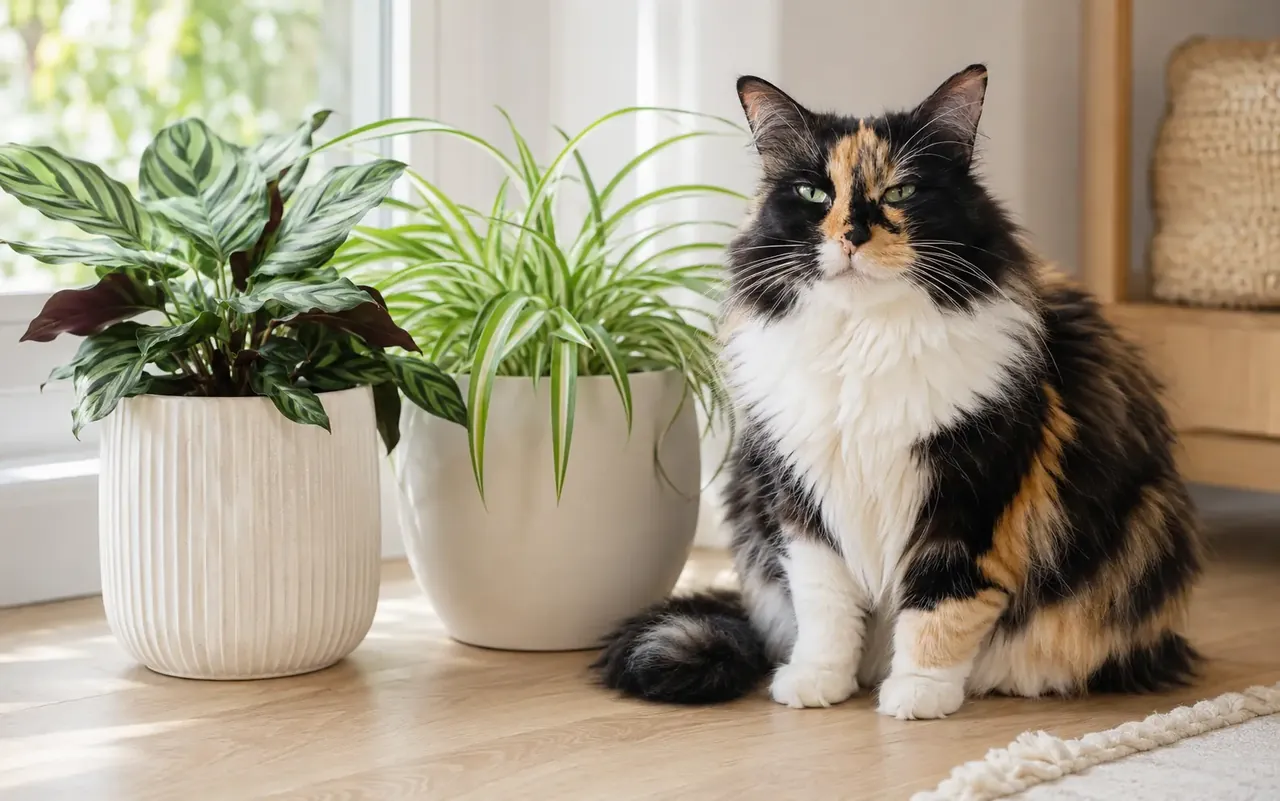 Topic illustration selected for this guide. Some learning images may be AI-assisted.
Cat-safe houseplants and risky plants — the quick answer
✓ True lilies can be fatal to cats
✓ Check the scientific name, not only a shop label
✓ Keep fertilizer and plant water out of reach
A plant can be beautiful and still be dangerous to a curious cat. The safest habit is to check the exact plant name before it enters the home.
The plants to take seriously
True lilies and daylilies are medical emergencies for cats; pollen, leaves and even vase water can be dangerous. Sago palm is another severe risk.
Safer choices
Examples commonly considered non-toxic include many calatheas, parlour palms and spider plants. A non-toxic plant can still cause stomach upset if heavily chewed.
Before you buy
Photograph the plant label and check a trusted veterinary poison database. If identification is uncertain, do not bring the plant into a cat-accessible area.
Identify before you buy
Common names are unreliable, so photograph the label and verify the scientific name with a trustworthy veterinary or poison-control source. Remember that bulbs, pollen, leaves, sap, soil additives and vase water may create different risks.
Non-toxic still does not mean snack
Even a plant not classed as poisonous can cause irritation, vomiting or obstruction when chewed. Place plants thoughtfully, offer safe cat grass if appropriate and contact a veterinarian promptly after any uncertain exposure. Keep the plant, label or a clear photo for identification.
Your quick checklist
Your progress is saved on this device.
Three simple things you can do
You do not have to change everything today. Pick one step that feels realistic, try it and see how your cat responds.
- 1Check both the common and scientific plant name.
- 2Remove true lilies completely from a cat home.
- 3Keep fertilizer, bulbs and vase water inaccessible.
Common mistakes
×Trusting a vague shop label.
×Assuming a high shelf is enough for a determined climber.
×Keeping a dangerous plant because the cat has not chewed it yet.
Questions cat people ask
Are all lilies dangerous?+
Plants called lilies belong to different groups, but true lilies and daylilies can cause fatal kidney injury in cats. If uncertain, keep the plant out and verify it.
Does non-toxic mean edible?+
No. Chewing any plant may cause irritation or stomach upset. Non-toxic means it is not known for the same poisoning risk.
Still looking for the right answer?
Search the full EverYes Cats encyclopedia with your own words — a symptom, food, behaviour, breed or everyday question.
Checked, dated and transparent
- Prepared by
- EverYes Cats editorial team
- Last updated
- 8 August 2026
- Source checked
- 8 August 2026
- Primary reference
- Cornell Feline Health Center: Common Cat Hazards ↗
We begin with the named reference, rewrite the information in plain language and add practical cat-parent steps. Urgent health statements are checked against veterinary sources. This guide has not been individually reviewed by a veterinarian unless explicitly stated. It provides education, not diagnosis or treatment.
Spotted something unclear or outdated? Tell us so we can review it.
Your answer helps us improve the cat encyclopedia.
During renovation, cats need a closed dust-free safe zone away from open doors, tools, fumes, debris and unfamiliar workers.