Keeping a cat safe during home renovation
During renovation, cats need a closed dust-free safe zone away from open doors, tools, fumes, debris and unfamiliar workers.
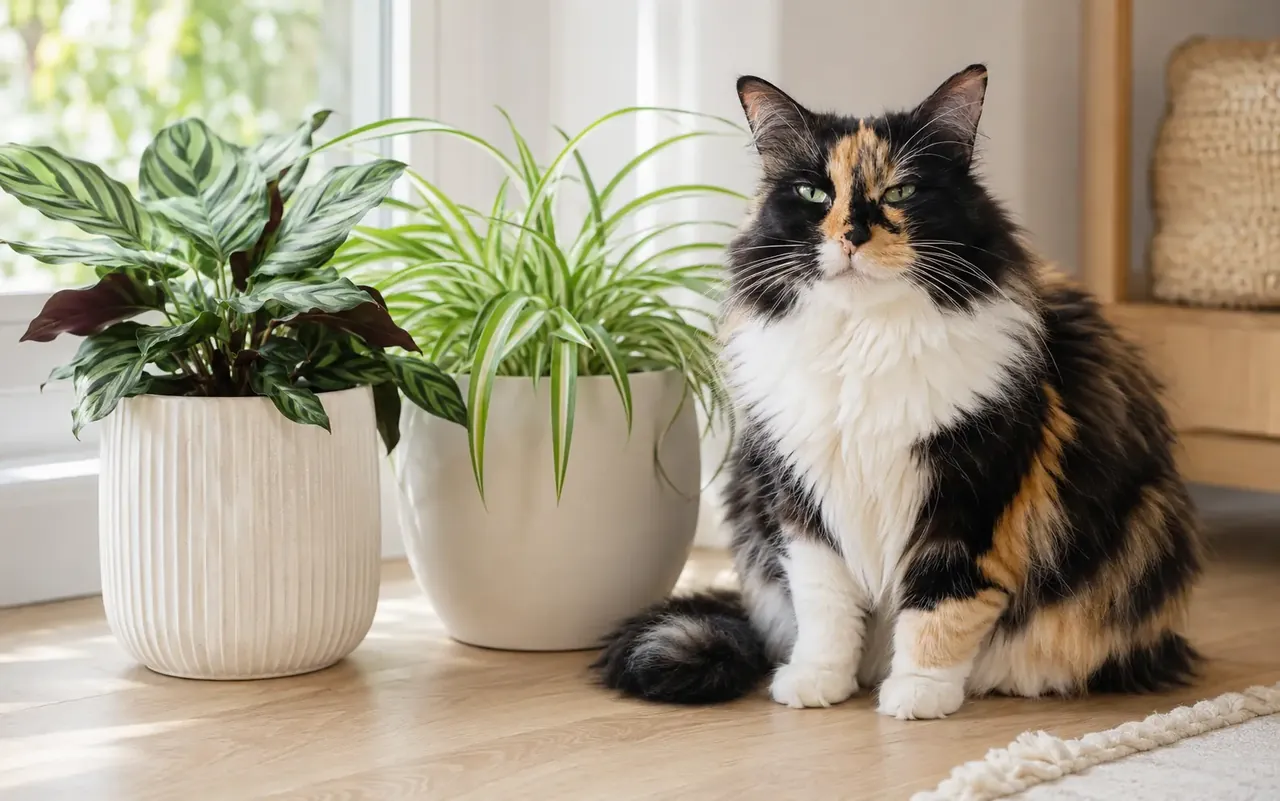 Topic illustration selected for this guide. Some learning images may be AI-assisted.
Keeping a cat safe during home renovation — the quick answer
✓ Even a confident cat may flee through an open door or investigate unsafe materials.
✓ Use a secure distant room or alternative accommodation, control air quality and account for the cat before every door opens.
✓ Breathing change, chemical exposure, injury or swallowed debris needs prompt veterinary help.
Renovation can change territory while introducing sharp objects, fumes, debris and unfamiliar workers.
Keep the cat completely outside the work zone
Dust, tools, fumes, debris and frequently opened doors make renovation different from ordinary household noise.
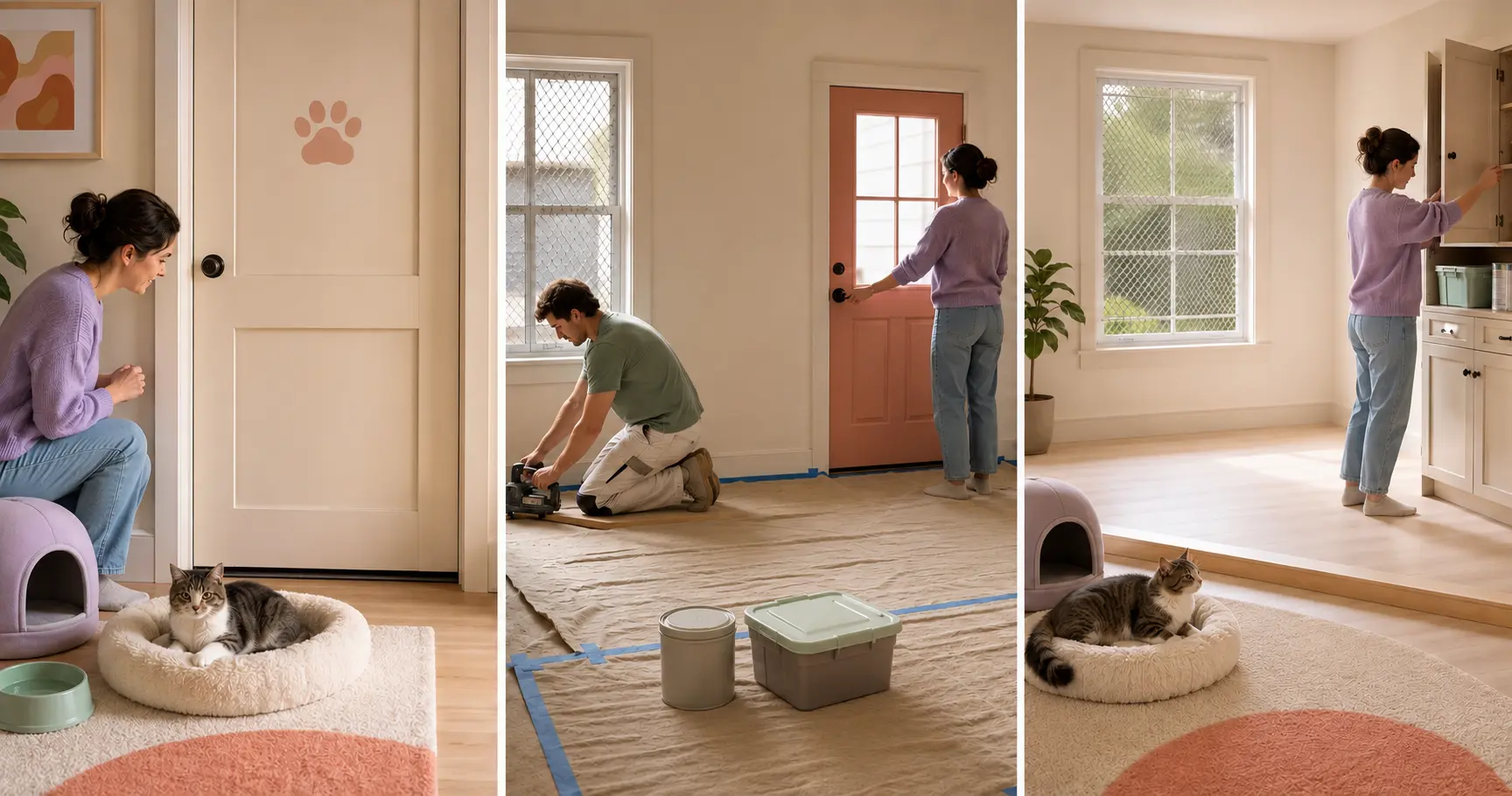
- 1Set up a distant safe room
Before work starts, place familiar bedding, water and an accessible hide behind a secure closed door away from the project.
- 2Control the work zone
Keep the area cat-free, secure exterior doors, ventilate safely and close every tool, chemical and debris container between uses.
- 3Inspect before access
Remove sharp debris and loose coverings, allow products to dry fully and check every surface before gradually reopening the room.
The short answer
Renovation can change territory while introducing sharp objects, fumes, debris and unfamiliar workers.
Why it may happen
Even a confident cat may flee through an open door or investigate unsafe materials.
Read the whole situation
One behaviour rarely has one guaranteed meaning. Compare it with your cat’s age, health, posture, appetite, litter habits, environment and usual pattern before drawing a conclusion.
What to do now
Use a secure distant room or alternative accommodation, control air quality and account for the cat before every door opens.
What not to do
Avoid punishment, forced handling and sudden large changes. They can add fear while hiding the information that would help you understand the original cause.
When to contact a veterinarian
Breathing change, chemical exposure, injury or swallowed debris needs prompt veterinary help.
Keep a useful record
Write down when it started, how often it happens and what immediately precedes and follows it. Photos, weights or short videos can make a veterinary or behaviour consultation more productive.
What to check first
Risks change by phase: escape during deliveries, ingestion of debris, nails and blades, paint or adhesive fumes, noise stress and access inside walls or cabinets.
DEEPER GUIDE1 more detailed sectionsOpen +
What to do next
Create a labelled secure room or arrange off-site care, confirm ventilation and product safety, count the cat before opening work areas and inspect every room before release. Breathing difficulty, chemical contact, injury, suspected ingestion or disappearance into a structural gap is urgent.
Your quick checklist
Your progress is saved on this device.
Three simple things you can do
You do not have to change everything today. Pick one step that feels realistic, try it and see how your cat responds.
- 1Use a closed safe room away from dust, tools and open doors.
- 2Seal paint, adhesive, insulation and debris after each work period.
- 3Maintain meals, litter and quiet time despite schedule changes.
Common mistakes
×Letting the cat investigate an active work zone.
×Assuming low-odour paint is harmless before drying.
×Leaving nails, blades or foam accessible.
Questions cat people ask
Should my cat stay elsewhere during renovation?+
For major dust, fumes, noise or repeated open access, trusted temporary care may be safest. Smaller projects still require secure separation.
When can a cat enter a freshly painted room?+
Follow product ventilation and curing guidance and wait until surfaces are fully dry and odour has cleared.
Still looking for the right answer?
Search the full EverYes Cats encyclopedia with your own words — a symptom, food, behaviour, breed or everyday question.
Checked, dated and transparent
- Prepared by
- EverYes Cats editorial team
- Last updated
- 14 August 2026
- Source checked
- 14 August 2026
- Primary reference
- Cats Protection ↗
We begin with the named reference, rewrite the information in plain language and add practical cat-parent steps. Urgent health statements are checked against veterinary sources. This guide has not been individually reviewed by a veterinarian unless explicitly stated. It provides education, not diagnosis or treatment.
Spotted something unclear or outdated? Tell us so we can review it.
Your answer helps us improve the cat encyclopedia.
Paint work can unsettle cats through fumes, noise, strangers and moved furniture. Keep the cat away until products are dry and the area is thoroughly ventilated.