How to kitten-proof your home
Kitten-proof from floor to ceiling: remove swallowable objects, secure cords and windows, block appliance gaps and verify every plant. Recheck often because a kitten’s reach changes quickly.
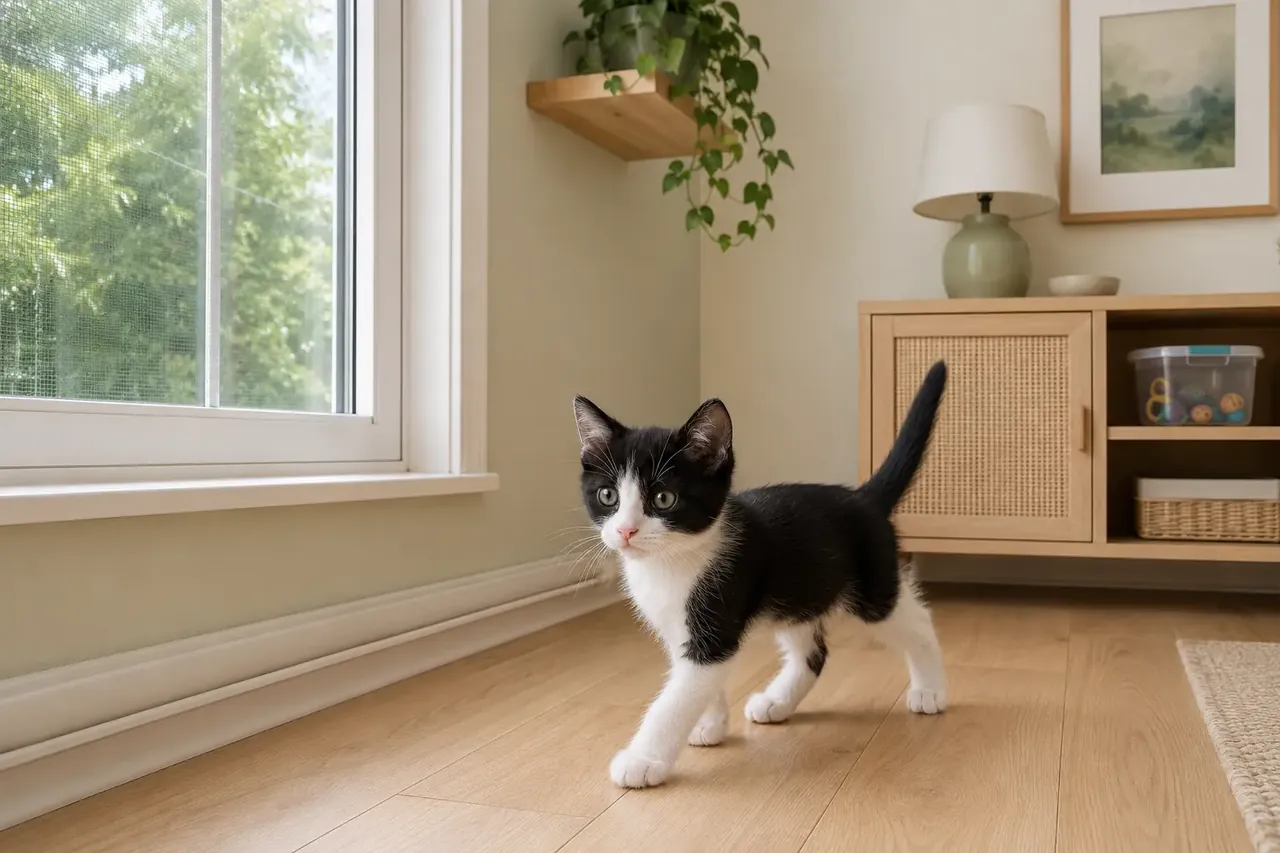 Topic illustration selected for this guide. Some learning images may be AI-assisted.
How to kitten-proof your home — the quick answer
✓ Secure cords, windows and narrow gaps
✓ Remove unsafe plants and small swallowable objects
✓ Recheck as the kitten learns to climb
Kittens explore with paws, teeth and remarkable climbing ability. A room-by-room safety check prevents many avoidable problems.
Kitten-proof from floor to ceiling
Kittens climb, squeeze, chew and investigate. Recheck every room from their height.
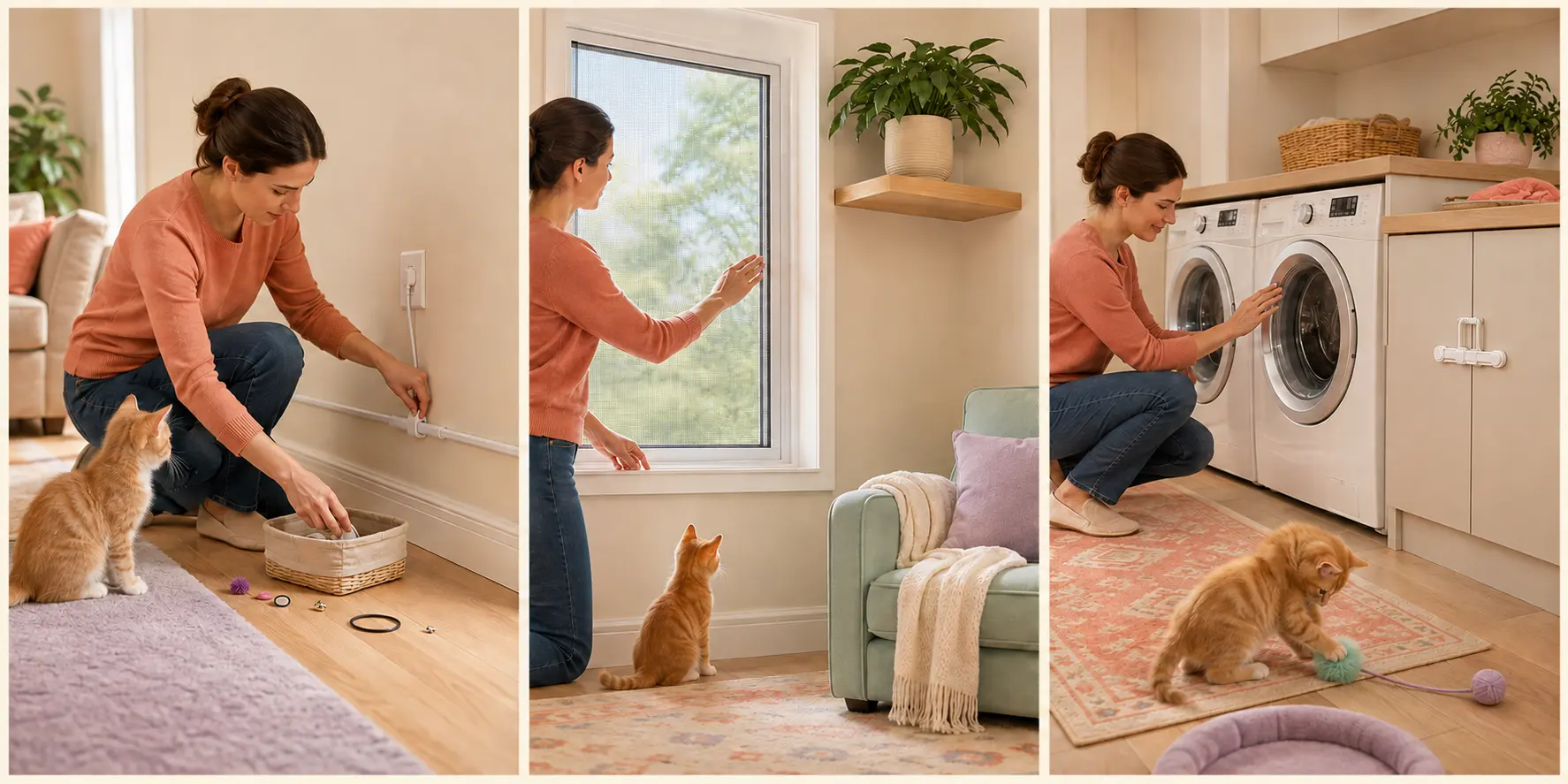
- 1Clear the floor
Secure cords and remove thread, elastic bands, medicine and tiny objects that could be chewed or swallowed.
- 2Secure heights
Fit reliable window protection and remove unsafe plants from every surface the kitten may eventually reach.
- 3Check before closing
Inspect appliances, cupboards and recliners before use, then keep chemicals and detergents locked away.
Start at floor level
Look under furniture and appliances for gaps, string, medication, cleaning products and small objects that could be swallowed.
Look upward next
Secure unstable furniture, window screens and dangling blind cords. Assume a determined kitten will eventually reach shelves.
Create legal adventures
Add safe climbing, scratching, hiding and interactive play so curiosity has appropriate outlets.
Run a room-by-room four-level check
Inspect the floor for thread, hair ties, medicine and sharp pieces; furniture level for blind cords and hot drinks; shelves for breakables and toxic plants; then doors and windows for escape gaps. Check washing machines, dryers and reclining furniture before every use.
Pair prevention with legal exploration
A safe room still needs stable climbing, scratching, hiding, food puzzles and interactive play. Rotate a few suitable options instead of leaving string, elastic, feathers or small toy parts available without supervision.
Your quick checklist
Your progress is saved on this device.
Three simple things you can do
You do not have to change everything today. Pick one step that feels realistic, try it and see how your cat responds.
- 1Get down to kitten height and inspect cords, gaps, plants, windows and swallowable objects room by room.
- 2Secure medicines, cleaning products, thread, ribbon, hair ties and food hazards in closed storage.
- 3Begin with one equipped base room and expand access only after each new area is checked.
Common mistakes
×Assuming a high shelf is unreachable to a climbing kitten.
×Leaving tilt windows, balconies, recliners, appliances or small gaps unchecked.
×Using string toys without supervision and leaving them accessible afterward.
Questions cat people ask
What are the most commonly missed kitten hazards?+
Thread and hair ties, toxic plants, electrical cords, open appliances, unstable furniture, tilt windows and tiny hiding gaps are easy to overlook.
How long should a kitten stay in one room?+
Use behaviour rather than a strict deadline. Expand when the kitten is eating, toileting and exploring confidently and the next area is fully secured.
Still looking for the right answer?
Search the full EverYes Cats encyclopedia with your own words — a symptom, food, behaviour, breed or everyday question.
Checked, dated and transparent
- Prepared by
- EverYes Cats editorial team
- Last updated
- 13 August 2026
- Source checked
- 13 August 2026
- Primary reference
- Cornell Feline Health Center: Common Cat Hazards ↗
We begin with the named reference, rewrite the information in plain language and add practical cat-parent steps. Urgent health statements are checked against veterinary sources. This guide has not been individually reviewed by a veterinarian unless explicitly stated. It provides education, not diagnosis or treatment.
Spotted something unclear or outdated? Tell us so we can review it.
Your answer helps us improve the cat encyclopedia.
During renovation, cats need a closed dust-free safe zone away from open doors, tools, fumes, debris and unfamiliar workers.