How to make open windows safer for cats
An open window is safe only when secured with a sturdy cat-proof barrier. Ordinary insect screens and tilted windows do not reliably prevent falls, escapes or entrapment.
 Topic illustration selected for this guide. Some learning images may be AI-assisted.
How to make open windows safer for cats — the quick answer
✓ Prey interest and startle responses can override ordinary caution around height.
✓ Use professionally secured pet-resistant screens and inspect frames, gaps and fixings regularly.
✓ A fall requires veterinary assessment even when the cat initially walks away.
Cats can squeeze through openings, dislodge light screens or fall while focused on movement outside.
Treat every open window as an escape route
An insect screen is not automatically cat-safe. The frame, mesh, gaps and nearby furniture all need checking.
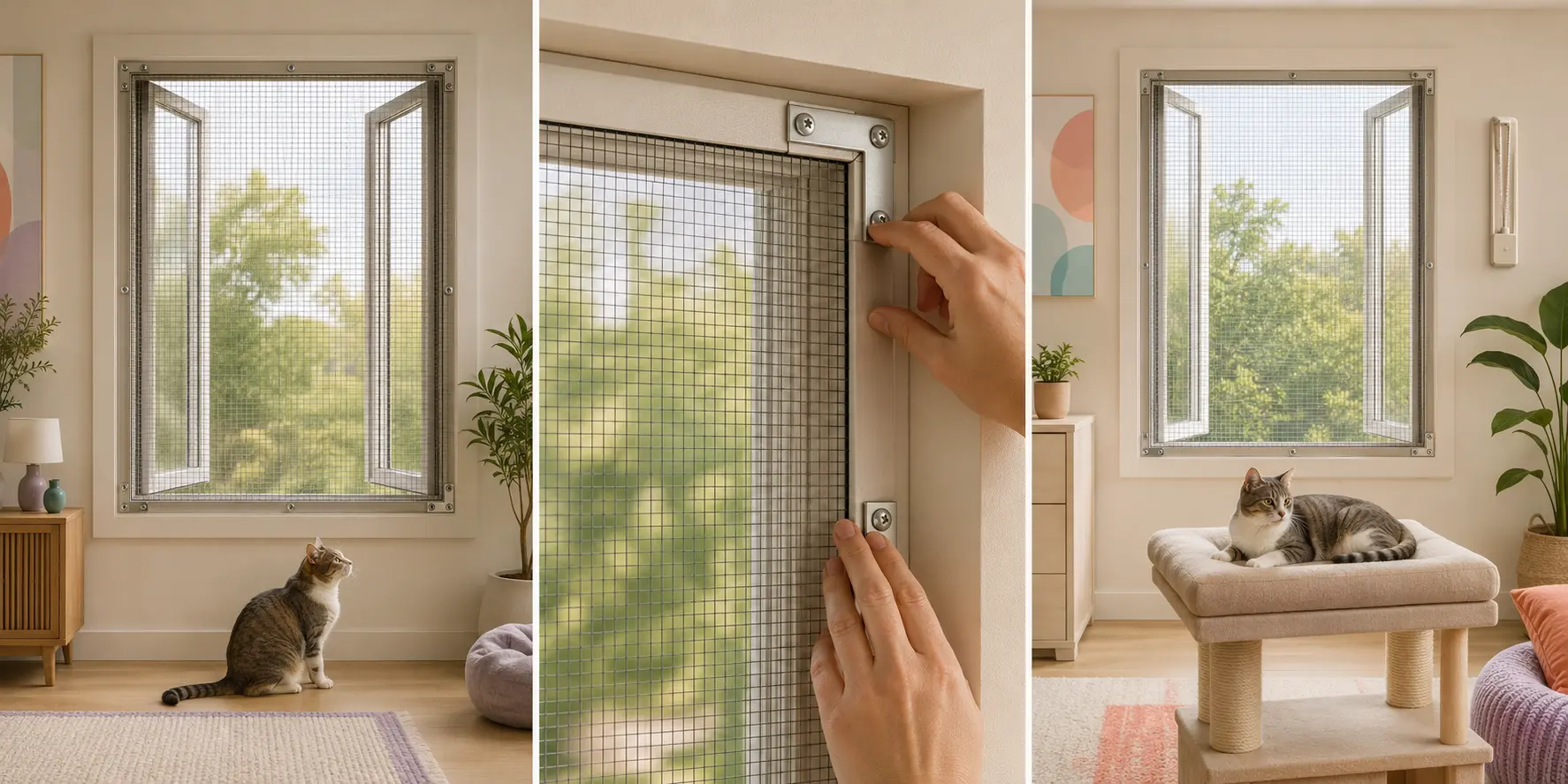
- 1Fit a secure barrier
Use a properly fixed pet-resistant screen that covers the complete opening and cannot be pushed or climbed loose.
- 2Inspect every edge
Check the frame, corners, fasteners and small gaps regularly, especially after weather, cleaning or maintenance.
- 3Clear the window zone
Keep blind cords inaccessible and place stable resting furniture far enough back that the cat does not lean on the screen.
The short answer
Cats can squeeze through openings, dislodge light screens or fall while focused on movement outside.
Why it may happen
Prey interest and startle responses can override ordinary caution around height.
Read the whole situation
One behaviour rarely has one guaranteed meaning. Compare it with your cat’s age, health, posture, appetite, litter habits, environment and usual pattern before drawing a conclusion.
What to do now
Use professionally secured pet-resistant screens and inspect frames, gaps and fixings regularly.
What not to do
Avoid punishment, forced handling and sudden large changes. They can add fear while hiding the information that would help you understand the original cause.
When to contact a veterinarian
A fall requires veterinary assessment even when the cat initially walks away.
Keep a useful record
Write down when it started, how often it happens and what immediately precedes and follows it. Photos, weights or short videos can make a veterinary or behaviour consultation more productive.
What to check first
Inspect frames, gaps, catches and screen attachment from the cat's level. Consider whether furniture gives a launch point and whether a tilted window creates a narrowing trap.
DEEPER GUIDE1 more detailed sectionsOpen +
What to do next
Install a purpose-designed secure screen or restrictor, test every fixing and keep the cat elsewhere until installation is complete. Recheck after cleaning, storms or seasonal reopening. A fall, entrapment, breathing change, pain or abnormal movement needs immediate veterinary assessment even if no injury is visible.
Your quick checklist
Your progress is saved on this device.
Three simple things you can do
You do not have to change everything today. Pick one step that feels realistic, try it and see how your cat responds.
- 1Fit strong cat-proof screens secured to the frame.
- 2Check mesh, locks and attachments regularly.
- 3Keep tilt-and-turn windows closed or protected by purpose-made guards.
Common mistakes
×Relying on insect mesh.
×Leaving a tilted window accessible.
×Assuming a high floor makes a careful cat safer.
Questions cat people ask
Can cats fall from open windows?+
Yes. Prey movement, slipping or startle can cause falls, and height does not guarantee a safe landing.
Why are tilted windows dangerous?+
Cats can become wedged in the narrowing gap, causing crushing injury and loss of blood supply. Prevent all access.
Still looking for the right answer?
Search the full EverYes Cats encyclopedia with your own words — a symptom, food, behaviour, breed or everyday question.
Checked, dated and transparent
- Prepared by
- EverYes Cats editorial team
- Last updated
- 14 August 2026
- Source checked
- 14 August 2026
- Primary reference
- Cats Protection ↗
We begin with the named reference, rewrite the information in plain language and add practical cat-parent steps. Urgent health statements are checked against veterinary sources. This guide has not been individually reviewed by a veterinarian unless explicitly stated. It provides education, not diagnosis or treatment.
Spotted something unclear or outdated? Tell us so we can review it.
Your answer helps us improve the cat encyclopedia.
During renovation, cats need a closed dust-free safe zone away from open doors, tools, fumes, debris and unfamiliar workers.