Windows, screens and the tilt-window trap
A tilted window creates a narrowing V-shaped trap that can crush a cat and restrict circulation. Close it around unattended cats or fit a secure purpose-designed guard across every accessible gap.
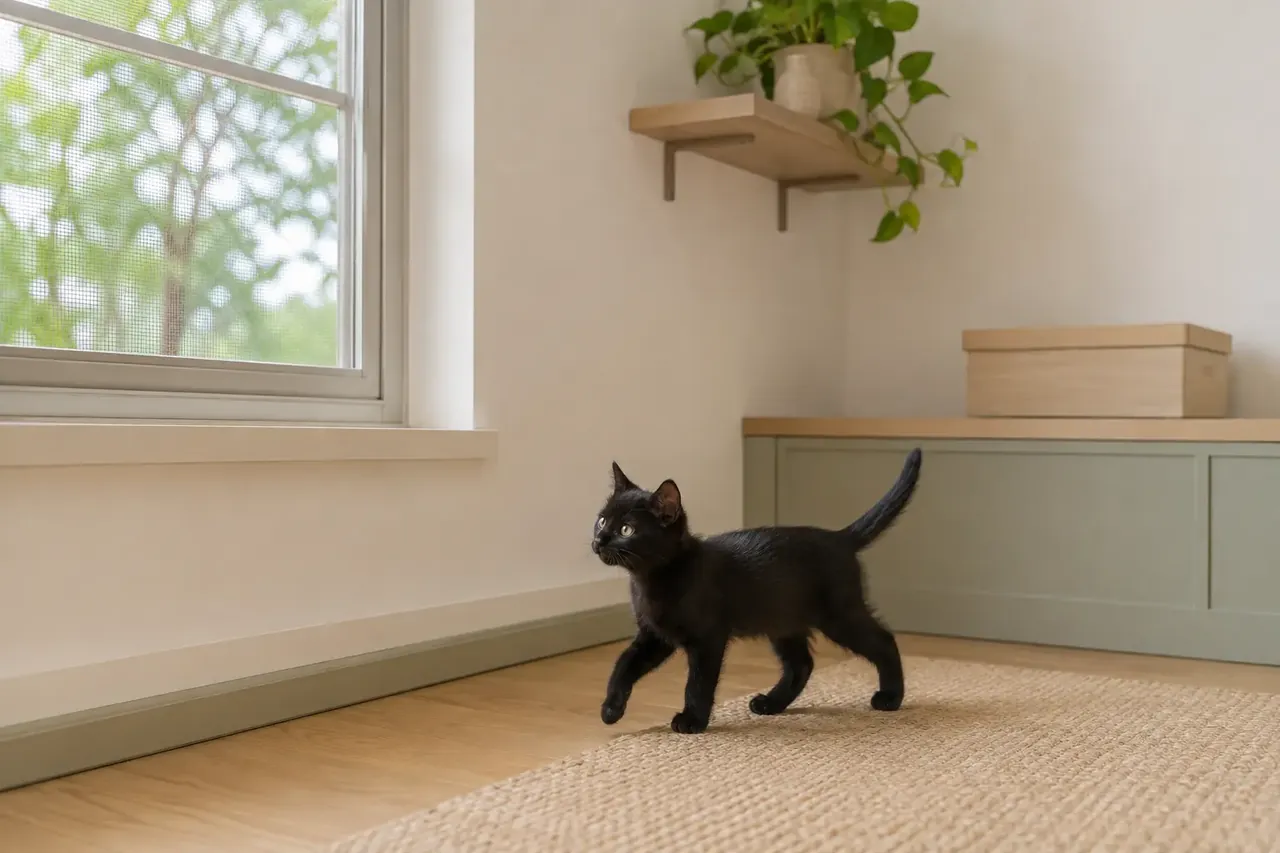 Topic illustration selected for this guide. Some learning images may be AI-assisted.
Windows, screens and the tilt-window trap — the quick answer
✓ A standard insect screen may not be cat-proof
✓ Tilted windows can trap a cat
✓ Secure balconies as well as windows
✓ Check fittings regularly
An ordinary window can become an escape route or a wedge-shaped trap. Tilted windows are particularly dangerous because a cat can slide into the narrowing gap and become compressed.
Understand the V-shaped trap
A cat trying to pass through a tilt-and-turn window can slide downward into the narrowing side gap. Struggling may wedge the body more tightly and cause crushing, nerve or circulation injury. The opening does not need to look large enough for the whole cat to be dangerous. Curiosity, an insect, noise or a sudden fright can draw even a previously cautious cat toward it.
Choose a genuinely safe ventilation setup
The safest option around an unattended cat is a fully closed tilt window or a different opening protected by a securely fitted cat-resistant screen. If tilt mode must be used, install a purpose-designed grille or guard that prevents access to both side wedges and any top gap. A decorative cover, loose fabric or partial barrier can leave another route into the trap.
Do not rely on insect mesh
Ordinary insect screen may tear, detach or bow when climbed or pushed. Use a product designed for animal containment and the specific frame, following installation instructions and any building rules. Test frames, fasteners, corners and latches with firm hand pressure. Recheck after cleaning, building work, strong weather or any time the window hardware has been adjusted.
Audit every room and household routine
Include bathrooms, bedrooms, utility rooms and guest spaces rather than protecting only the usual cat area. Make a clear rule for visitors, cleaners and children about which windows may be opened. Before leaving home, check every tilt-and-turn window rather than relying on memory. Provide shade and safe airflow so a closed dangerous window does not create a separate heat risk.
Respond carefully to entrapment
Treat a trapped cat as an emergency. Support the body to reduce further sliding and call an emergency veterinarian while arranging release and transport. Avoid pulling only on the legs or twisting the spine. If safe release needs another person or emergency assistance, get it quickly. A frightened painful cat may bite, so use a towel or barrier without delaying necessary rescue.
Seek care even when the cat walks away
Circulation, nerve, muscle and internal injuries may not be immediately visible after compression. Breathing difficulty, weakness, pale or blue-grey gums, collapse, cold limbs or inability to walk requires immediate transport, but the absence of these signs does not prove the cat is unharmed. Tell the clinic how long the cat may have been trapped and which part of the body was compressed.
Include ordinary windows and balconies
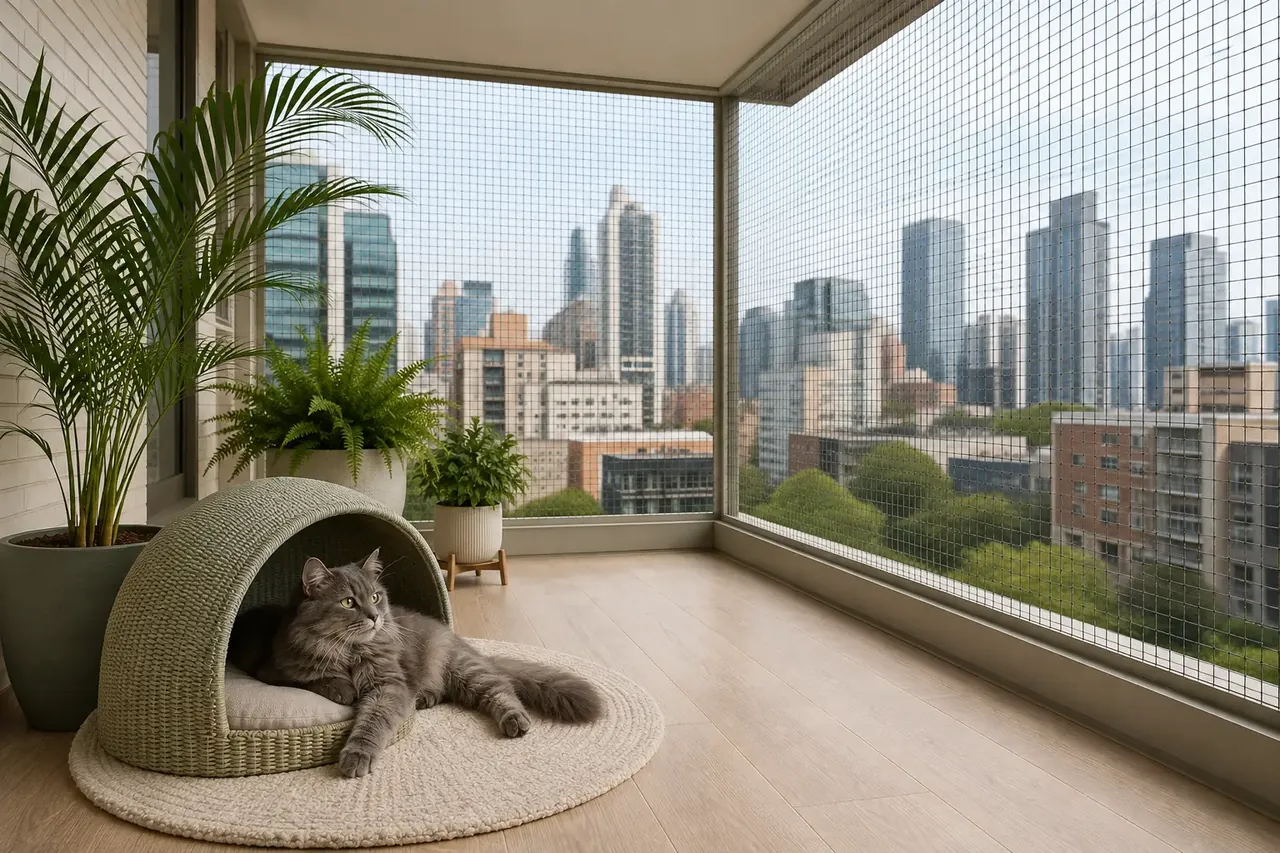
A separate secure plan is needed for fully open windows and balcony doors. Cats can push weak screens, squeeze through small gaps or fall while focused on prey. Use robust full-coverage barriers, keep climbable furniture away from unsafe openings and inspect the entire boundary. Microchipping helps after an escape but does not replace physical prevention.
Your quick checklist
Loading saved progress…
Three simple things you can do
You do not have to change everything today. Pick one step that feels realistic, try it and see how your cat responds.
- 1Keep tilt-and-turn windows fully closed or fitted with a purpose-designed secure guard.
- 2Check every opening before leaving the room and give fresh air through a safely screened alternative.
- 3Seek emergency veterinary care after any entrapment, even if the cat walks away.
Common mistakes
×Assuming the narrow V-shaped gap is too small for a cat.
×Using loose mesh that can collapse under body weight.
×Pulling a trapped cat out without supporting the body or arranging urgent care.
Questions cat people ask
Why are tilted windows dangerous for cats?+
A cat can slip into the narrowing gap and become wedged, causing crushing injury, impaired circulation and severe internal damage.
What should I do if my cat was trapped in a tilt window?+
Support the body, free the cat as safely as possible and seek emergency veterinary care immediately because serious injury may be hidden.
Still looking for the right answer?
Search the full EverYes Cats encyclopedia with your own words — a symptom, food, behaviour, breed or everyday question.
Checked, dated and transparent
- Prepared by
- EverYes Cats editorial team
- Last updated
- Source checked
- Primary reference
- Cats Protection: Keeping Cats Safe Outside ↗
We begin with the named reference, rewrite the information in plain language and add practical cat-parent steps. Urgent health statements are checked against veterinary sources. This guide has not been individually reviewed by a veterinarian unless explicitly stated. It provides education, not diagnosis or treatment.
How we choose and use sources →
Spotted something unclear or outdated? Tell us so we can review it.
Loading your saved choice…
Forceful biting and kicking can be normal hunting play, but a damaged toy becomes an ingestion hazard. Match toys to the cat, supervise fragile designs and remove them at the first loose seam or missing piece.
 01
 02
 03
 04
 05