Ringworm in cats: what it looks like and why testing matters
Ringworm is a fungal skin infection—not a worm—and its appearance overlaps with mites, allergy and other skin disease. Arrange veterinary testing, reduce shared hair and dust, follow the full treatment plan and protect vulnerable people without abandoning or harshly isolating the cat.
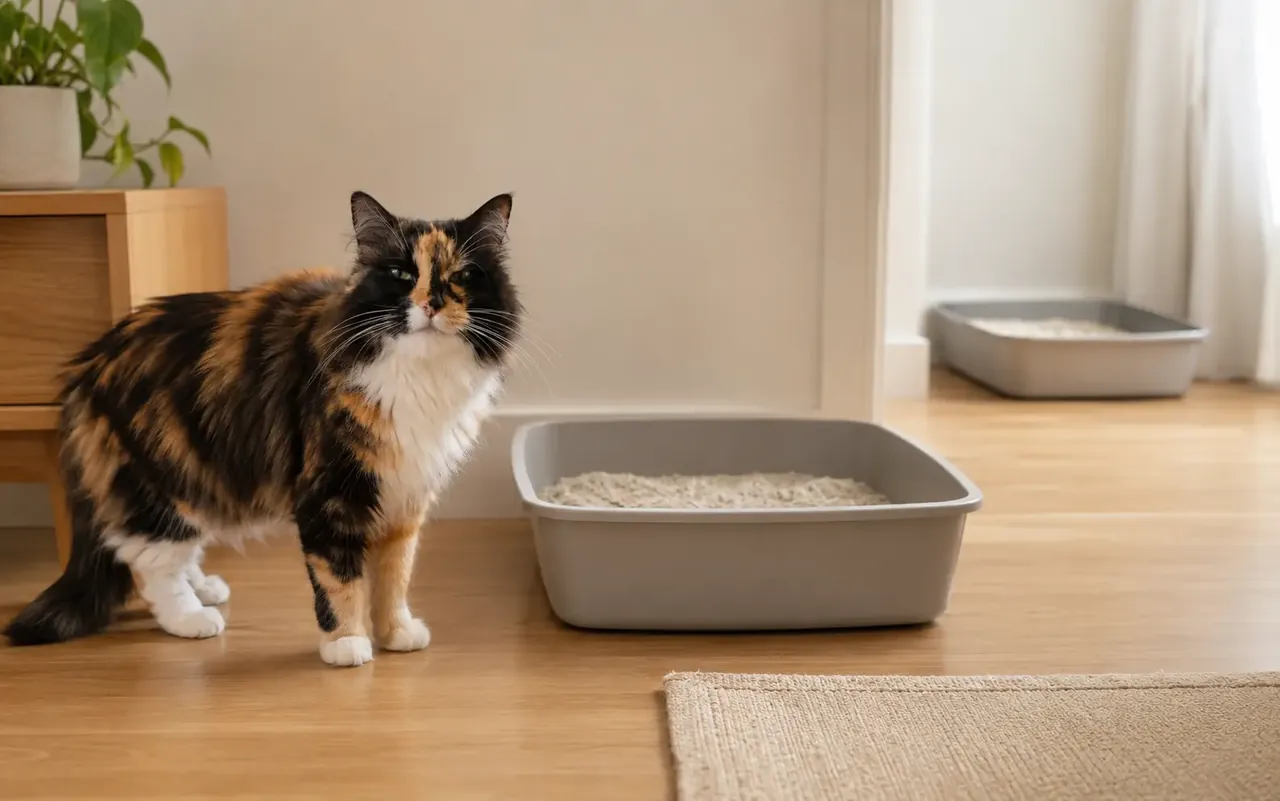 Topic illustration selected for this guide. Some learning images may be AI-assisted.
Ringworm in cats: what it looks like and why testing matters — the quick answer
✓ Limit sharing of brushes and bedding, wash hands and arrange veterinary testing before treatment.
✓ Kittens, widespread lesions, vulnerable household members or significant illness needs prompt professional advice.
✓ This information supports observation and does not replace veterinary diagnosis.
Look for circular or irregular hair loss, scaling, broken hairs and crusts, but remember appearances vary. This guide explains what to record, what not to do and when veterinary care becomes urgent.
Do not diagnose from a circular patch alone
Ringworm may cause broken hairs, scaling, crusting, dandruff or irregular hair loss, often around the face, ears, feet or tail, but cats can carry spores with few visible changes. Photograph lesions and note contact with new animals, shelters or affected people. Do not use an internet image or a home ultraviolet lamp as proof; several diseases look alike.
Arrange testing before random treatment
Veterinarians may use coat examination, fungal culture, microscopy, ultraviolet screening or molecular testing in combination. Results and household circumstances guide treatment. Do not apply athlete’s-foot cream, bleach, essential oils or farm fungicides to the cat. Human products may be unsafe when licked, and partial treatment can obscure diagnosis while contagious spores continue to spread.
Reduce household spread sensibly
Wash hands after handling, keep grooming tools and bedding separate and vacuum loose hair and dust. Follow veterinary instructions for washable surfaces and disinfectant concentration; never mix cleaning chemicals. A practical easy-to-clean room may help during treatment, but provide normal care, enrichment and social contact safely. Ask a doctor for advice if a person develops a suspicious skin lesion.
Protect higher-risk household members
Children, older adults and people with weakened immune systems may need extra precautions. Tell the veterinarian who lives in the household so the plan can balance infection control and welfare. Avoid direct contact between lesions and vulnerable skin, launder fabrics as instructed and prevent other pets sharing brushes or beds until the veterinary team advises that the infection is controlled.
Complete treatment and clearance checks
Treatment often combines topical whole-coat care with oral antifungal medication and environmental cleaning for weeks. Give medicines exactly as prescribed and attend repeat cultures or other clearance tests; visual hair regrowth alone may not prove that spores are gone. Contact the clinic for vomiting, poor appetite, worsening lesions or difficulty administering treatment rather than stopping early.
Your quick checklist
Loading saved progress…
Three simple things you can do
You do not have to change everything today. Pick one step that feels realistic, try it and see how your cat responds.
- 1Observe your cat’s individual baseline.
- 2Make one gentle change at a time.
- 3Ask a qualified professional when health or safety is involved.
Common mistakes
×Waiting for a dramatic symptom instead of noticing smaller changes from the cat’s normal routine.
×Changing several things at once, making it difficult to learn what actually helped.
×Treating general guidance as a substitute for advice from a veterinarian who knows the individual cat.
Questions cat people ask
Does every cat follow the same rule?+
No. Age, health, history, temperament and environment all change what works for an individual.
When should I seek professional help?+
Seek veterinary advice for sudden, persistent or concerning changes and urgent help for breathing difficulty, collapse, seizures, poisoning or urinary obstruction signs.
Still looking for the right answer?
Search the full EverYes Cats encyclopedia with your own words — a symptom, food, behaviour, breed or everyday question.
Checked, dated and transparent
- Prepared by
- EverYes Cats editorial team
- Last updated
- Source checked
- Primary reference
- Cornell Feline Health Center: Ringworm ↗
We begin with the named reference, rewrite the information in plain language and add practical cat-parent steps. Urgent health statements are checked against veterinary sources. This guide has not been individually reviewed by a veterinarian unless explicitly stated. It provides education, not diagnosis or treatment.
How we choose and use sources →
Spotted something unclear or outdated? Tell us so we can review it.
Loading your saved choice…
A broken cat tooth may expose sensitive tissue or hide damage below the gumline even when the cat still eats. Prevent hard chewing, do not test or file the tooth and arrange a veterinary dental assessment; facial trauma, jaw misalignment or heavy bleeding is urgent.
 01
 03
 06