Regurgitation in cats: how it differs from vomiting
Regurgitation is usually a passive return of food or fluid from the oesophagus, often soon after swallowing and without the abdominal effort typical of vomiting. Repeated episodes need veterinary assessment because fast eating is only one possible cause.
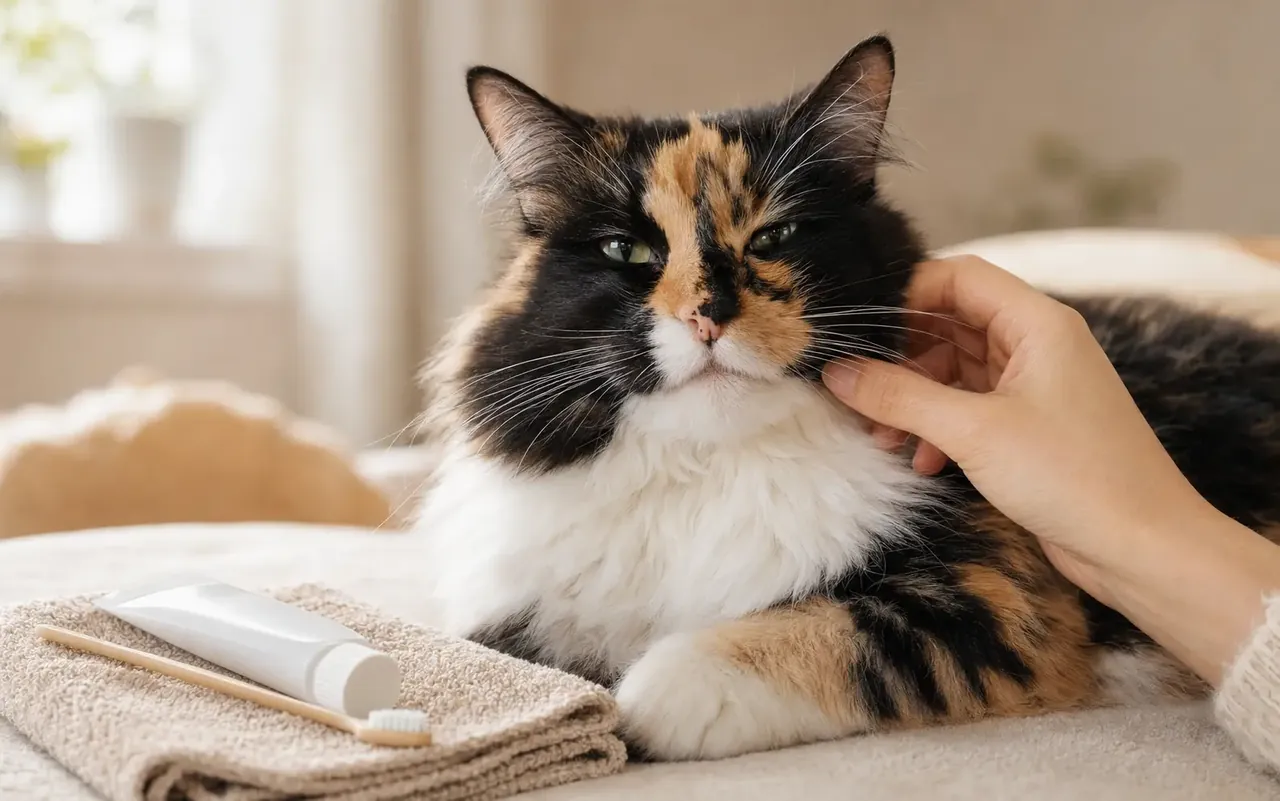 Topic illustration selected for this guide. Some learning images may be AI-assisted.
This sign can be urgent. Call a veterinarian or emergency clinic now for individual triage; do not wait for this article to diagnose the cause.
Regurgitation in cats: how it differs from vomiting — the quick answer
✓ Save a photo, offer no large replacement meal and arrange assessment if it repeats.
✓ Inability to swallow water, breathing trouble, weakness, repeated episodes or foreign-body risk needs urgent care.
✓ This information supports observation and does not replace veterinary diagnosis.
Note whether food returns suddenly without abdominal heaving and how soon after eating it occurs. This guide explains what to record, what not to do and when veterinary care becomes urgent.
Distinguish regurgitation from vomiting
Record whether material appears suddenly with little warning or abdominal effort and how soon it follows food or water. Undigested food may keep a tubular shape. Vomiting more often includes nausea, repeated swallowing, retching and abdominal contractions, though a video and examination may be needed to tell them apart.
Record eating and swallowing clues
Note meal texture, speed, portion, coughing, gagging, repeated swallowing, drooling and whether water also returns. Track appetite, weight and frequency. Do not deliberately give another large meal to recreate the event; record only what happens naturally and safely.
Do not assume fast eating is the answer
Eating rapidly can contribute, but oesophageal inflammation, narrowing, motility problems, foreign material and other disease can also cause regurgitation. A slow feeder cannot diagnose these problems. New or repeated return of food warrants veterinary advice rather than endless feeding experiments.
Avoid a large replacement meal
Keep the cat calm and call the clinic for feeding instructions before replacing lost food. Do not force-feed, syringe water, give antacids or automatically elevate the bowl as treatment. If swallowing is impaired, more material may enter the airway or worsen an obstruction.
Watch for aspiration and swallowing emergencies
Coughing after material returns, rapid or difficult breathing, fever-like illness or lethargy can follow inhalation into the lungs. Inability to swallow water, repeated unproductive swallowing, heavy drooling, choking, collapse or breathing difficulty requires urgent care.
When to arrange veterinary assessment
Seek prompt care for repeated regurgitation, weight loss, reduced intake, pain or inability to keep water down. Kittens, senior cats and cats with other illness need earlier advice. Bring a video, timeline and sample photo, and follow the veterinary feeding and recheck plan precisely.
Your quick checklist
Loading saved progress…
What to do now
Do not use this guide to delay care. Start with the first step and follow the veterinary professional's instructions.
- 1Observe your cat’s individual baseline.
- 2Make one gentle change at a time.
- 3Ask a qualified professional when health or safety is involved.
Common mistakes
×Waiting for a dramatic symptom instead of noticing smaller changes from the cat’s normal routine.
×Changing several things at once, making it difficult to learn what actually helped.
×Treating general guidance as a substitute for advice from a veterinarian who knows the individual cat.
Questions cat people ask
Does every cat follow the same rule?+
No. Age, health, history, temperament and environment all change what works for an individual.
When should I seek professional help?+
Seek veterinary advice for sudden, persistent or concerning changes and urgent help for breathing difficulty, collapse, seizures, poisoning or urinary obstruction signs.
Still looking for the right answer?
Search the full EverYes Cats encyclopedia with your own words — a symptom, food, behaviour, breed or everyday question.
Checked, dated and transparent
- Prepared by
- EverYes Cats editorial team
- Last updated
- Source checked
- Primary reference
- Merck Veterinary Manual: Digestive Disorders of Cats ↗
We begin with the named reference, rewrite the information in plain language and add practical cat-parent steps. Urgent health statements are checked against veterinary sources. This guide has not been individually reviewed by a veterinarian unless explicitly stated. It provides education, not diagnosis or treatment.
How we choose and use sources →
Spotted something unclear or outdated? Tell us so we can review it.
Loading your saved choice…
A broken cat tooth may expose sensitive tissue or hide damage below the gumline even when the cat still eats. Prevent hard chewing, do not test or file the tooth and arrange a veterinary dental assessment; facial trauma, jaw misalignment or heavy bleeding is urgent.
 01
 02
 03
 06