Muscle loss in cats: what owners often miss
Muscle loss can occur even when a cat's body weight looks stable. Compare the spine, shoulders, hips and thighs over time, record appetite and activity, and arrange veterinary assessment because ageing, pain, kidney or thyroid disease and other illness can contribute.
 Topic illustration selected for this guide. Some learning images may be AI-assisted.
Muscle loss in cats: what owners often miss — the quick answer
✓ Book a veterinary assessment and provide an accurate diet and weight history.
✓ Rapid loss with weakness, not eating, breathing change or repeated vomiting needs prompt care.
✓ This information supports observation and does not replace veterinary diagnosis.
Feel gently over spine, shoulders, hips and thighs and compare monthly photos and weight. This guide explains what to record, what not to do and when veterinary care becomes urgent.
Separate muscle condition from body weight
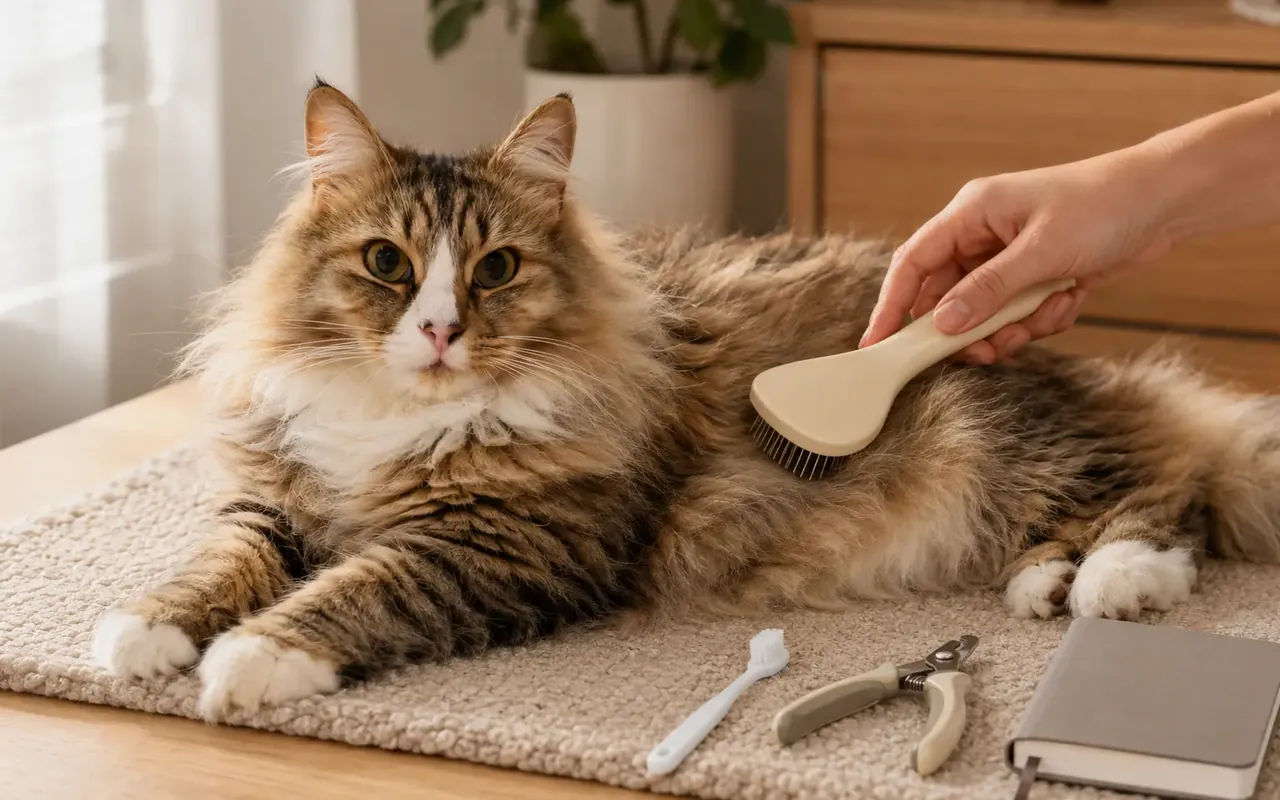
A scale measures the whole body, including fat and fluid, so stable weight does not guarantee stable muscle. Look and feel gently over the spine, shoulder blades, skull, hips and thighs without pressing painful areas. Compare both sides and use ordinary monthly photographs from similar angles. A veterinary muscle-condition assessment is more useful than judging coat-covered shape alone.
Notice the functional changes
Watch rising after rest, stair use, jumping, landing, grooming, scratching and litter-box posture. Slipping, shorter steps, pulling with the front legs or abandoning favourite heights may accompany pain or weakness. Film natural movement on a non-slip surface; do not repeatedly make the cat jump or exercise to prove that strength has changed.
Build the nutritional and health timeline
Record measured food intake, appetite, weight, thirst, urine, vomiting, stool and medication alongside muscle change. Chronic kidney disease, hyperthyroidism, inadequate intake, digestive disease, pain and other conditions can contribute. Older cats may have more than one problem. Adding calories or protein without understanding the cause may conflict with an existing therapeutic diet.
Arrange examination before choosing supplements
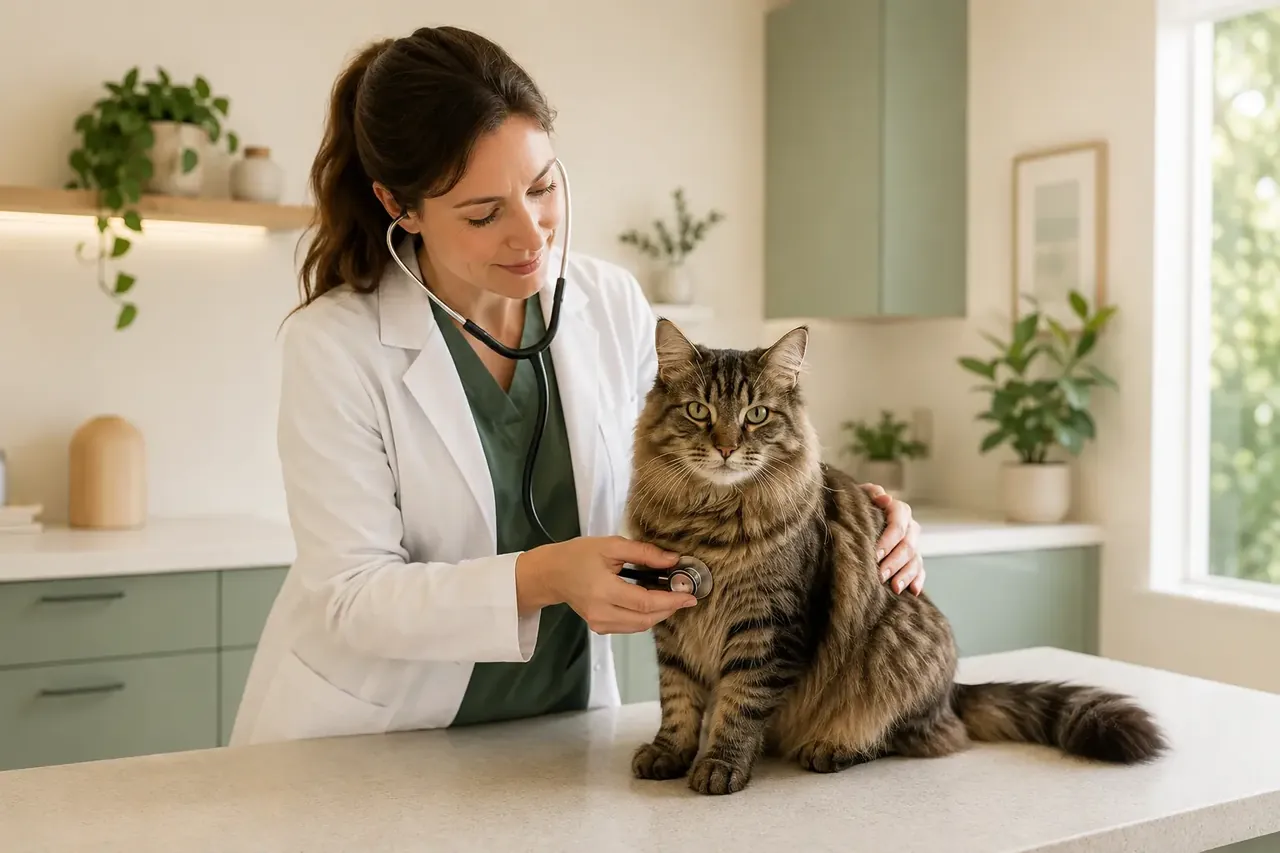
A veterinarian can assess body and muscle condition, mouth comfort, joints, nerves and general health, then select tests based on findings. Bring diet labels, treat and supplement details and earlier weights. Do not begin human protein powder, creatine, vitamins, appetite products or a homemade high-protein diet; these are not universal treatments and may be inappropriate.
Make the home easier while investigating
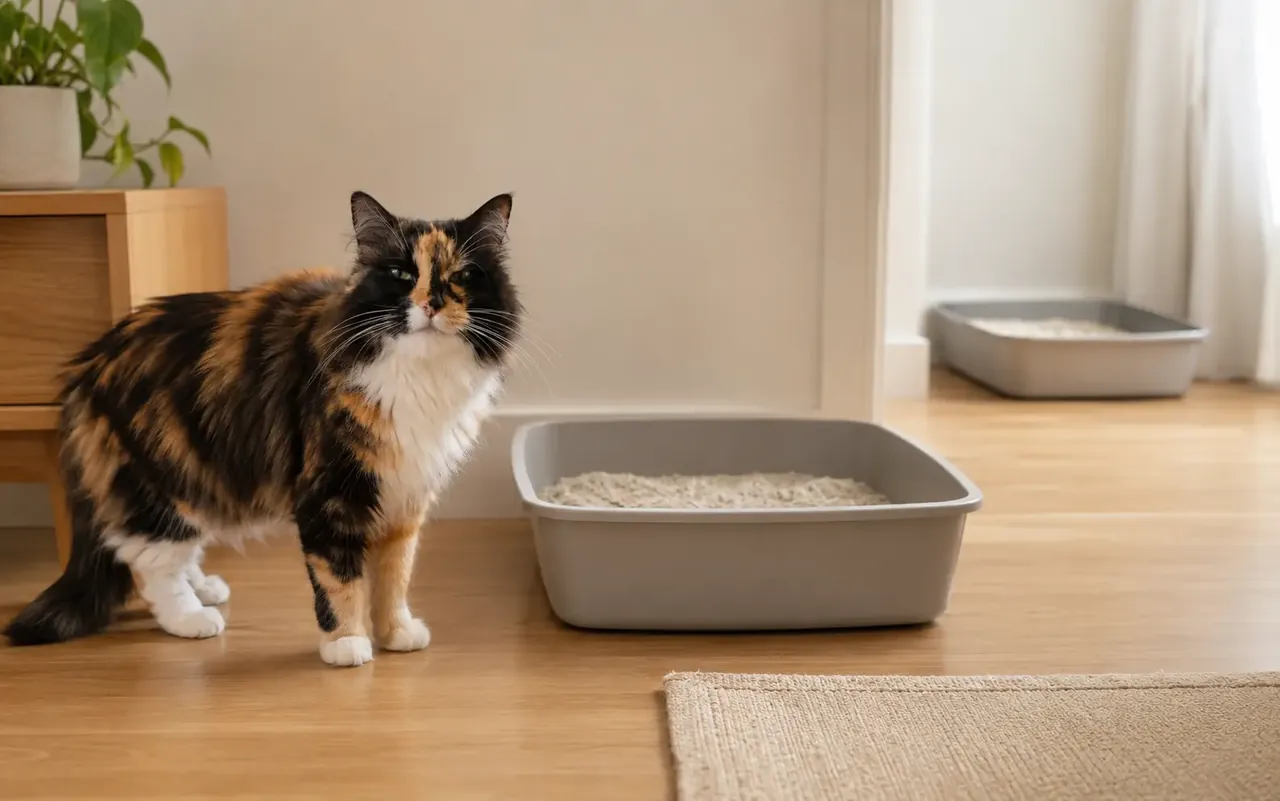
Place food, water, litter and beds on easy non-slip routes and add stable low steps where helpful. Offer the familiar complete food in a quiet accessible place and follow any prescribed diet exactly. Short voluntary floor-level play may maintain comfortable movement, but stop for pain, breathlessness or fatigue and never force strengthening exercises.
Know when decline is urgent
Seek prompt advice for rapid muscle or weight loss, reduced eating, repeated vomiting, dehydration, marked pain or a sudden decline in mobility. Collapse, breathing difficulty, inability to stand, sudden painful hind-leg weakness, severe lethargy or refusal to eat with worsening condition requires urgent or emergency care. Do not wait for the next monthly photograph.
Your quick checklist
Loading saved progress…
Three simple things you can do
You do not have to change everything today. Pick one step that feels realistic, try it and see how your cat responds.
- 1Observe your cat’s individual baseline.
- 2Make one gentle change at a time.
- 3Ask a qualified professional when health or safety is involved.
Common mistakes
×Waiting for a dramatic symptom instead of noticing smaller changes from the cat’s normal routine.
×Changing several things at once, making it difficult to learn what actually helped.
×Treating general guidance as a substitute for advice from a veterinarian who knows the individual cat.
Questions cat people ask
Does every cat follow the same rule?+
No. Age, health, history, temperament and environment all change what works for an individual.
When should I seek professional help?+
Seek veterinary advice for sudden, persistent or concerning changes and urgent help for breathing difficulty, collapse, seizures, poisoning or urinary obstruction signs.
Still looking for the right answer?
Search the full EverYes Cats encyclopedia with your own words — a symptom, food, behaviour, breed or everyday question.
Checked, dated and transparent
- Prepared by
- EverYes Cats editorial team
- Last updated
- Source checked
- Primary reference
- Cornell Feline Health Center: Chronic Kidney Disease ↗
We begin with the named reference, rewrite the information in plain language and add practical cat-parent steps. Urgent health statements are checked against veterinary sources. This guide has not been individually reviewed by a veterinarian unless explicitly stated. It provides education, not diagnosis or treatment.
How we choose and use sources →
Spotted something unclear or outdated? Tell us so we can review it.
Loading your saved choice…
A broken cat tooth may expose sensitive tissue or hide damage below the gumline even when the cat still eats. Prevent hard chewing, do not test or file the tooth and arrange a veterinary dental assessment; facial trauma, jaw misalignment or heavy bleeding is urgent.
 01
 02
 03
 06