New lumps or enlarged areas in cats
A new lump on a cat cannot be identified safely by touch or appearance. Record its location and size without squeezing it and arrange a veterinary examination, especially when it grows, persists, ulcerates or occurs with weight loss, poor appetite or lethargy.
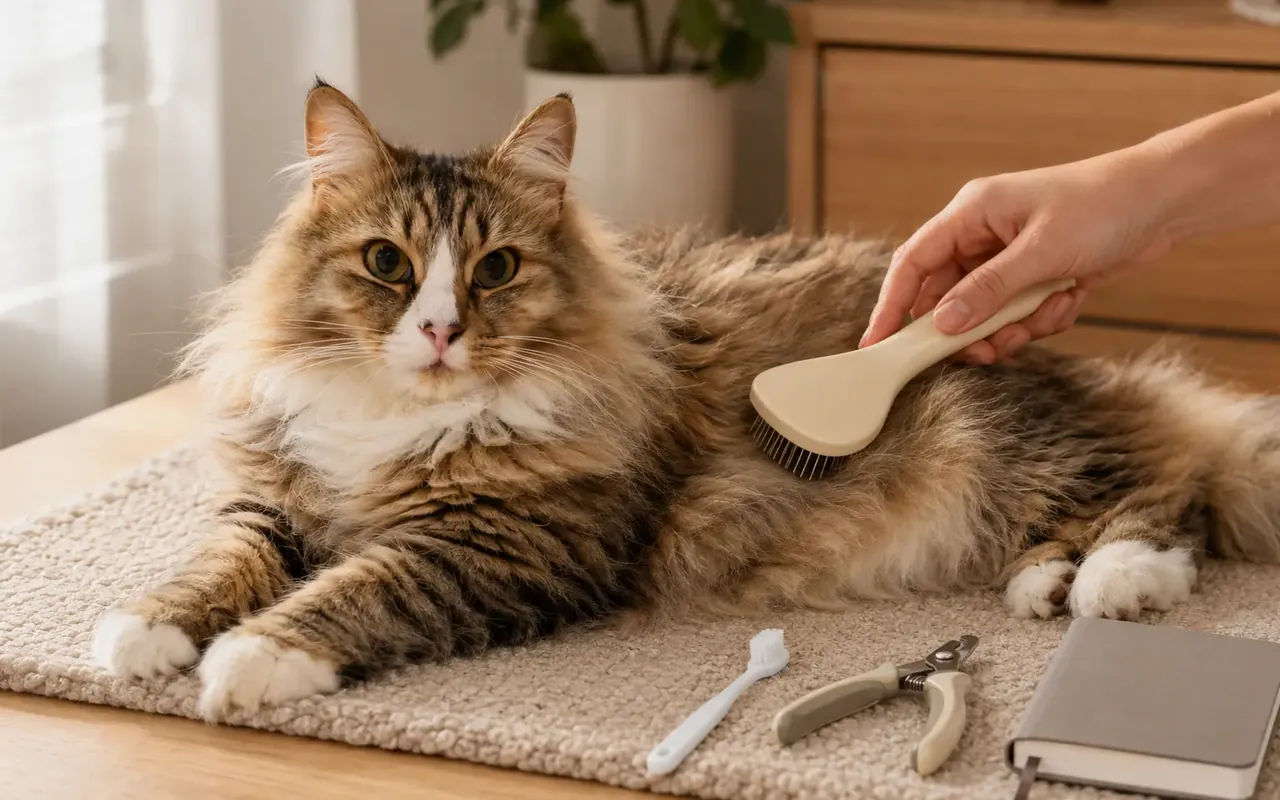 Topic illustration selected for this guide. Some learning images may be AI-assisted.
This sign can be urgent. Call a veterinarian or emergency clinic now for individual triage; do not wait for this article to diagnose the cause.
New lumps or enlarged areas in cats — the quick answer
✓ Arrange a veterinary examination rather than squeezing or waiting for a large change.
✓ Rapid swelling, facial involvement, breathing trouble, bleeding or severe pain is urgent.
✓ This information supports observation and does not replace veterinary diagnosis.
Map location, size, firmness, mobility, heat, pain and growth using a photo and ruler. This guide explains what to record, what not to do and when veterinary care becomes urgent.
Map the lump without manipulating it
Note the exact location, photograph beside a ruler and record the date. Describe whether it seems under the skin or attached to the skin, but do not repeatedly pinch, roll or press it to decide whether it is harmless. Pain, depth and attachment are difficult to judge at home, and manipulation can inflame tissue or cause bleeding.
Check the skin and the whole cat
Look for heat, redness, hair loss, crust, discharge, ulceration or rapid change, then record appetite, weight, breathing, movement and energy. Lumps may represent cysts, abscesses, inflammation, enlarged lymph nodes or tumours, among other causes. A soft, movable or painless lump is not automatically benign, and a firm lump is not automatically cancer.
Know common lymph-node locations without self-diagnosing
Some peripheral lymph nodes lie around the jaw and neck, in front of the shoulders and behind the knees, but normal structures, salivary glands and fat can be mistaken for nodes. Lymphoma can also occur internally where no lump is felt. Do not perform repeated full-body palpation; show the veterinarian the specific change you found.
Arrange examination while the change is small
Early assessment gives more options and a clearer baseline. The veterinarian may use examination, a needle sample, biopsy, imaging or laboratory tests depending on location and findings. Testing is how different-looking and similar-looking masses are distinguished. Do not puncture the lump or apply drawing salve, essential oils, steroid cream or leftover antibiotics.
Use a simple monitoring record
When the veterinary team recommends monitoring, use the same ruler, angle and lighting and record length, width and skin change at the instructed interval. Do not rely on memory or wait for the lump to become dramatic. Return sooner for growth, firmness change, pain, discharge, bleeding, colour change or a new second lump.
Recognise urgent locations and combinations
Seek prompt or emergency care for rapid facial or throat swelling, breathing or swallowing difficulty, uncontrolled bleeding, severe pain, collapse or a lump associated with major trauma. Same-day advice is appropriate for a hot painful swelling with fever signs or poor appetite because an abscess may be present. Weight loss, lethargy or reduced eating also lowers the threshold for assessment.
Your quick checklist
Loading saved progress…
What to do now
Do not use this guide to delay care. Start with the first step and follow the veterinary professional's instructions.
- 1Observe your cat’s individual baseline.
- 2Make one gentle change at a time.
- 3Ask a qualified professional when health or safety is involved.
Common mistakes
×Waiting for a dramatic symptom instead of noticing smaller changes from the cat’s normal routine.
×Changing several things at once, making it difficult to learn what actually helped.
×Treating general guidance as a substitute for advice from a veterinarian who knows the individual cat.
Questions cat people ask
Does every cat follow the same rule?+
No. Age, health, history, temperament and environment all change what works for an individual.
When should I seek professional help?+
Seek veterinary advice for sudden, persistent or concerning changes and urgent help for breathing difficulty, collapse, seizures, poisoning or urinary obstruction signs.
Still looking for the right answer?
Search the full EverYes Cats encyclopedia with your own words — a symptom, food, behaviour, breed or everyday question.
Checked, dated and transparent
- Prepared by
- EverYes Cats editorial team
- Last updated
- Source checked
- Primary reference
- Cornell Feline Health Center: Warning Signs of Cancer ↗
We begin with the named reference, rewrite the information in plain language and add practical cat-parent steps. Urgent health statements are checked against veterinary sources. This guide has not been individually reviewed by a veterinarian unless explicitly stated. It provides education, not diagnosis or treatment.
How we choose and use sources →
Spotted something unclear or outdated? Tell us so we can review it.
Loading your saved choice…
A broken cat tooth may expose sensitive tissue or hide damage below the gumline even when the cat still eats. Prevent hard chewing, do not test or file the tooth and arrange a veterinary dental assessment; facial trauma, jaw misalignment or heavy bleeding is urgent.
 01
 02
 03