Dandruff and flaky skin in cats
Flakes in a cat's coat can accompany reduced grooming, dry or oily skin, parasites, allergy, infection, pain or systemic illness. Check the whole cat, avoid human shampoo and supplements, and arrange assessment when dandruff persists or comes with itching, hair loss or health changes.
 Topic illustration selected for this guide. Some learning images may be AI-assisted.
Dandruff and flaky skin in cats — the quick answer
✓ Brush gently if comfortable, review parasite prevention and arrange care when persistent.
✓ Open sores, marked itching, rapid hair loss, lethargy or appetite and weight changes need veterinary assessment.
✓ This information supports observation and does not replace veterinary diagnosis.
Part the coat to check distribution, redness, grease, parasites, hair loss and whether grooming has changed. This guide explains what to record, what not to do and when veterinary care becomes urgent.
Map where the flakes occur
Part the coat in several areas and note whether scales are fine or greasy and whether there is redness, odour, crusting, broken hair, flea dirt or movement. Record whether the problem is concentrated over the back where an overweight or painful cat cannot groom. Photograph the coat in the same light and avoid vigorous brushing that removes evidence or irritates skin.
Assess grooming, mobility and general health
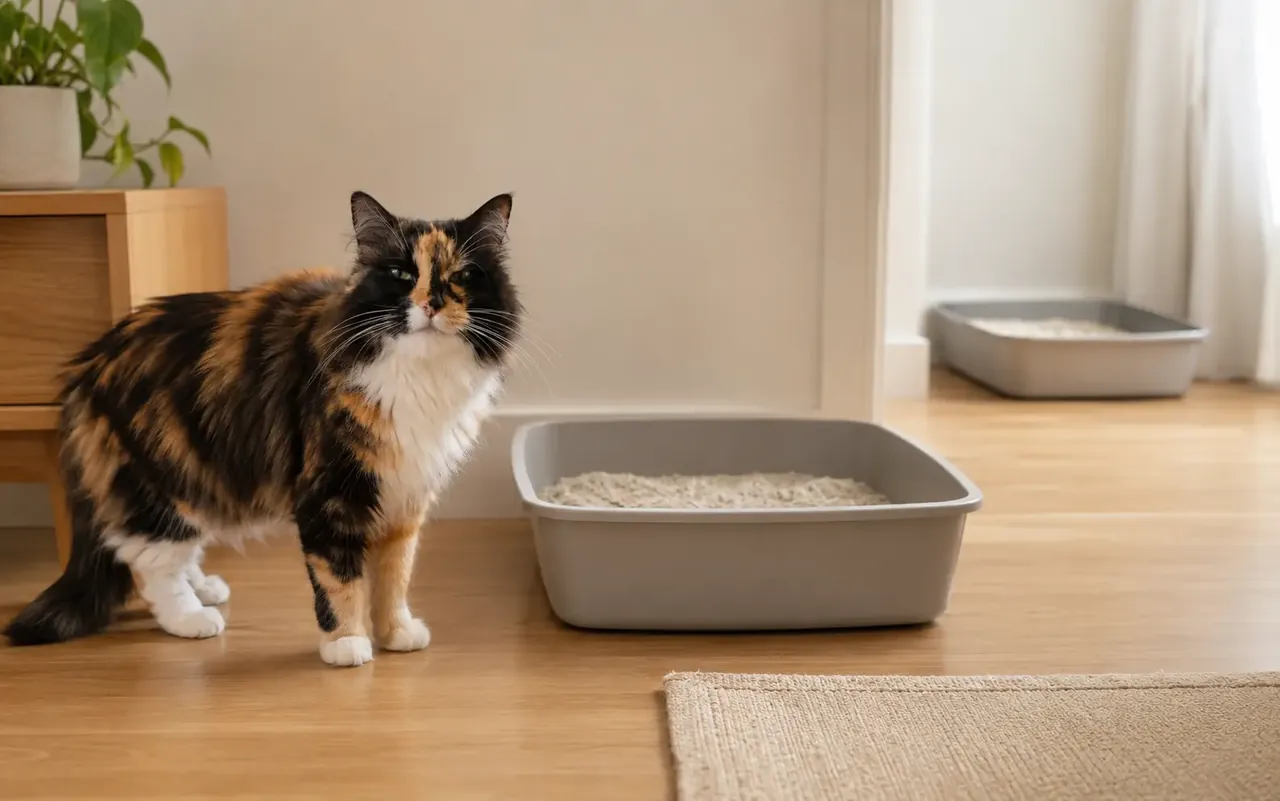
Watch whether the cat can turn comfortably to groom the back and hindquarters and whether jumping, weight, appetite, thirst or litter habits have changed. Arthritis, obesity and illness can reduce grooming, while parasites, allergy and infection can create flakes directly. Dandruff is a sign rather than one diagnosis, so coat oil or humidity alone should not be assumed to explain persistence.
Avoid human shampoo and improvised oils
Do not use human dandruff shampoo, essential oils, coconut oil, medicated dog wash or concentrated topical products. Cats groom residue from the coat, and ingredients or doses may be unsafe. Do not start fatty-acid or vitamin supplements without advice; excesses and an unbalanced diet can cause harm. Continue a complete familiar diet while the cause is assessed.
Use gentle supportive grooming only
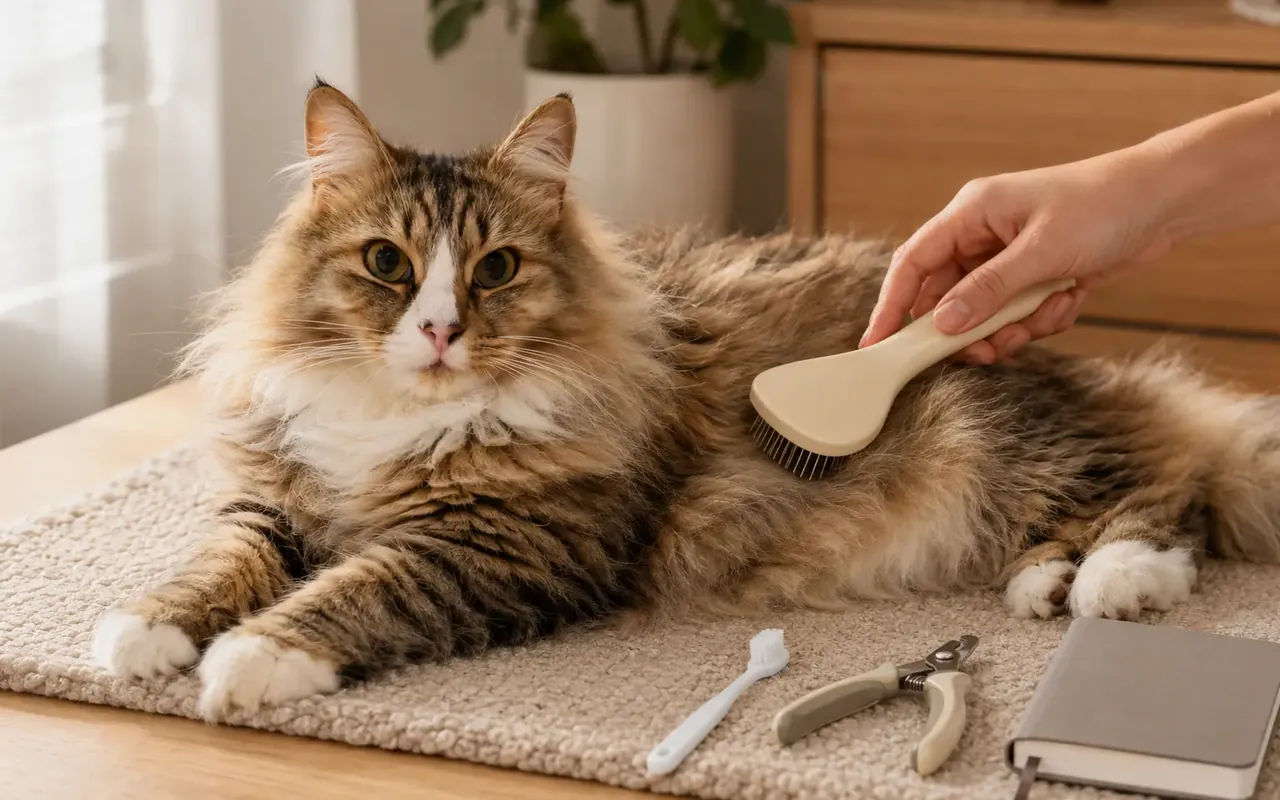
If the skin is not painful and the cat accepts it, use a soft brush for a brief session and stop at twitching, turning, biting or moving away. Never pull mats or cut close to thin skin with scissors. Provide stable footing and bring grooming to the cat's resting place when mobility is limited. Tight mats, sores or painful skin need professional help.
Book care for persistence or additional signs
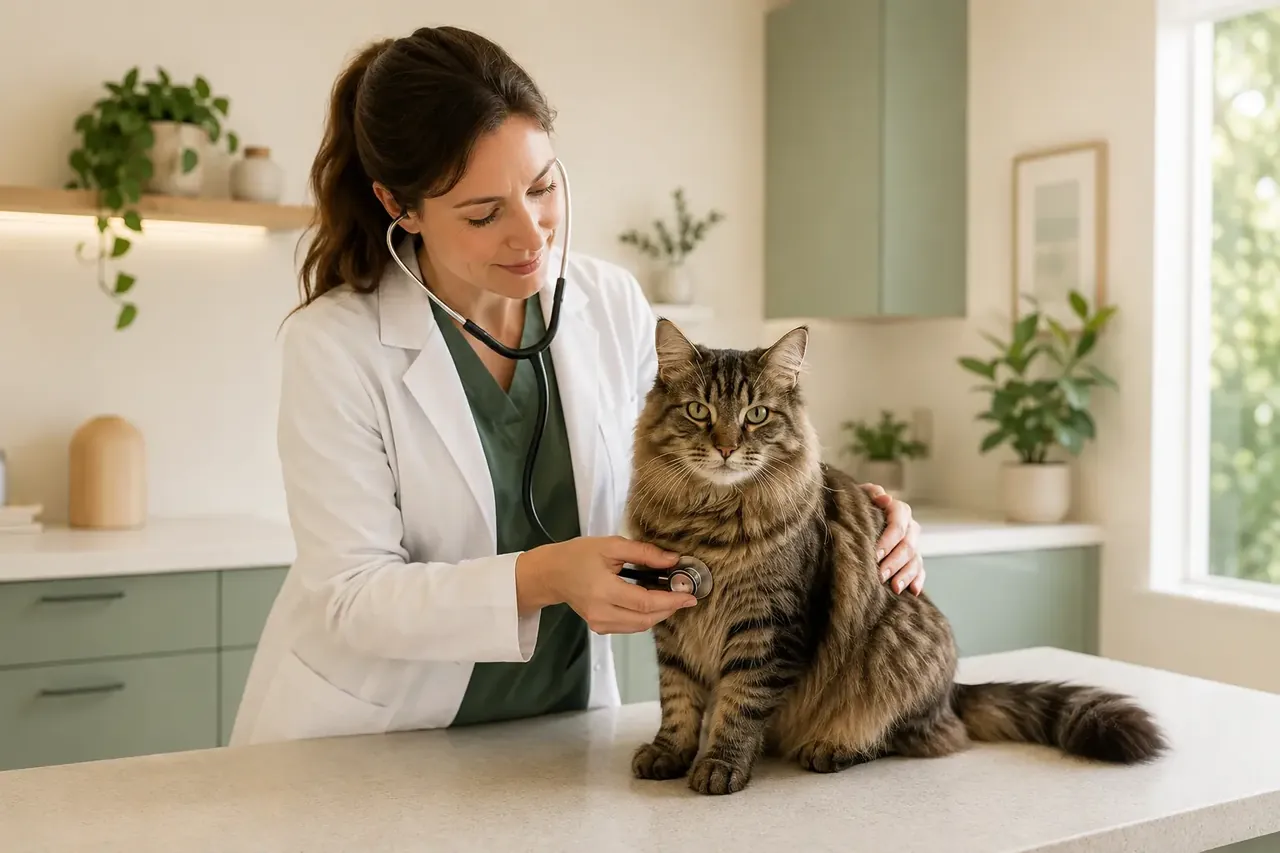
Arrange veterinary assessment when scaling repeats, spreads or appears with intense itching, hair loss, greasy odour, wounds, weight change, reduced grooming or lethargy. Testing may include flea combing, skin scrapings, hair examination, culture or blood and urine tests. Seek prompt care for open infected sores, rapid hair loss, marked weakness or a kitten with a heavy parasite burden.
Your quick checklist
Loading saved progress…
Three simple things you can do
You do not have to change everything today. Pick one step that feels realistic, try it and see how your cat responds.
- 1Observe your cat’s individual baseline.
- 2Make one gentle change at a time.
- 3Ask a qualified professional when health or safety is involved.
Common mistakes
×Waiting for a dramatic symptom instead of noticing smaller changes from the cat’s normal routine.
×Changing several things at once, making it difficult to learn what actually helped.
×Treating general guidance as a substitute for advice from a veterinarian who knows the individual cat.
Questions cat people ask
Does every cat follow the same rule?+
No. Age, health, history, temperament and environment all change what works for an individual.
When should I seek professional help?+
Seek veterinary advice for sudden, persistent or concerning changes and urgent help for breathing difficulty, collapse, seizures, poisoning or urinary obstruction signs.
Still looking for the right answer?
Search the full EverYes Cats encyclopedia with your own words — a symptom, food, behaviour, breed or everyday question.
Checked, dated and transparent
- Prepared by
- EverYes Cats editorial team
- Last updated
- Source checked
- Primary reference
- Cornell Feline Health Center: Feline Skin Diseases ↗
We begin with the named reference, rewrite the information in plain language and add practical cat-parent steps. Urgent health statements are checked against veterinary sources. This guide has not been individually reviewed by a veterinarian unless explicitly stated. It provides education, not diagnosis or treatment.
How we choose and use sources →
Spotted something unclear or outdated? Tell us so we can review it.
Loading your saved choice…
A broken cat tooth may expose sensitive tissue or hide damage below the gumline even when the cat still eats. Prevent hard chewing, do not test or file the tooth and arrange a veterinary dental assessment; facial trauma, jaw misalignment or heavy bleeding is urgent.
 02
 03
 06