My cat ate string: what to do
Swallowed string, ribbon, yarn, floss or tinsel can anchor under the tongue or in the stomach and injure the intestine. Do not pull visible material or induce vomiting—call a veterinarian immediately.
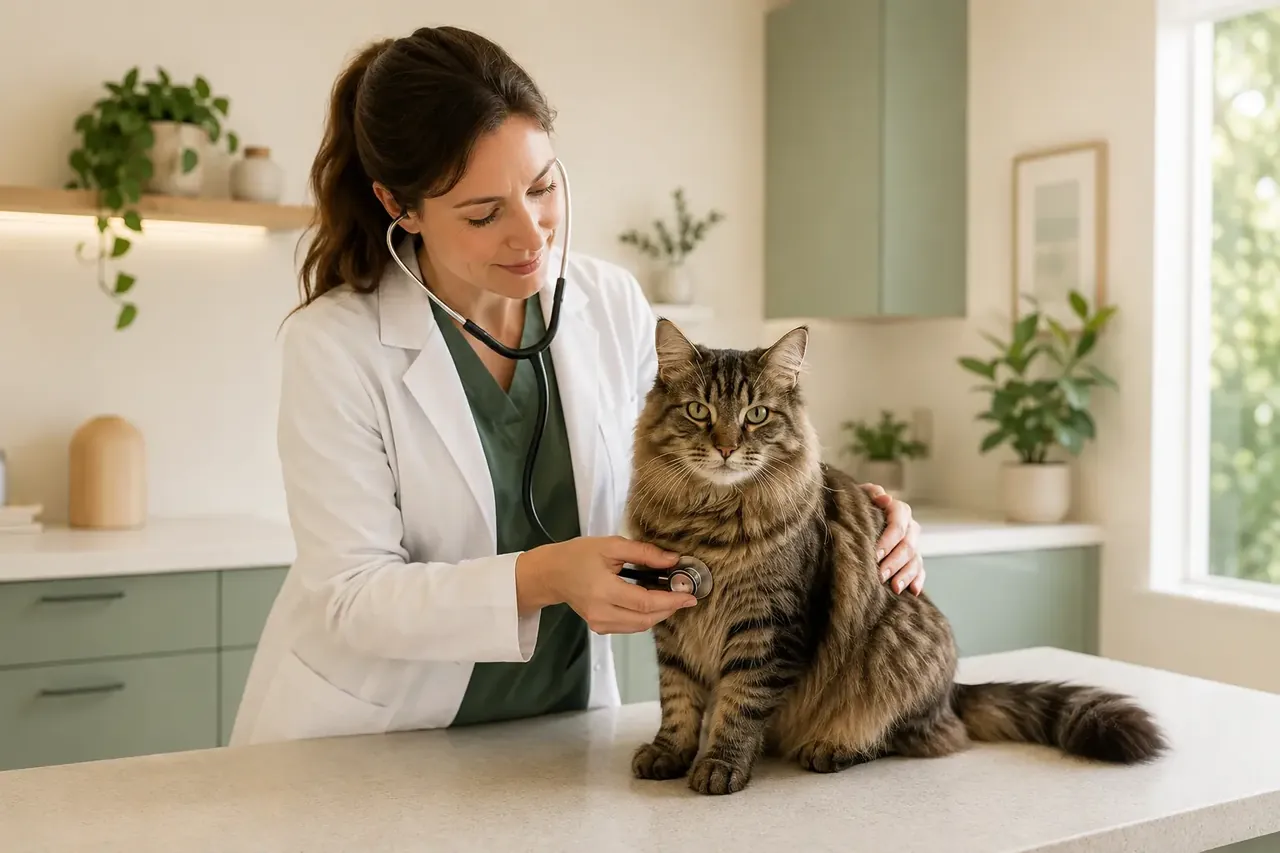 Topic illustration selected for this guide. Some learning images may be AI-assisted.
This sign can be urgent. Call a veterinarian or emergency clinic now for individual triage; do not wait for this article to diagnose the cause.
My cat ate string: what to do — the quick answer
✓ Do not pull string from the mouth or anus; prevent access and call a veterinarian promptly.
✓ Visible string, repeated vomiting, pain, lethargy, refusal of food or breathing trouble is urgent.
✓ This information supports observation and does not replace veterinary diagnosis.
Look for missing thread, ribbon, yarn, dental floss or tinsel and note gagging, vomiting and appetite. This guide explains what to record, what not to do and when veterinary care becomes urgent.
Remove access but do not pull
Secure the remaining spool, ribbon, toy or rubbish so no more can be swallowed. If string is visible from the mouth or anus, leave it in place and prevent chewing when this can be done without restraint. Pulling can tighten anchored material and cut or perforate the digestive tract.
Call a veterinarian immediately
Contact your veterinarian or emergency clinic as soon as ingestion is known or strongly suspected, even before symptoms appear. Report the material, estimated length, attached needle or object, time and whether any part is missing. Early assessment may offer safer options than waiting for obstruction or intestinal damage.
Do not induce vomiting or give food remedies
Never use hydrogen peroxide, salt, oil, butter, bread, bulky food, laxatives or hairball paste to move string through. Do not push visible thread back into the mouth or sweep fingers under the tongue. Follow the clinic's instructions about food, water and transport.
Watch for developing warning signs
Vomiting, gagging, drooling, pawing at the mouth, reduced appetite, lethargy, abdominal pain, hiding, straining or passing little stool can occur. A cat may appear normal early on, so absence of signs is not proof the material has passed. Do not search faeces by pulling on anything protruding.
Bring useful evidence
Take the packaging, matching material or a photograph and estimate how much is unaccounted for. Mention needles, hooks, chemicals or decorations attached to it. Note the last normal meal, stool and behaviour. Do not delay departure to find every fragment when urgent assessment has been advised.
Prevent a repeat after veterinary clearance
Store sewing kits, dental floss, gift ribbon, elastic thread, tinsel and wand toys in closed containers. Use string-like toys only with direct supervision and put them away immediately afterward. Prevention matters because a cat that swallowed one linear object may seek similar textures again.
Your quick checklist
Loading saved progress…
What to do now
Do not use this guide to delay care. Start with the first step and follow the veterinary professional's instructions.
- 1Observe your cat’s individual baseline.
- 2Make one gentle change at a time.
- 3Ask a qualified professional when health or safety is involved.
Common mistakes
×Waiting for a dramatic symptom instead of noticing smaller changes from the cat’s normal routine.
×Changing several things at once, making it difficult to learn what actually helped.
×Treating general guidance as a substitute for advice from a veterinarian who knows the individual cat.
Questions cat people ask
Does every cat follow the same rule?+
No. Age, health, history, temperament and environment all change what works for an individual.
When should I seek professional help?+
Seek veterinary advice for sudden, persistent or concerning changes and urgent help for breathing difficulty, collapse, seizures, poisoning or urinary obstruction signs.
Still looking for the right answer?
Search the full EverYes Cats encyclopedia with your own words — a symptom, food, behaviour, breed or everyday question.
Checked, dated and transparent
- Prepared by
- EverYes Cats editorial team
- Last updated
- Source checked
- Primary reference
- Merck Veterinary Manual: Gastrointestinal Obstruction ↗
We begin with the named reference, rewrite the information in plain language and add practical cat-parent steps. Urgent health statements are checked against veterinary sources. This guide has not been individually reviewed by a veterinarian unless explicitly stated. It provides education, not diagnosis or treatment.
How we choose and use sources →
Spotted something unclear or outdated? Tell us so we can review it.
Loading your saved choice…
A broken cat tooth may expose sensitive tissue or hide damage below the gumline even when the cat still eats. Prevent hard chewing, do not test or file the tooth and arrange a veterinary dental assessment; facial trauma, jaw misalignment or heavy bleeding is urgent.
 01
 02
 06