Why Does My Kitten Play in the Litter Box?
A kitten may dig and pounce in a litter box while learning about the substrate, but eating litter, rolling in waste or repeated unproductive visits needs attention. Keep the toilet clean and provide safer digging play elsewhere.
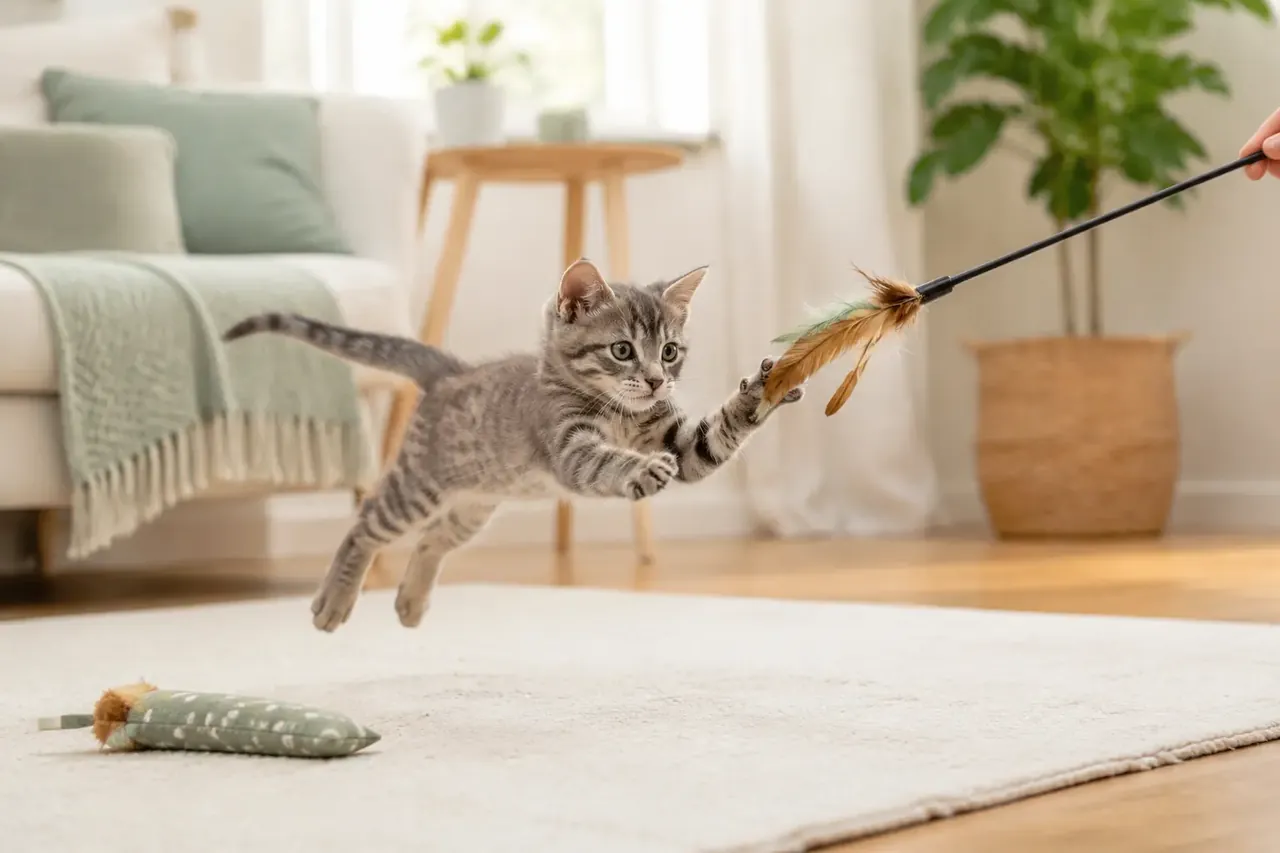 Topic illustration selected for this guide. Some learning images may be AI-assisted.
Why Does My Kitten Play in the Litter Box — the quick answer
✓ A newly discovered box can invite digging and pouncing before toileting habits are fully established.
✓ Scoop often, redirect play to a clean dig box and use veterinarian-approved kitten-safe litter.
✓ Litter ingestion, constipation, vomiting or urinary straining needs prompt care.
A newly discovered box can invite digging and pouncing before toileting habits are fully established. Start by comparing the moment with your cat's usual pattern.
Separate play from a toileting problem
Observe without interrupting every visit. Normal exploration may include a short dig or pounce followed by leaving or toileting normally. Repeated entry with straining, crying, tiny urine spots, hard stool, diarrhoea or no output is different and can require urgent veterinary care.
Make the litter box simple and safe
Use a large easy-entry tray in a quiet accessible location with an unscented litter appropriate for the kitten and accepted by them. Scoop promptly so play does not involve waste. Avoid scented additives, plastic liners that catch claws and abrupt litter changes made only to stop play.
Offer a legal digging activity
Provide a separate shallow box with crumpled paper, large kitten-safe balls or another supervised material that cannot be swallowed. Add short wand-toy sessions elsewhere and reward leaving the litter area. Do not hide treats in cat litter or turn the toilet into a deliberate play station.
Watch closely for litter ingestion
Some kittens mouth unfamiliar material, but swallowing litter can create gastrointestinal risk and may also accompany pica or illness. Record the product, amount and time, remove access to loose spilled litter and ask the veterinary team which substrate is safest for the kitten's age and circumstances.
When to contact a veterinarian
Seek prompt advice for litter eating, vomiting, abdominal pain, constipation, diarrhoea, weakness or reduced appetite. Repeated straining with little or no urine is an emergency, including in a young kitten. Do not give oil, laxatives or another home remedy unless a veterinarian instructs you.
Your quick checklist
Loading saved progress…
Three simple things you can do
You do not have to change everything today. Pick one step that feels realistic, try it and see how your cat responds.
- 1Observe your cat’s individual baseline.
- 2Make one gentle change at a time.
- 3Ask a qualified professional when health or safety is involved.
Common mistakes
×Waiting for a dramatic symptom instead of noticing smaller changes from the cat’s normal routine.
×Changing several things at once, making it difficult to learn what actually helped.
×Treating general guidance as a substitute for advice from a veterinarian who knows the individual cat.
Questions cat people ask
Does every cat follow the same rule?+
No. Age, health, history, temperament and environment all change what works for an individual.
When should I seek professional help?+
Seek veterinary advice for sudden, persistent or concerning changes and urgent help for breathing difficulty, collapse, seizures, poisoning or urinary obstruction signs.
Still looking for the right answer?
Search the full EverYes Cats encyclopedia with your own words — a symptom, food, behaviour, breed or everyday question.
Checked, dated and transparent
- Prepared by
- EverYes Cats editorial team
- Last updated
- Source checked
- Primary reference
- FelineVMA/ISFM: House-Soiling Guidelines ↗
We begin with the named reference, rewrite the information in plain language and add practical cat-parent steps. Urgent health statements are checked against veterinary sources. This guide has not been individually reviewed by a veterinarian unless explicitly stated. It provides education, not diagnosis or treatment.
How we choose and use sources →
Spotted something unclear or outdated? Tell us so we can review it.
Loading your saved choice…
A kitten may follow an older cat to learn routines, seek warmth or invite contact. Protect the older cat's ability to rest and leave while giving the kitten separate play, food and comfortable places.
 02
 04
 06