How do you stop a kitten climbing people’s clothes?
A kitten that climbs trousers or hanging clothes is usually seeking height, movement or attention while practising claws. Prevent falls, provide a legal climbing route and reward four paws on the floor or perch.
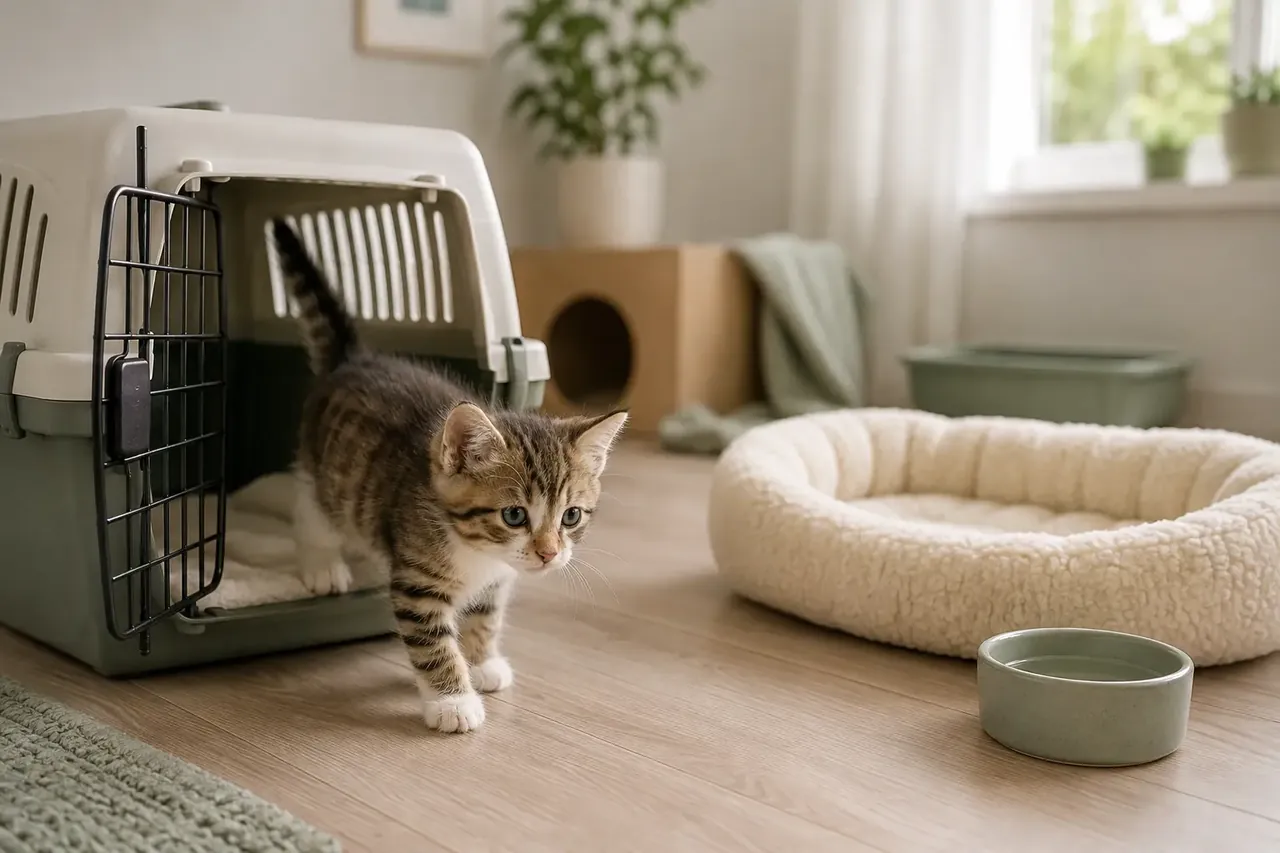 Topic illustration selected for this guide. Some learning images may be AI-assisted.
How do you stop a kitten climbing people’s clothes — the quick answer
✓ Climbing can seek height, contact or play, but skin and fabric make an unsafe ladder.
✓ Observe: Identify whether it happens during greetings, feeding or under-stimulation.
✓ Try this: Provide a nearby legal climbing route and reward paws remaining on it.
Climbing can seek height, contact or play, but skin and fabric make an unsafe ladder. The useful question is not only what the moment resembles, but whether it fits this cat’s normal pattern. Context, frequency, recovery and accompanying changes make the interpretation safer and more accurate.
Why clothes become a climbing target
Moving fabric grips small claws and can lead toward a person, shelf or window. A kitten may repeat the climb because it produces height, play or an immediate reaction. Check when it happens: before meals, during busy household movement or when the kitten cannot reach an appealing elevated place safely.
Try one gentle change
Stand still rather than shaking the kitten off, support the body if needed and calmly place the kitten on a nearby stable perch or floor. Then direct energy to a wand toy away from legs. Wear less snag-prone clothing during training and keep robes, curtains and laundry secured so accidental climbing is not repeatedly rehearsed.
Create a better route upward
Provide a stable cat tree, low step sequence or secured furniture route appropriate to the kitten's size. Place it near the social area that motivated the climb and reward voluntary use. Check that platforms do not wobble, gaps cannot trap the kitten and every high point has a safe way down.
Teach an alternative without punishment
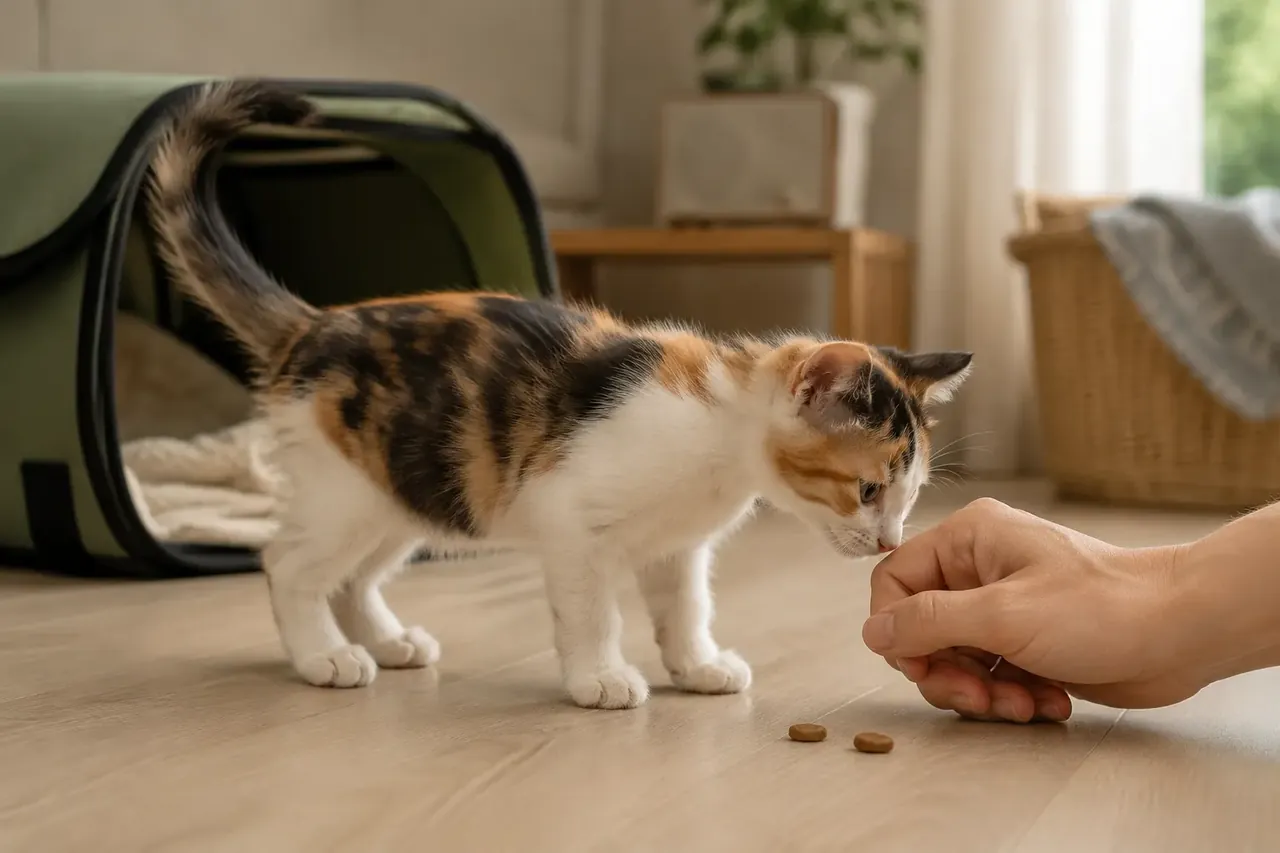
Reward four paws on the floor, sitting beside you or moving to the perch before meals and attention. Keep cues simple and sessions brief. Do not shout, spray water, push with a foot or pull claws from fabric; fear and physical removal do not teach where climbing is allowed.
When to contact a veterinarian
Check paws after a snag and seek veterinary advice for a torn claw, bleeding that does not stop, swelling, limping, pain or reluctance to climb. A fall followed by breathing difficulty, collapse, severe pain or inability to walk normally needs urgent care.
Your quick checklist
Loading saved progress…
Three simple things you can do
You do not have to change everything today. Pick one step that feels realistic, try it and see how your cat responds.
- 1Observe your cat’s individual baseline.
- 2Make one gentle change at a time.
- 3Ask a qualified professional when health or safety is involved.
Common mistakes
×Waiting for a dramatic symptom instead of noticing smaller changes from the cat’s normal routine.
×Changing several things at once, making it difficult to learn what actually helped.
×Treating general guidance as a substitute for advice from a veterinarian who knows the individual cat.
Questions cat people ask
Does every cat follow the same rule?+
No. Age, health, history, temperament and environment all change what works for an individual.
When should I seek professional help?+
Seek veterinary advice for sudden, persistent or concerning changes and urgent help for breathing difficulty, collapse, seizures, poisoning or urinary obstruction signs.
Still looking for the right answer?
Search the full EverYes Cats encyclopedia with your own words — a symptom, food, behaviour, breed or everyday question.
Checked, dated and transparent
- Prepared by
- EverYes Cats editorial team
- Last updated
- Source checked
- Primary reference
- FelineVMA: Positive Reinforcement Training Toolkit ↗
We begin with the named reference, rewrite the information in plain language and add practical cat-parent steps. Urgent health statements are checked against veterinary sources. This guide has not been individually reviewed by a veterinarian unless explicitly stated. It provides education, not diagnosis or treatment.
How we choose and use sources →
Spotted something unclear or outdated? Tell us so we can review it.
Loading your saved choice…
A tired kitten may bite because play has continued past their ability to settle, not because they are aggressive. End interaction early, lower stimulation and offer a predictable quiet place for sleep.
 01
 02
 04
 05