How high should a kitten’s food bowl be?
Most healthy kittens can eat comfortably from a stable shallow dish at floor level. Easy access, clean placement and freedom from competition matter more than a fashionable raised-bowl rule.
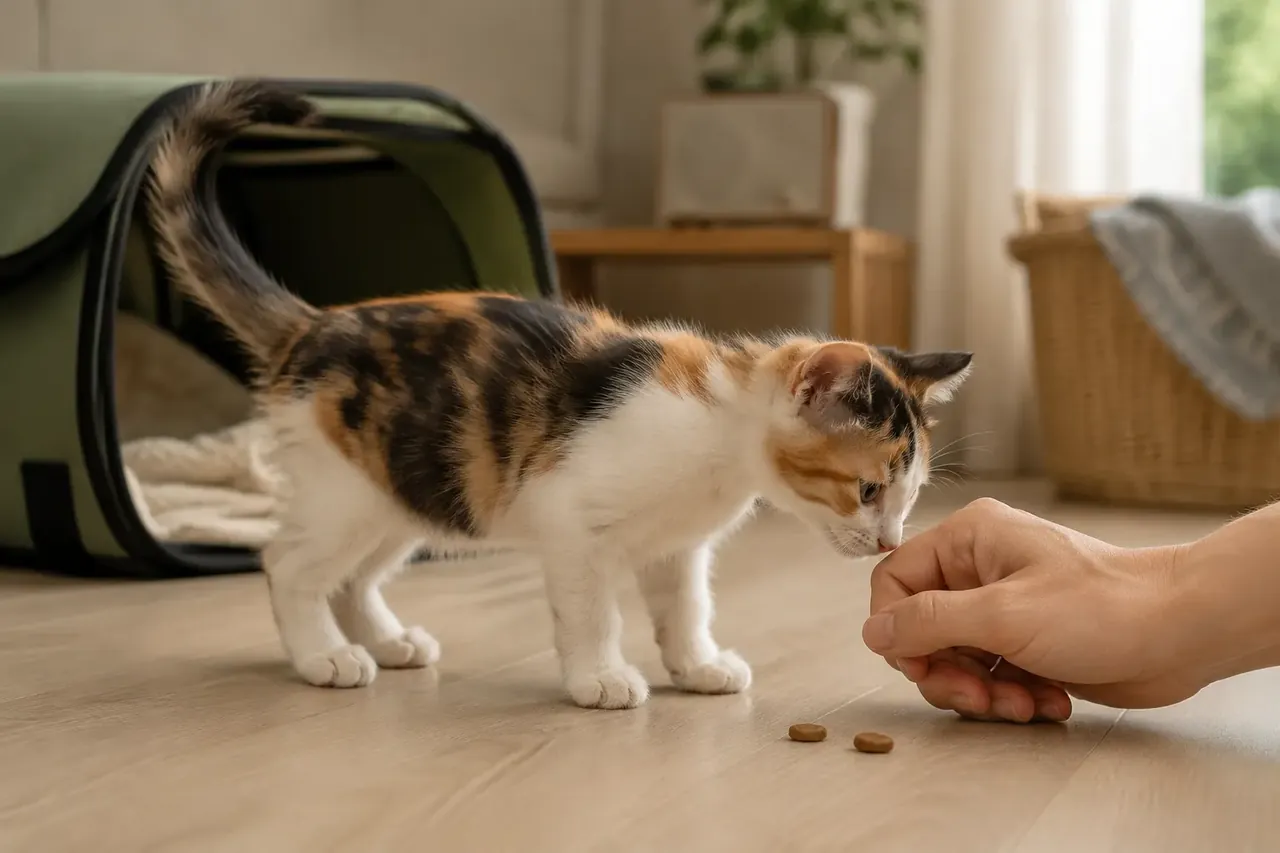
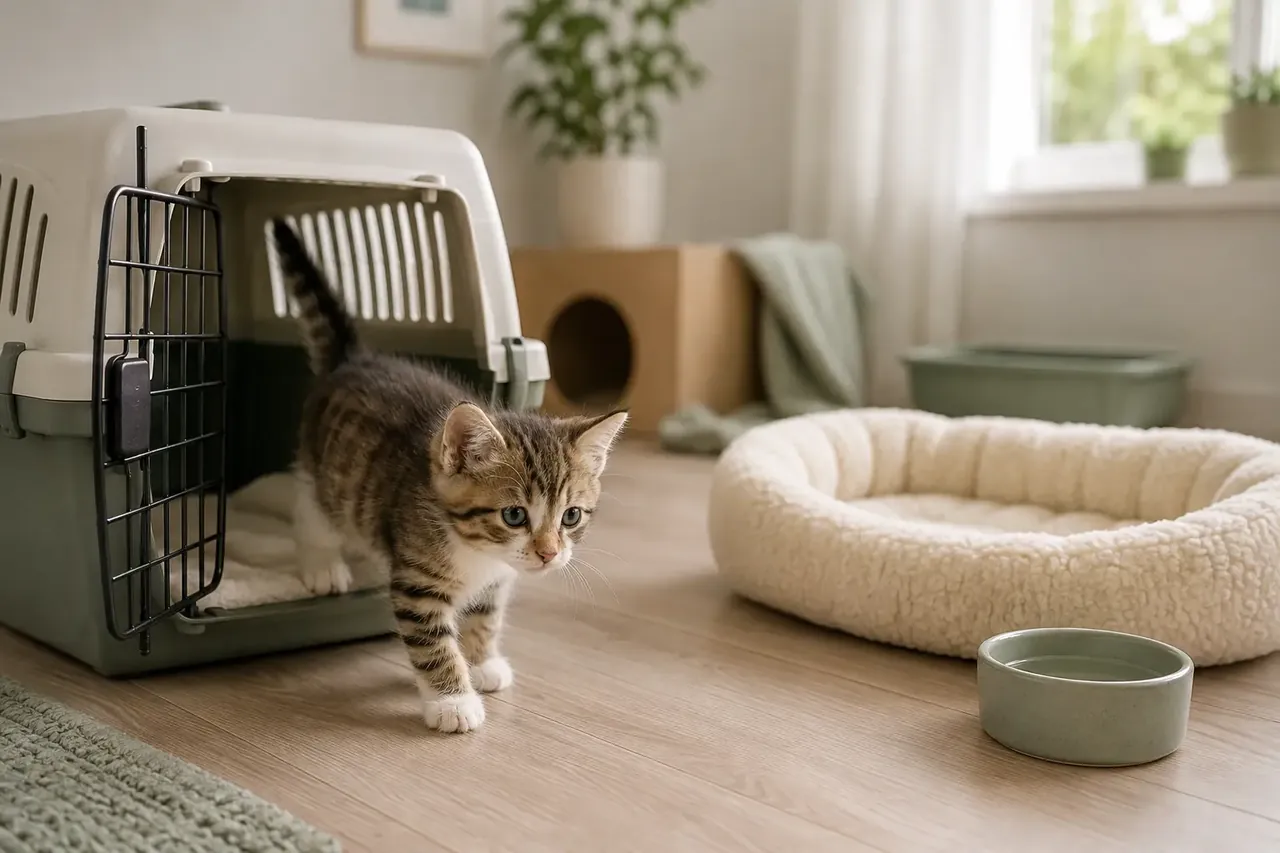 Topic illustration selected for this guide. Some learning images may be AI-assisted.
How high should a kitten’s food bowl be — the quick answer
✓ A stable shallow dish at comfortable floor level suits most kittens; easy access matters more than fashionable elevation.
✓ Observe: Watch posture, slipping, whisker contact and whether littermates block access.
✓ Try this: Use a low nonslip dish and adjust only for an individual medical or mobility need.
A stable shallow dish at comfortable floor level suits most kittens; easy access matters more than fashionable elevation. The useful question is not only what the moment resembles, but whether it fits this cat’s normal pattern. Context, frequency, recovery and accompanying changes make the interpretation safer and more accurate.
Start with posture and stability
Watch whether the kitten stands or crouches comfortably, reaches the whole meal and keeps paws secure. Use a low, wide dish that does not slide or tip. A kitten should not need to stretch upward, climb onto furniture or place the neck in an awkward position to eat.
Separate height from bowl shape
Whisker contact, deep sides, movement and food collecting in corners can affect use independently of height. Test one feature at a time with the familiar food and schedule. A wide shallow plate may help more than raising the same narrow bowl.
Keep food away from pressure
Place the dish in a quiet area away from litter and busy routes. In multi-cat homes, feed measured portions in separate visual spaces so an adult cannot block the kitten and the kitten cannot steal another diet. Side-by-side bowls do not prove that both cats eat enough.
Adjust for an individual need
A veterinarian may recommend a specific setup for injury, mobility change or another medical reason. Use a stable platform designed not to tip and observe intake rather than assuming elevation benefits every cat. Reassess as a growing kitten becomes taller.
When to contact a veterinarian
Seek advice for reduced intake, dropping food, one-sided chewing, drooling, vomiting, poor growth, pain or an abrupt posture change. A young kitten that stops eating, becomes weak or cannot keep food down needs prompt veterinary guidance.
Your quick checklist
Loading saved progress…
Three simple things you can do
You do not have to change everything today. Pick one step that feels realistic, try it and see how your cat responds.
- 1Observe your cat’s individual baseline.
- 2Make one gentle change at a time.
- 3Ask a qualified professional when health or safety is involved.
Common mistakes
×Waiting for a dramatic symptom instead of noticing smaller changes from the cat’s normal routine.
×Changing several things at once, making it difficult to learn what actually helped.
×Treating general guidance as a substitute for advice from a veterinarian who knows the individual cat.
Questions cat people ask
Does every cat follow the same rule?+
No. Age, health, history, temperament and environment all change what works for an individual.
When should I seek professional help?+
Seek veterinary advice for sudden, persistent or concerning changes and urgent help for breathing difficulty, collapse, seizures, poisoning or urinary obstruction signs.
Still looking for the right answer?
Search the full EverYes Cats encyclopedia with your own words — a symptom, food, behaviour, breed or everyday question.
Checked, dated and transparent
- Prepared by
- EverYes Cats editorial team
- Last updated
- Source checked
- Primary reference
- FelineVMA: How to Feed a Cat ↗
We begin with the named reference, rewrite the information in plain language and add practical cat-parent steps. Urgent health statements are checked against veterinary sources. This guide has not been individually reviewed by a veterinarian unless explicitly stated. It provides education, not diagnosis or treatment.
How we choose and use sources →
Spotted something unclear or outdated? Tell us so we can review it.
Loading your saved choice…
A tired kitten may bite because play has continued past their ability to settle, not because they are aggressive. End interaction early, lower stimulation and offer a predictable quiet place for sleep.
 01
 02
 03
 04