Help an overweight cat lose weight safely
Cat weight loss must be gradual and planned with a veterinarian. Measure all food and treats, protect muscle with suitable activity and seek help immediately if an overweight cat stops eating.
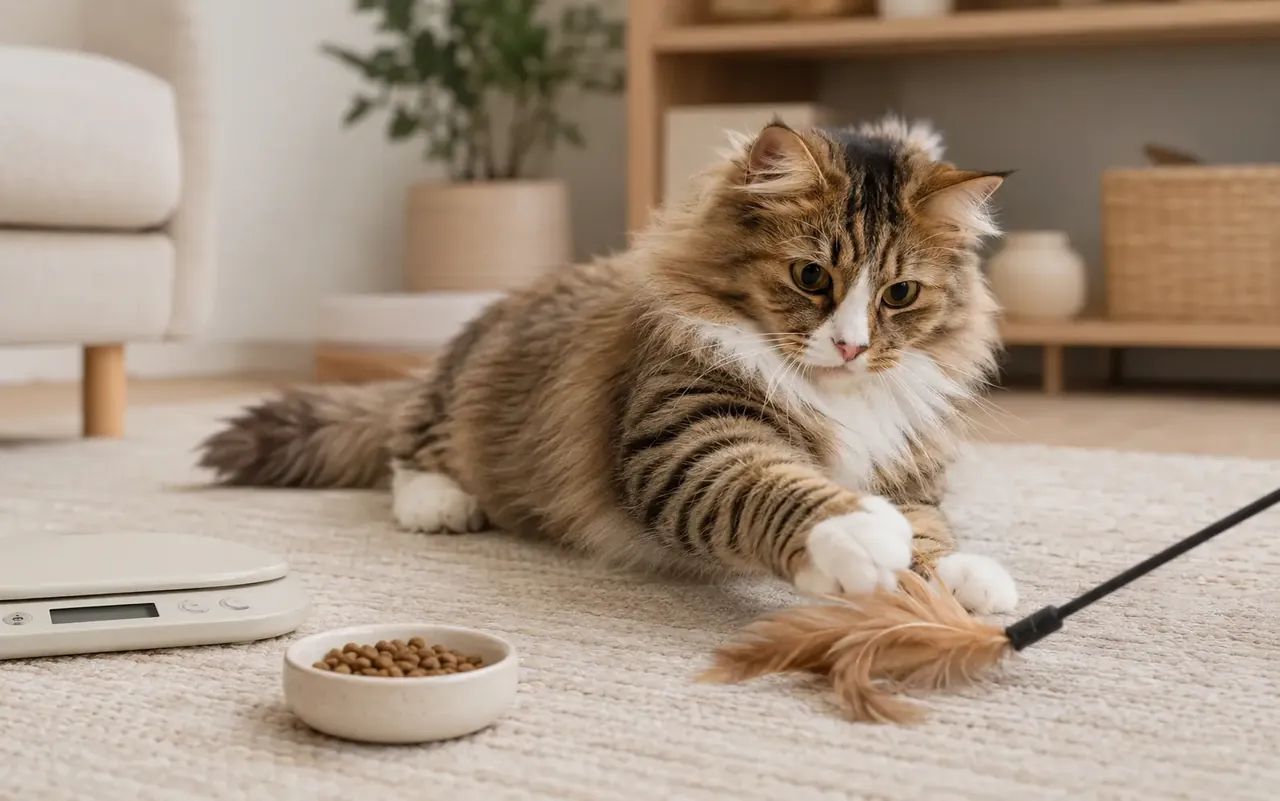 Topic illustration selected for this guide. Some learning images may be AI-assisted.
Help an overweight cat lose weight safely — the quick answer
✓ Ask a veterinarian for a target and calorie plan
✓ Measure food and count treats
✓ Never allow an overweight cat to stop eating
Extra weight can affect movement, grooming and long-term health, but cats must never be put on a sudden crash diet. Safe weight loss is planned and gradual.
Make weight loss gradual and measurable
Safe weight loss protects muscle and depends on the whole daily intake, realistic activity and veterinary guidance.
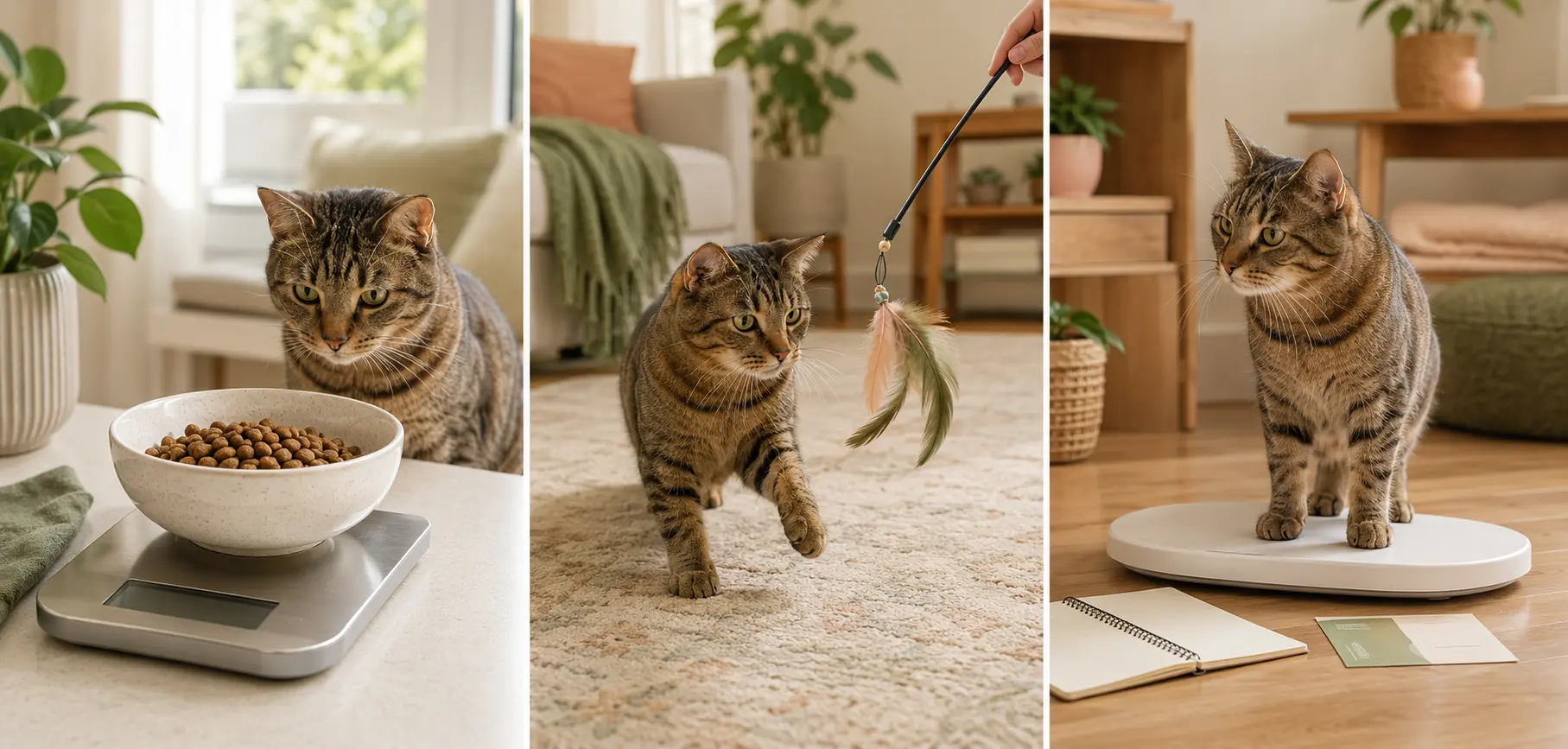
- 1Measure the complete daily food
Use the veterinary calorie target, weigh portions and include every treat instead of estimating by eye.
- 2Add comfortable activity
Use short low-impact play or food-search sessions suited to your cat's mobility, confidence and breathing.
- 3Track the trend
Record weight and body-condition changes at the interval your veterinarian recommends, then adjust the plan with them.
Begin with a health check
A veterinarian can confirm body condition, check for health problems and calculate a sensible feeding target. The number on the food bag is only a starting guide.
Make calories visible
Weigh or measure the full daily ration, including treats. Put the day's allowance in one container so everyone in the home knows what remains.
Add movement gently
Use short play sessions, food puzzles and small changes in walking distance. If your cat stops eating, becomes weak or seems unwell, contact a veterinarian promptly.
Set a target you can measure safely
Ask the veterinary team to assess body condition, muscle condition and medical factors, then provide a calorie target and review interval. Weigh food with a kitchen scale when practical and weigh the cat consistently on the same scale.
Change the environment as well as the portion
Use several short low-impact play sessions, part of the measured meal in easy puzzles and small walking distances between safe stations. In multi-cat homes, feed separately so portions remain accurate. Never crash diet or simply remove food for long periods.
Your quick checklist
Your progress is saved on this device.
Three simple things you can do
You do not have to change everything today. Pick one step that feels realistic, try it and see how your cat responds.
- 1Book a body-condition and weight check.
- 2Measure every meal and treat.
- 3Use short gentle play sessions your cat can comfortably repeat.
Common mistakes
×Reducing food drastically without a veterinary plan.
×Guessing portions by eye.
×Ignoring treats shared by different family members.
Questions cat people ask
How fast should a cat lose weight?+
The safe rate depends on the individual cat. A veterinarian should set the target and monitor progress because weight loss that is too fast can be dangerous.
What if my cat refuses the diet food?+
Do not let a cat go without eating. Contact your veterinarian for a gradual transition or a different suitable option.
Still looking for the right answer?
Search the full EverYes Cats encyclopedia with your own words — a symptom, food, behaviour, breed or everyday question.
Checked, dated and transparent
- Prepared by
- EverYes Cats editorial team
- Last updated
- 13 August 2026
- Source checked
- 13 August 2026
- Primary reference
- Cornell Feline Health Center ↗
We begin with the named reference, rewrite the information in plain language and add practical cat-parent steps. Urgent health statements are checked against veterinary sources. This guide has not been individually reviewed by a veterinarian unless explicitly stated. It provides education, not diagnosis or treatment.
Spotted something unclear or outdated? Tell us so we can review it.
Your answer helps us improve the cat encyclopedia.
A sudden behaviour change is health information until proven otherwise. Check eating, drinking, urine, stool, breathing and movement before assuming stress or stubbornness.